If you would like a printed copy of any of our back issues, then they can be purchased on Farm Marketplace. You can also download the PDFs or read online from links below.
-
How To Start Drilling For £8K
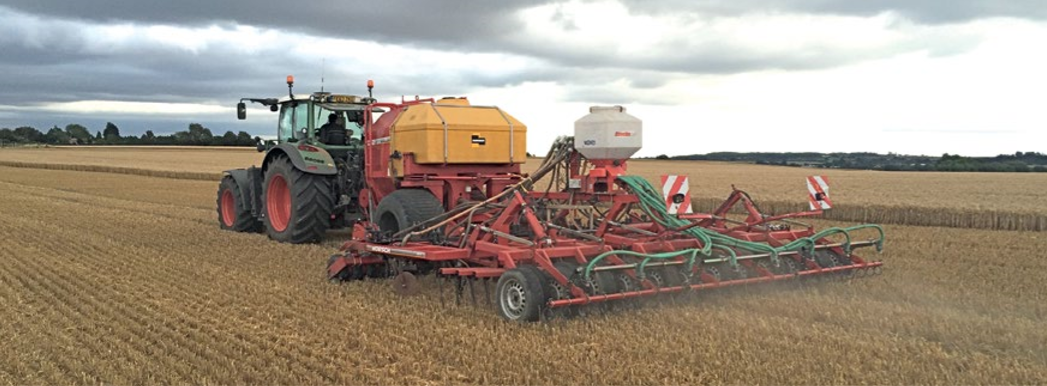
Clive Bailye’s seed drill of choice is his 6m John Deere 750A , which has been used exclusively for 3-4 seasons. Last year, with an increased acreage, the founder and publisher of this Direct Driller magazine thought a second seed drill was necessary. Having just the one machine was a risk and in a difficult season would mean drilling was delayed. He looked around and found a good condition Horsch CO6 tine drill advertised in Germany.
Words and pictures by Mike Donovan
After delivery he rebuilt the coulters to a narrow profile so as to reduce soil disturbance. He says the tine drill is very useful driling after straw crops such as osr and also through the straw on second crop cereals.
Buying the drill from a German farmer was not particularly complicated, and provided him with a higher spec machine than Horsh sell in the UK. The seed dart tyres are much wider, and the machine is fitted with blockage monitors as well as full width front packers and also a liquid fert application system.
A sheaf of photos were taken, and Clive then asked for some of specific parts to show wear. The deal was done at under £5,000 which Clive says is the market value of these machines which are too large for small farmers to buy. Original owners like to buy new and sell when the machine is still in good condition.
Narrow tines with wear tiles
@Clive knew he wanted to make changes, substituting the Horsch tines and coulters for something far narrower, and has ended up getting his own design of tine made, which has a wear tile made from Ferobide, far harder than tungsten. The drill is on the farm primarily for osr and 2nd crop cereals drilled into chopped straw and the 25cm spacing is okay for these crops.
Comments on Clive’s on-line forum, TFF, said the drill many not be so good with beans, as the slot is a mere 12mm wide. And in barley the spacing may well be too wide as it needs to be thick. Clive points out that the seed pipe can actually be a bit wider than 12mm as it is in the shadow of the point. It would be good to have the option of using it for beans.

Above left: The cheap CO6 is being calibrated ready for its first outing

Above right: The adapted Horsch is being filled by the home built drill logistics trailer with seed and liquid starter fert.
Getting around the German instructions
The Horsch came, of course, with a control box and instructions in German. More on-line discussion revealed that English instructions were available on the Horsch website, and another explained that Horsch was sourcing some of these parts from Agton in Canada anyway. Zealman from New Zealand explained that the button marked with callipers should be held down for around 5 seconds. The menu is where you adjust the tramline sequence, valve layout and row numbers.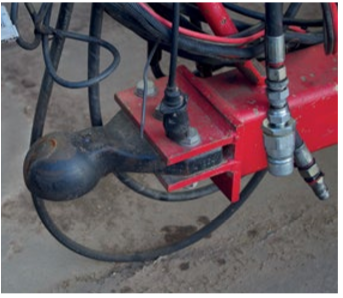
Ball hitch is a continental standard and provides a positive connection between tractor and drill

The Stocks Wizard has a rotor modified for Avadex which otherwise leaks everywhere
A Stocks Wizard is on the back of the drill and used for Avadex. Here again the knowledge of actual farmers is helpful. Alistair Nelson warned that the rotor and the surrounding shroud need to be changed, and he got good advice “from Rick at Stocks”. Clive has the same setup on the 750A and says that the Avadex leaks everywhere unless the modification is made. The drill was acquired and modified in 2016 and the results have been excellent.
The machine went through the residue without many problems and having the second drill has meant more timely planting. Clive has shown that moving into No-Till is not the expensive exercise so many farmers think it might be. The total cost, after modifications which included replacing all tines and coulters, was under £8,000.
Author Mike Donovan writes: we have featured a number of home made direct drills in @Practical Farm Ideas, and are always interested in seeing more. Please contact mike [email protected] or 07778877514.
-
Never Finished, Always Farming
Listen to this article There is a question farmers continually ask themselves. Usually, it’s a farmer standing in a field, hands in their pockets, looking at a crop that is doing something unexpected, either for the better or worse. The question is always some version of the same thing: “Am I doing it right yet?”
My thoughts have never changed. You are never doing it right yet. And that is not a criticism. It is, in fact, the whole point.
Regenerative agriculture is not a destination. It is a direction of travel. There is no certificate (although plenty are trying), no final inspection, no moment at which a farm crosses a line and becomes definitively regenerative. There is only the continuous, sometimes frustrating, always instructive process of observation, adaptation and improvement. The farmers who understand this, who have genuinely internalised it, rather than simply adopted the language, are the ones who are still moving forward 10 years after they started.
This issue of Direct Driller is built around our coverage of Groundswell 2026, and it is a fitting place to reflect on that idea. Groundswell itself was born from the same philosophy. When the event was first held in 2016, it was not a celebration of an arrived movement; it was a gathering of farmers who were asking questions, sharing failures as readily as successes, and refusing to accept that the way things had always been done was necessarily the way things should continue to be done. The farmers who spoke at that first event were not finished. They were, and remain, works in progress.
The sessions we covered at Groundswell 2026 illustrate this beautifully. Tim Parton, one of our own Farmer Focus writers and a man whose journey into biological farming began with a personal health crisis, spoke alongside nutritionist Dr Lucy Williamson about the connection between soil biology and human health. Tim has been farming without insecticides for over a decade and without fungicides for seven years. He is not done. He is still testing, still observing, still refining. His book, Intelligent Farming, is not a manual for a finished system. It is a record of a journey that is still underway – do buy yourself a copy.
The same is true across every session we attended. The pulse panel debated the gap between what farmers can grow and what the market will pay for. The rainfall simulator demonstrated, in real time, why soil cover matters, and why the answer is never simply “do more of this.” The data sessions revealed a genuine fault line in the industry between those who see farm data as a compliance cost to be surrendered to supply chains, and those who see it as a premium-generating asset to be carefully stewarded. None of these conversations are resolved. They are ongoing.
This brings me to an announcement I am particularly proud to make. In 2027, Direct Driller will turn 10 years old. To mark that milestone, we are planning a special anniversary issue that will bring together all our Farmer Focus pieces from the past decade – every farmer journey we have told since the first issue – with an additional piece from each of these farmers. The intention is not simply to celebrate what has been achieved; it is to show how much has continued to change.
The farmers we profiled in 2016 and 2017, the people who were considered pioneers at the time, many of whom were also speaking at that very first Groundswell, have not stood still. Their systems have evolved. Their understanding has deepened. Some of the things they were doing then, they no longer do. Some of the things they are doing now, they could not have imagined then. That is not a sign that they were wrong before. It is a sign that they are thinking properly.
Regenerative agriculture cannot be reduced to a checklist. It cannot be captured in a set of SFI actions, however well-intentioned those actions may be. It is, at its core, a commitment to infinite thinking, to the idea that there is always more to learn, always a better question to ask, always a reason to go back out into the field and look again.
The farmers who understand that are the ones this magazine exists to serve. We hope to still be learning alongside them when we reach our twentieth year.
-
Building Profit and Resilience from the Ground Up
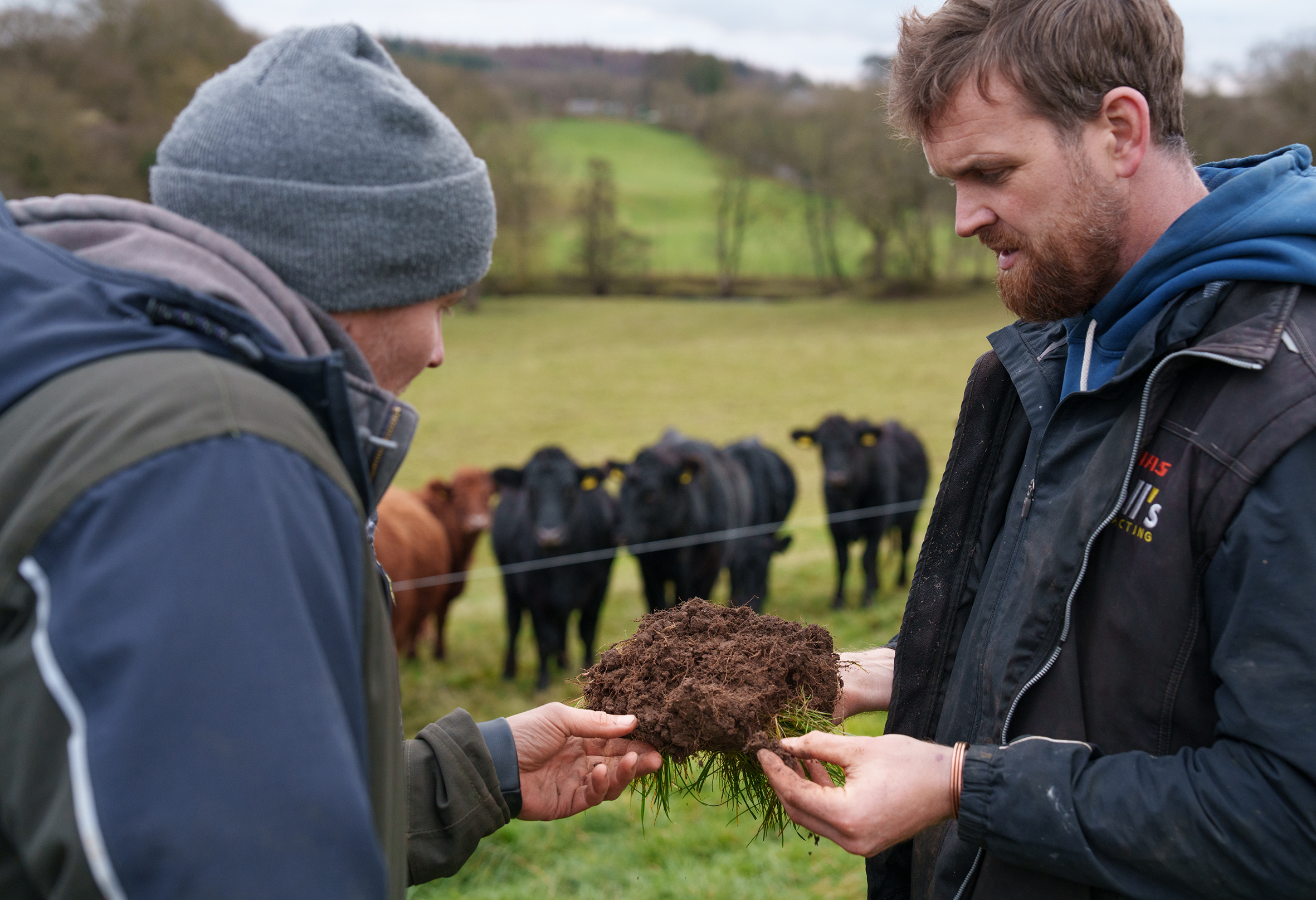
Listen to this article Stuart Johnson was one of the first farmers to join Regenerate Outcomes. The programme provides expert mentoring in soil health and baselines and measures soil carbon at no upfront cost to generate verified soil carbon credits members can sell for additional income.
Stuart is now a mentor for the programme, working with farmers across the UK to grow profits, cut input costs and build resilient businesses.
For Stuart and his family, the path to focusing on soil as the primary resource on their farm in Northumberland began with a drive to save money.
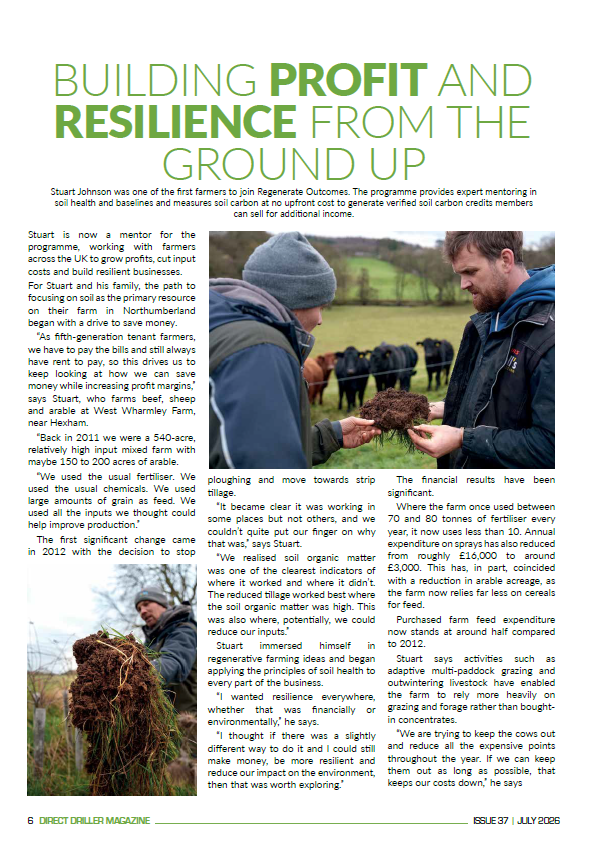
“As fifth-generation tenant farmers, we have to pay the bills and still always have rent to pay, so this drives us to keep looking at how we can save money while increasing profit margins,” says Stuart, who farms beef, sheep and arable at West Wharmley Farm, near Hexham.
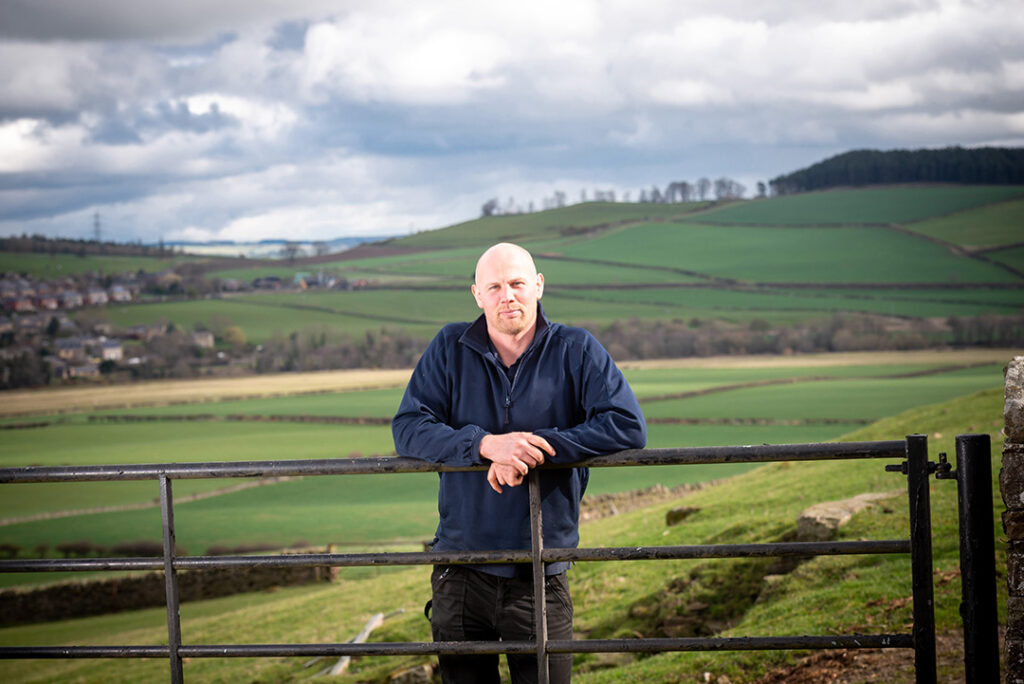
CHESTERS ESTATE FARM — Photography at Chesters Estate near Hexham. Tuesday 21st March 2023. PHOTOGRAPHY: HARRY ATKINSON “Back in 2011 we were a 540-acre, relatively high input mixed farm with maybe 150 to 200 acres of arable.
“We used the usual fertiliser. We used the usual chemicals. We used large amounts of grain as feed. We used all the inputs we thought could help improve production.”
The first significant change came in 2012 with the decision to stop ploughing and move towards strip tillage.
“It became clear it was working in some places but not others, and we couldn’t quite put our finger on why that was,” says Stuart.
“We realised soil organic matter was one of the clearest indicators of where it worked and where it didn’t. The reduced tillage worked best where the soil organic matter was high. This was also where, potentially, we could reduce our inputs.”
Stuart immersed himself in regenerative farming ideas and began applying the principles of soil health to every part of the business.
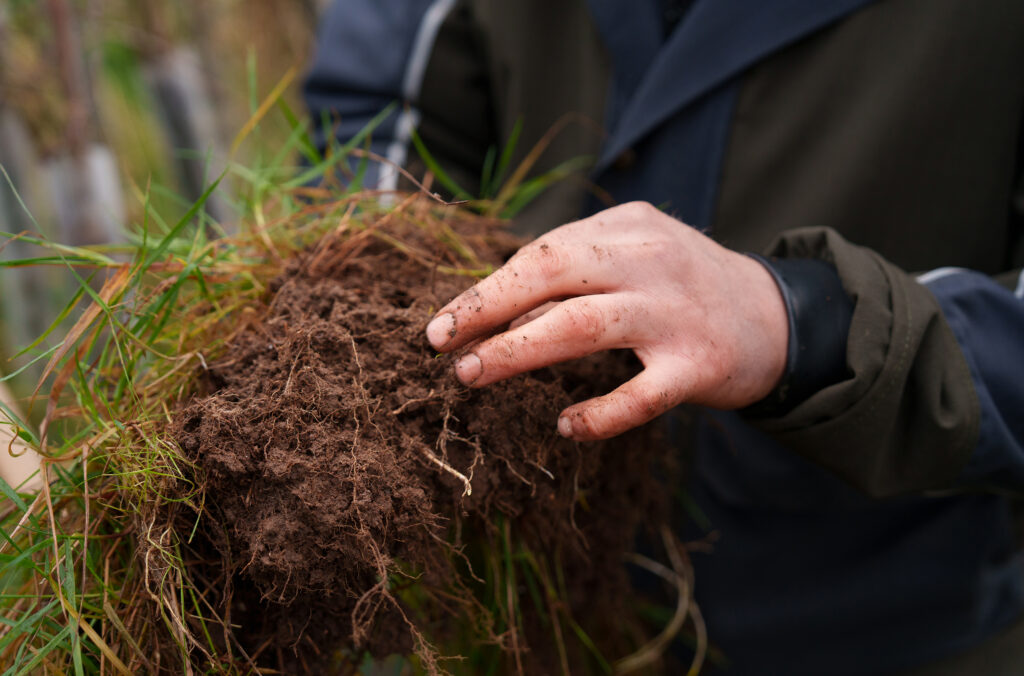
“I wanted resilience everywhere, whether that was financially or environmentally,” he says.
“I thought if there was a slightly different way to do it and I could still make money, be more resilient and reduce our impact on the environment, then that was worth exploring.”
The financial results have been significant.
Where the farm once used between 70 and 80 tonnes of fertiliser every year, it now uses less than 10. Annual expenditure on sprays has also reduced from roughly £16,000 to around £3,000. This has, in part, coincided with a reduction in arable acreage, as the farm now relies far less on cereals for feed.
Purchased farm feed expenditure now stands at around half compared to 2012.
Stuart says activities such as adaptive multi-paddock grazing and outwintering livestock have enabled the farm to rely more heavily on grazing and forage rather than bought-in concentrates.
“We are trying to keep the cows out and reduce all the expensive points throughout the year. If we can keep them out as long as possible, that keeps our costs down,” he says.
“Although all individual input costs have risen dramatically, we have managed to reduce the annual variable costs of a suckler cow from around £680 to less than £300, and a ewe from around £58 to about £30.”
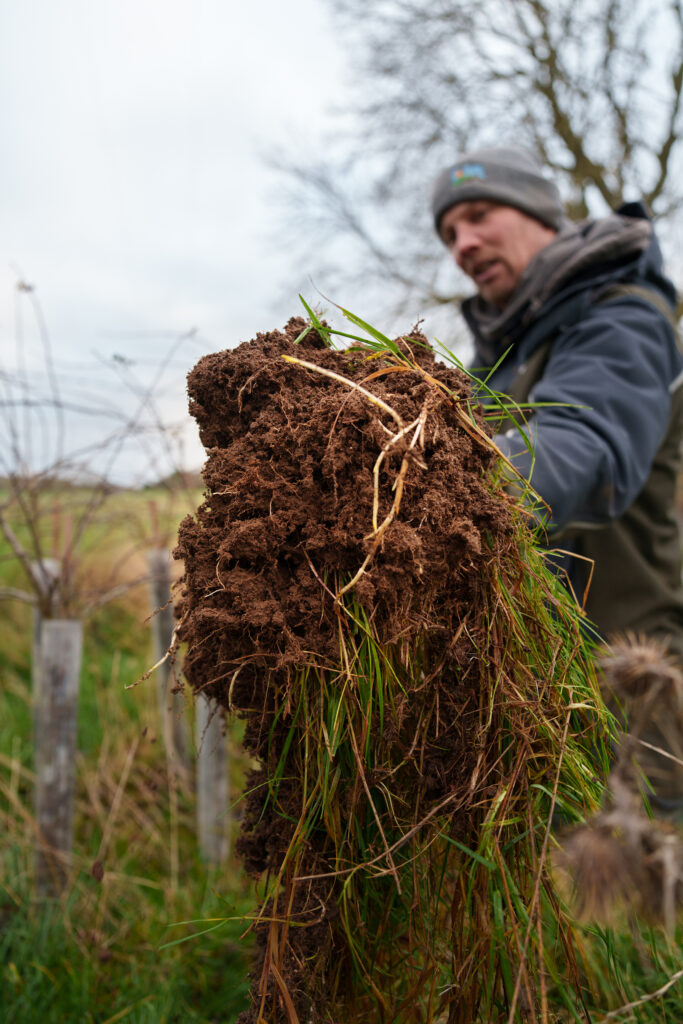
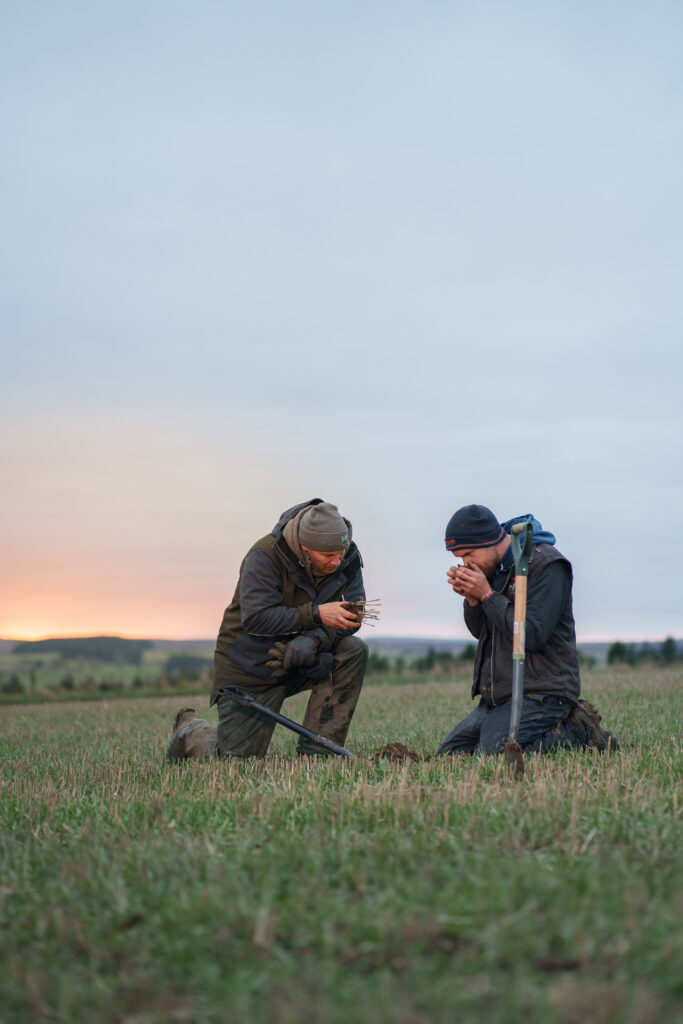
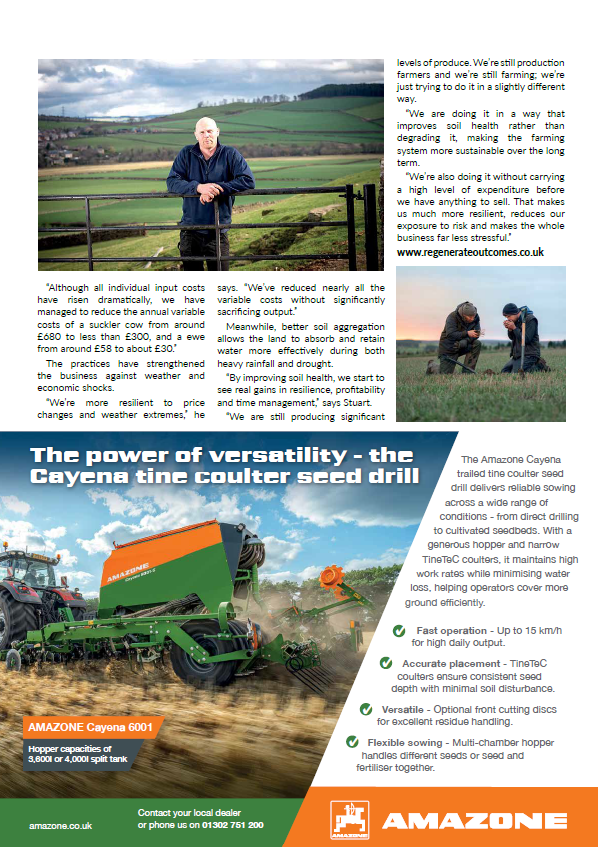
The practices have strengthened the business against weather and economic shocks.
“We’re more resilient to price changes and weather extremes,” he says. “We’ve reduced nearly all the variable costs without significantly sacrificing output.”
Meanwhile, better soil aggregation allows the land to absorb and retain water more effectively during both heavy rainfall and drought.
“By improving soil health, we start to see real gains in resilience, profitability and time management,” says Stuart.
“We are still producing significant levels of produce. We’re still production farmers and we’re still farming; we’re just trying to do it in a slightly different way.
“We are doing it in a way that improves soil health rather than degrading it, making the farming system more sustainable over the long term.
“We’re also doing it without carrying a high level of expenditure before we have anything to sell. That makes us much more resilient, reduces our exposure to risk and makes the whole business far less stressful.”
www.regenerateoutcomes.co.uk
-
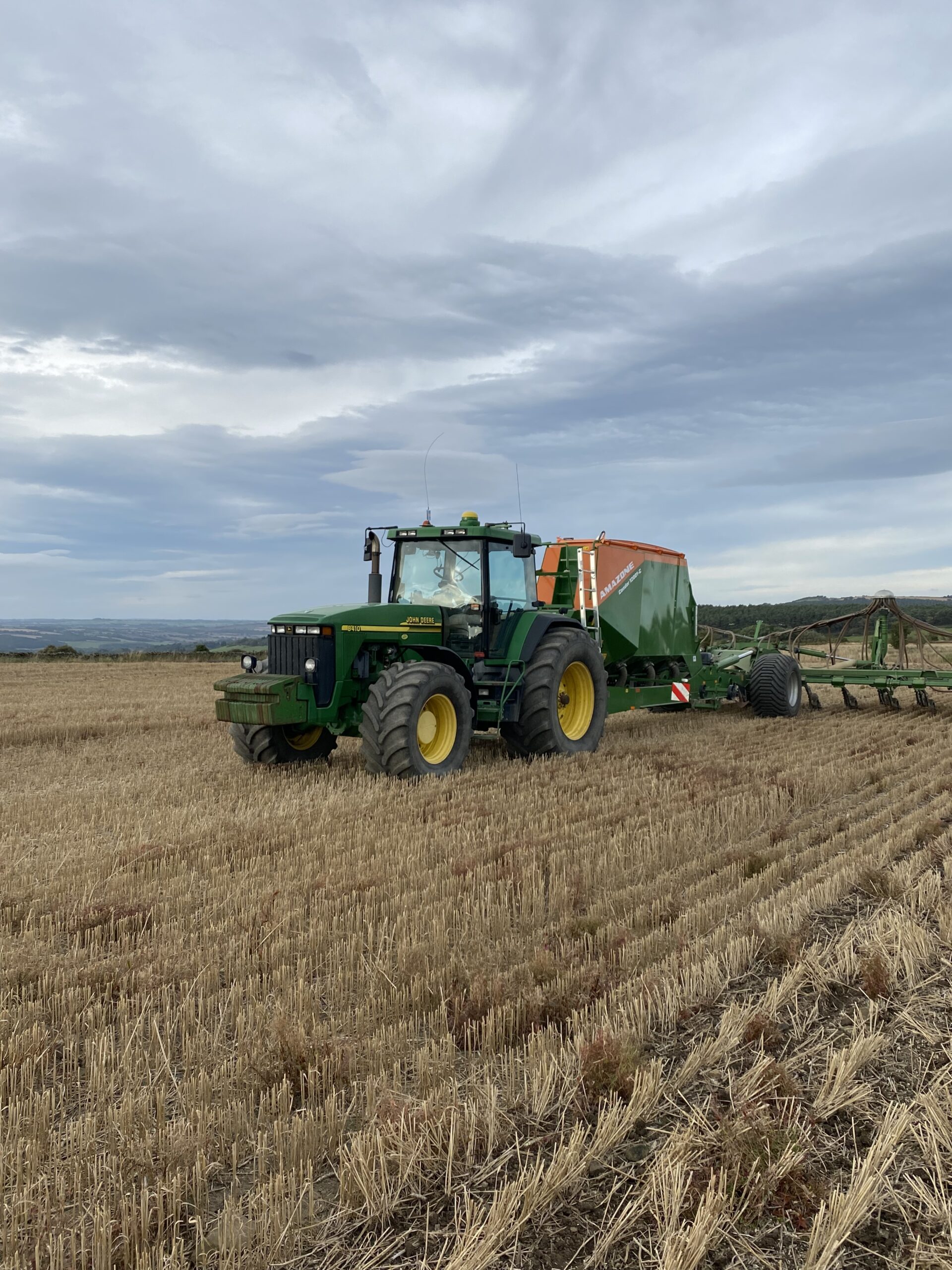
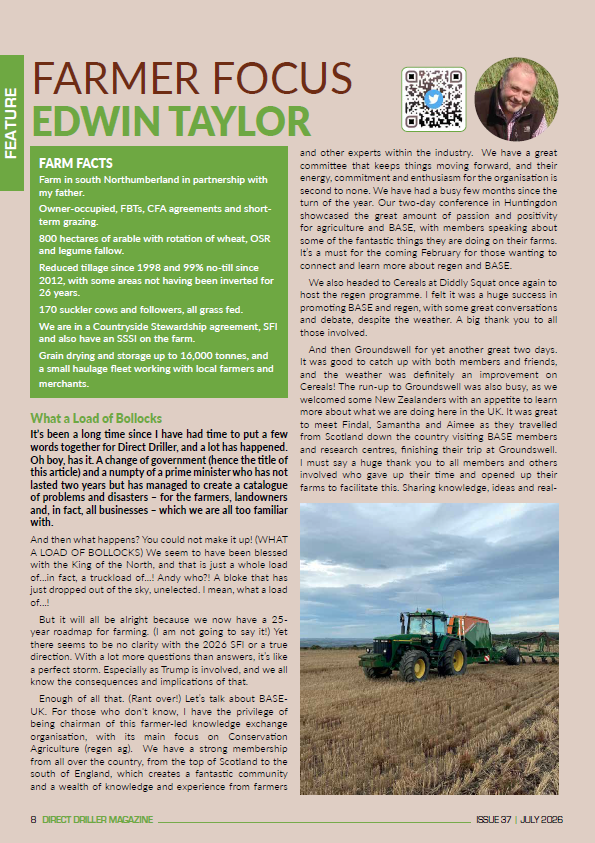
Farmer Focus – Edwin Taylor
Listen to this article Farm Facts
- Farm in south Northumberland in partnership with my father.
- Owner-occupied, FBTs, CFA agreements and short-term grazing.
- 800 hectares of arable with rotation of wheat, OSR and legume fallow.
- Reduced tillage since 1998 and 99% no-till since 2012, with some areas not having been inverted for 26 years.
- 170 suckler cows and followers, all grass fed.
- We are in a Countryside Stewardship agreement, SFI and also have an SSSI on the farm.
- Grain drying and storage up to 16,000 tonnes, and a small haulage fleet working with local farmers and merchants.
What a Load of Bollocks
It’s been a long time since I have had time to put a few words together for Direct Driller, and a lot has happened. Oh boy, has it. A change of government (hence the title of this article) and a numpty of a prime minister who has not lasted two years but has managed to create a catalogue of problems and disasters – for the farmers, landowners and, in fact, all businesses – which we are all too familiar with.
And then what happens? You could not make it up! (WHAT A LOAD OF BOLLOCKS) We seem to have been blessed with the King of the North, and that is just a whole load of…in fact, a truckload of…! Andy who?! A bloke that has just dropped out of the sky, unelected. I mean, what a load of…!
But it will all be alright because we now have a 25-year roadmap for farming. (I am not going to say it!) Yet there seems to be no clarity with the 2026 SFI or a true direction. With a lot more questions than answers, it’s like a perfect storm. Especially as Trump is involved, and we all know the consequences and implications of that.
Enough of all that. (Rant over!) Let’s talk about BASE-UK. For those who don’t know, I have the privilege of being chairman of this farmer-led knowledge exchange organisation, with its main focus on Conservation Agriculture (regen ag). We have a strong membership from all over the country, from the top of Scotland to the south of England, which creates a fantastic community and a wealth of knowledge and experience from farmers and other experts within the industry. We have a great committee that keeps things moving forward, and their energy, commitment and enthusiasm for the organisation is second to none. We have had a busy few months since the turn of the year. Our two-day conference in Huntingdon showcased the great amount of passion and positivity for agriculture and BASE, with members speaking about some of the fantastic things they are doing on their farms. It’s a must for the coming February for those wanting to connect and learn more about regen and BASE.
We also headed to Cereals at Diddly Squat once again to host the regen programme. I felt it was a huge success in promoting BASE and regen, with some great conversations and debate, despite the weather. A big thank you to all those involved.
And then Groundswell for yet another great two days. It was good to catch up with both members and friends, and the weather was definitely an improvement on Cereals! The run-up to Groundswell was also busy, as we welcomed some New Zealanders with an appetite to learn more about what we are doing here in the UK. It was great to meet Findal, Samantha and Aimee as they travelled from Scotland down the country visiting BASE members and research centres, finishing their trip at Groundswell. I must say a huge thank you to all members and others involved who gave up their time and opened up their farms to facilitate this. Sharing knowledge, ideas and real-life experiences from around the world is what BASE is all about. You cannot buy that; knowledge is priceless. Again, thanks to all involved.
So, back to the farm and not really sure what to say. When I think back (we have been on this CA journey now for more than 20 years), and I seem to think I have cracked it, I soon realise how little I know compared to others pushing the boundaries within CA. But what I do know is that the farm generally looks well. We are in our final year of the 2023 SFI, which has allowed us to reduce risk with the use of rotational legume fallow. So, the rotation at present is 50 per cent first wheat, OSR and legume fallow, with the focus on building our soil health and resilience in the growing crop; something we have definitely seen over the last couple of years. (Unfortunately, that is all going to change; it’s just all too short term.) The wheats have stood up well to the dry conditions, and I am convinced this has been helped by focusing on soil health with the cover crop and no-till system over the years.
I make sure that we feed the crop early in the year, building biomass through high seed rates at drilling and early high rates of nitrogen. I have tried reducing nitrogen over the years, and generally this has a detrimental effect on the crops’ performance. I need consistency and reliability year-on-year, but of course the weather has the final say!
Going forward, we will have to create the best plan we can with the SFI, again with the focus on consistency of the growing crop and to continue to build soil health. After all, it’s not rocket science: healthy soil equals healthy plants, a more consistent yield and possibly an increase, along with all the nutritional benefits down the food chain. I am convinced that our soils could solve a lot of our problems, yet most around the world seem to neglect them instead.
Where growing crops is marginal at best, cattle are doing a little better, with a steady number of 170 suckler cows plus followers. But again, nothing is straightforward, so from mob grazing and moving cattle daily, we have moved back to a set-stocked system (which we need to work on). We did see grass growth improvements, but unfortunately, with not being ring-fenced and the lack of infrastructure (mainly water and fencing, along with short-term tenancies and grazing licences), we couldn’t maintain it. However, our Belted Galloway and Angus crosses are fed with a focus on the quality of the end product.
A lot of you will have already started harvest. We are still two-and-a-half weeks away, with only OSR and wheat, yet it’s still going to be relatively early by the looks of things. As always, I’m looking forward to it, and hopefully will have some biggish covers to drill into – by early September, with any luck.
Let’s hope the world and the UK come to their senses! (Yet I am not holding my breath.) I do hope we all have a good harvest and a successful autumn.
-
Feeding the Fungal Network: Johnson-Su Results from the Field
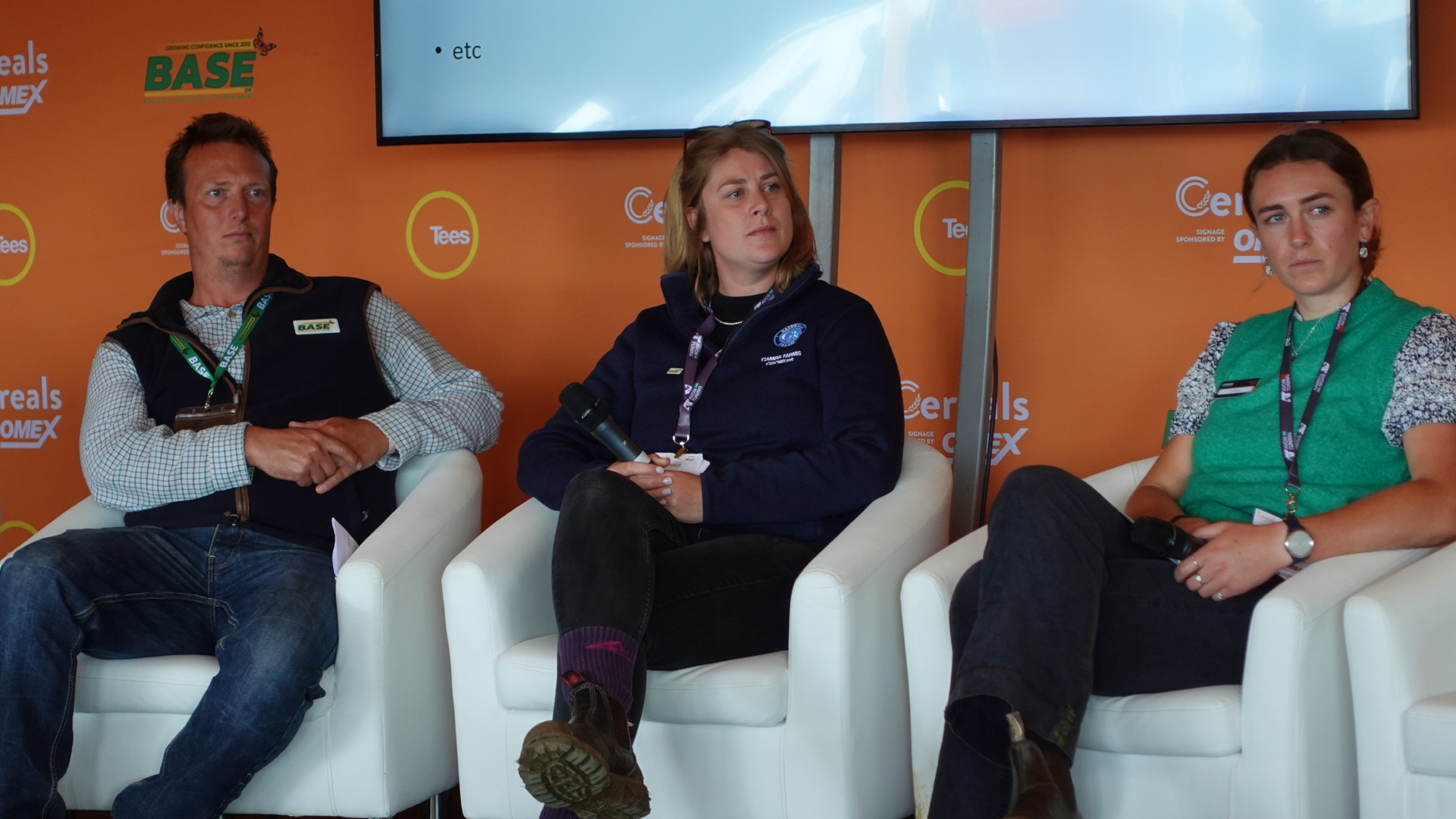
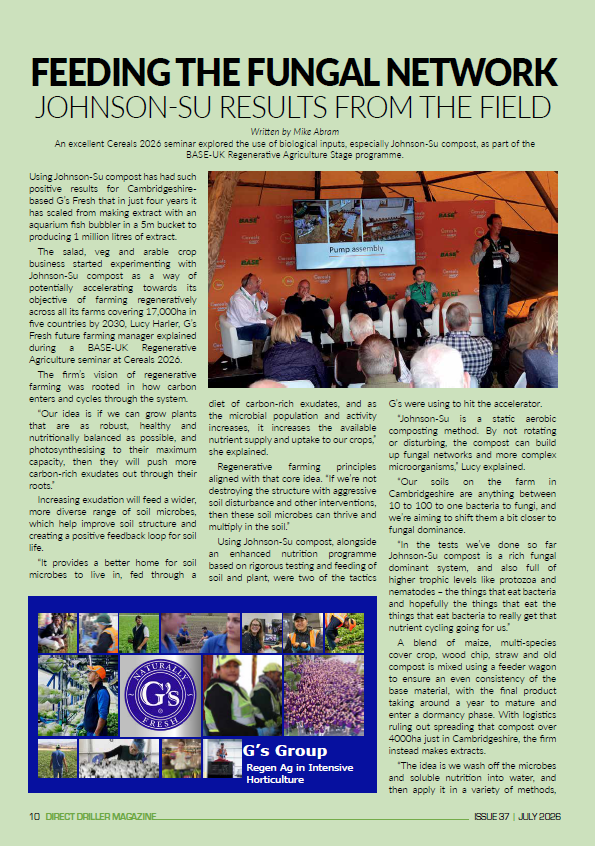
Listen to this article An excellent Cereals 2026 seminar explored the use of biological inputs, especially Johnson-Su compost, as part of the BASE-UK Regenerative Agriculture Stage programme.
Using Johnson-Su compost has had such positive results for Cambridgeshire-based G’s Fresh that in just four years it has scaled from making extract with an aquarium fish bubbler in a 5m bucket to producing 1 million litres of extract.
The salad, veg and arable crop business started experimenting with Johnson-Su compost as a way of potentially accelerating towards its objective of farming regeneratively across all its farms covering 17,000ha in five countries by 2030, Lucy Harler, G’s Fresh future farming manager explained during a BASE-UK Regenerative Agriculture seminar at Cereals 2026.
The firm’s vision of regenerative farming was rooted in how carbon enters and cycles through the system. “Our idea is if we can grow plants that are as robust, healthy and nutritionally balanced as possible, and photosynthesising to their maximum capacity, then they will push more carbon-rich exudates out through their roots.”
Increasing exudation will feed a wider, more diverse range of soil microbes, which help improve soil structure and creating a positive feedback loop for soil life.
“It provides a better home for soil microbes to live in, fed through a diet of carbon-rich exudates, and as the microbial population and activity increases, it increases the available nutrient supply and uptake to our crops,” she explained.
Regenerative farming principles aligned with that core idea. “If we’re not destroying the structure with aggressive soil disturbance and other interventions, then these soil microbes can thrive and multiply in the soil.”
Using Johnson-Su compost, alongside an enhanced nutrition programme based on rigorous testing and feeding of soil and plant, were two of the tactics G’s were using to hit the accelerator.
“Johnson-Su is a static aerobic composting method. By not rotating or disturbing, the compost can build up fungal networks and more complex microorganisms,” Lucy explained.
“Our soils on the farm in Cambridgeshire are anything between 10 to 100 to one bacteria to fungi, and we’re aiming to shift them a bit closer to fungal dominance.
“In the tests we’ve done so far Johnson-Su compost is a rich fungal dominant system, and also full of higher trophic levels like protozoa and nematodes – the things that eat bacteria and hopefully the things that eat the things that eat bacteria to really get that nutrient cycling going for us.”
A blend of maize, multi-species cover crop, wood chip, straw and old compost is mixed using a feeder wagon to ensure an even consistency of the base material, with the final product taking around a year to mature and enter a dormancy phase. With logistics ruling out spreading that compost over 4000ha just in Cambridgeshire, the firm instead makes extracts.
“The idea is we wash off the microbes and soluble nutrition into water, and then apply it in a variety of methods, wherever we’re putting disturbance into the system to give soils the material to recover,” Lucy said.
That included using it to wet the propagation blocks for salad crops, injected under the blocks when planted out, as a seed dressing on arable and cover crops, sprayed on when drilling onions, or as a side injection on the celery hoe.
Changing soil management from using cultivation as the primary tool to investing in biology had completely transitioned soil health, Lucy said.
In 2022, chemical imbalances including high magnesium levels left the soil prone to cracking in dry weather, while a lack of soil biology contributed poor soil structure and large clods following cultivation.
“Last year in another dry year on the same block, we had Johnson-Su treated overwintered cover crop followed by another Johnson-Su treated green manure, which was disced in very lightly before planting iceberg lettuce.”
Digs just before planting lettuce revealed visible fungal networks connecting the dying root of the overwintered cover crop with the living roots of the green manure, with another dig 10 days after planting lettuce showing the emerging lettuce roots interacting directly with the fungal network.
“That iceberg lettuce crop was one of the highest yielding on the farm last year from just 40 kg/ha of synthetic nitrogen fertiliser – a 65% reduction from four years ago.”
The business has rapidly scaled its use of Johnson-Su in just four years to the extent it is used on all crops grown by the business. “We saw positive responses virtually everywhere so have gone from a few small plots in year one to 70,000 litres in year two, 600,000 litres last year and this year an aim to reach 1 million litres.”
Similarly positive results have been seen in other crops. “In potatoes we’ve seen an increase in tuber numbers and tuber evenness,” she noted.
Cereals and cover crops were last to be tested with Johnson-Su. G’s have found the easiest way to treat large areas quickly is to make the sold compost into a slurry and using it as a seed treatment.
“But comparing treated seed with some drilled without and you can immediately see the impact with biology being recruited to the emerging root tips. It gets completely colonised, big rhizosheaths and a dreadlock effect on the root.”
Another observation is a difference in how crops treated with Johnson-Su extract partition their energy. “We’ve noticed crops put more energy into building its root system and are slower to emerge,” Lucy reported.
That led to some internal discussion about whether early nutrition, for example, was needed, but the answer was relearning crop growth curves. “They grow differently putting energy below ground, which later pays itself back and they catch up.”
More in-depth research has started with the help of funding from a retailer to help with understanding of the impact of Johnson-Su and cover crops on the soil microbiome.
“It’s a five-year trial comparing impacts on combinations of the two across six different trial conditions,” she said. “We’re using metabolic coding to understand the impact on the microbiome along with other measures, such as PLFA test, visual soil assessments and other soil emissions.”
But a trial with red gem lettuces was perhaps the evidence the business needed to take the next step and start making significant reductions in plant protection products, Lucy said.
In the trials propagation blocks wetted with Johnson-Su extract showed better head fill, uniformity and packet quality, with treated plants more vibrant with deeper red colour and shinier leaves – something Lucy attributes to higher levels of plant health.
“If you’re familiar with John Kempf’s plant health pyramid idea – we can see if we have got nutrition right pretty easily in our sap test results, but evidencing the higher levels of plant health, lipid synthesis and secondary metabolites is quite difficult.
“But that’s what we think the difference was between these lettuces as the only change was that we wetted some of the blocks in Johnson-Su extract.
“Showing that we have really healthy, vibrant plants that are reaching those higher levels on the plant health pyramid and becoming resistant to fungal pathogens is exactly what we need to continue progressing and change the current feeling that the risk of reducing insecticide and fungicide programmes is a little bit greater than the reward,” she concluded.
G’s experience inspires Northants farm
When a forward-thinking business such as G’s Fresh fully embraces a new and sometimes controversial technology like Johnson-Su composting, it can be enough to encourage others to test in on farm.
That’s exactly what happened at FRW Farrington & Son, home to the Mellow Yellow range of cold-pressed rapeseed oil products, based at Hargrave in Northamptonshire.
Despite a very keen eye on sustainability – Farrington’s Mellow Yellow Rapeseed oil was the world’s first food product to be certified as both carbon and plastic neutral – the farm had sat on the fence about using compost until farm owner Duncan Farrington visited G’s, explained farm manager Stuart Tabernor.
“He came back and told me we’re doing compost. I’ve seen it working and I want you to go down that route,” he said.
The only problem, although maybe not surprising, was the budget was basically zero.
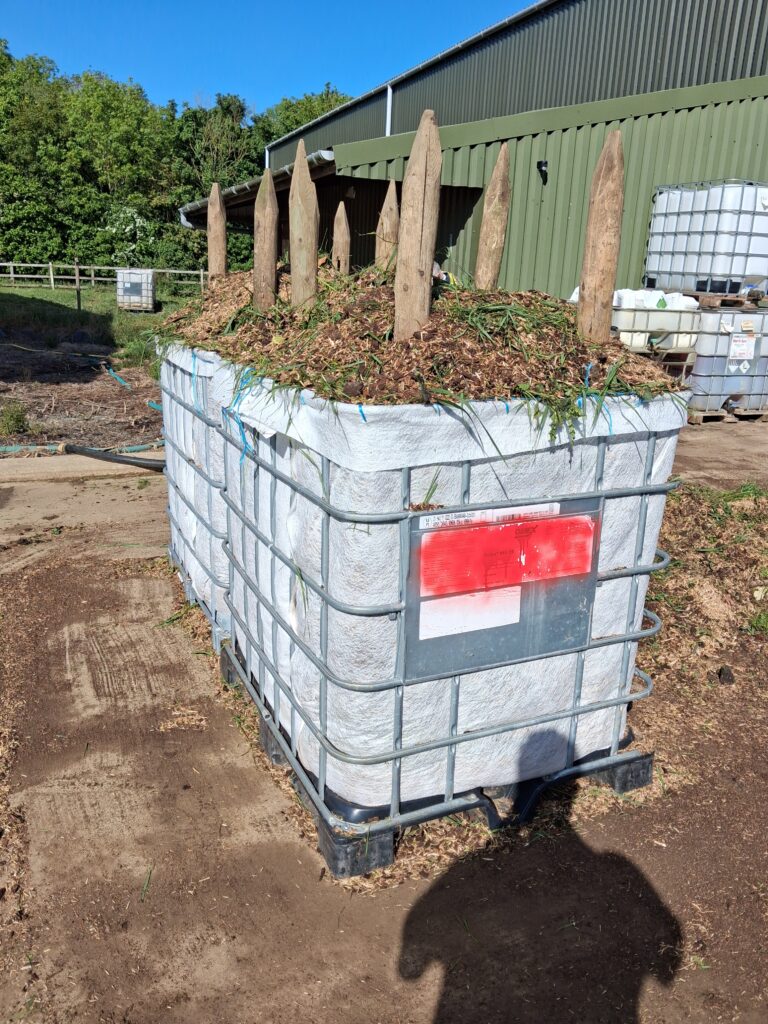
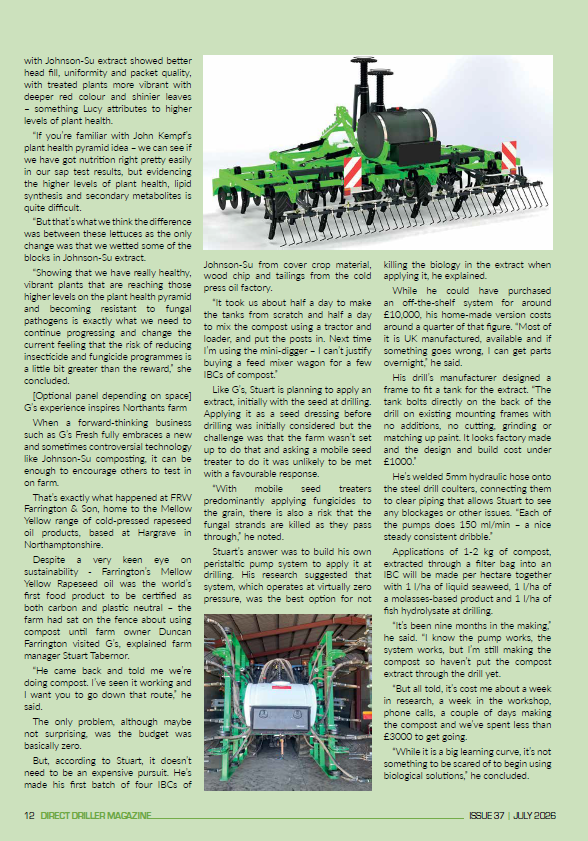
But, according to Stuart, it doesn’t need to be an expensive pursuit. He’s made his first batch of four IBCs of Johnson-Su from cover crop material, wood chip and tailings from the cold press oil factory.
“It took us about half a day to make the tanks from scratch and half a day to mix the compost using a tractor and loader, and put the posts in. Next time I’m using the mini-digger – I can’t justify buying a feed mixer wagon for a few IBCs of compost.”
Like G’s, Stuart is planning to apply an extract, initially with the seed at drilling. Applying it as a seed dressing before drilling was initially considered but the challenge was that the farm wasn’t set up to do that and asking a mobile seed treater to do it was unlikely to be met with a favourable response.
“With mobile seed treaters predominantly applying fungicides to the grain, there is also a risk that the fungal strands are killed as they pass through,” he noted.
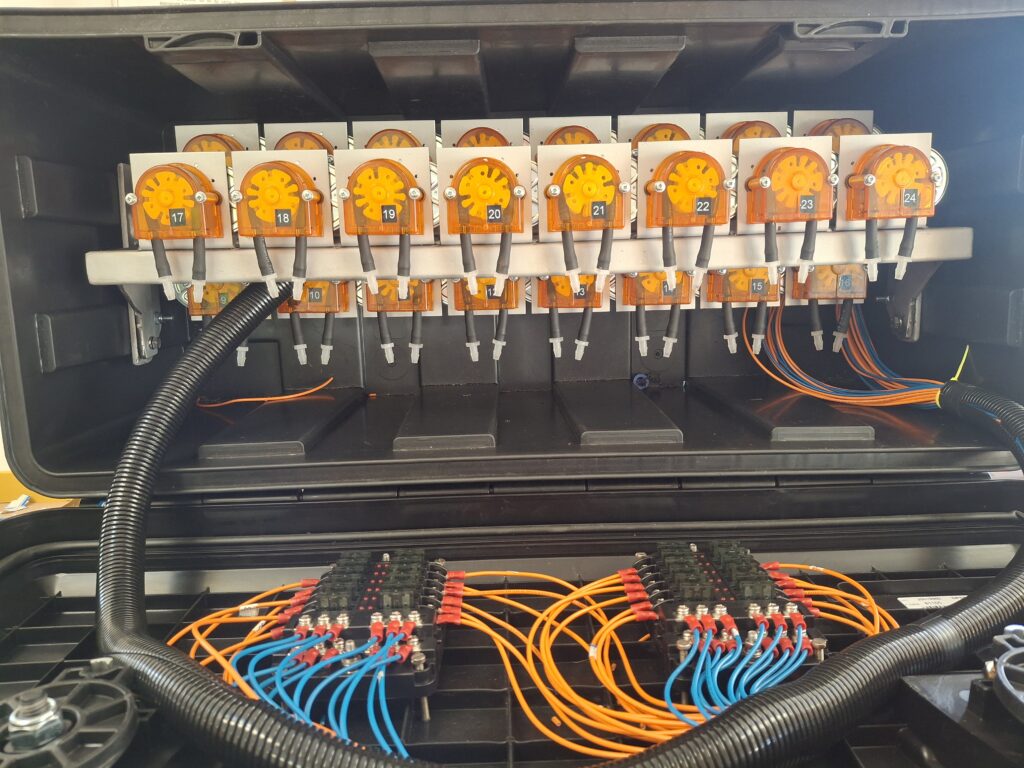
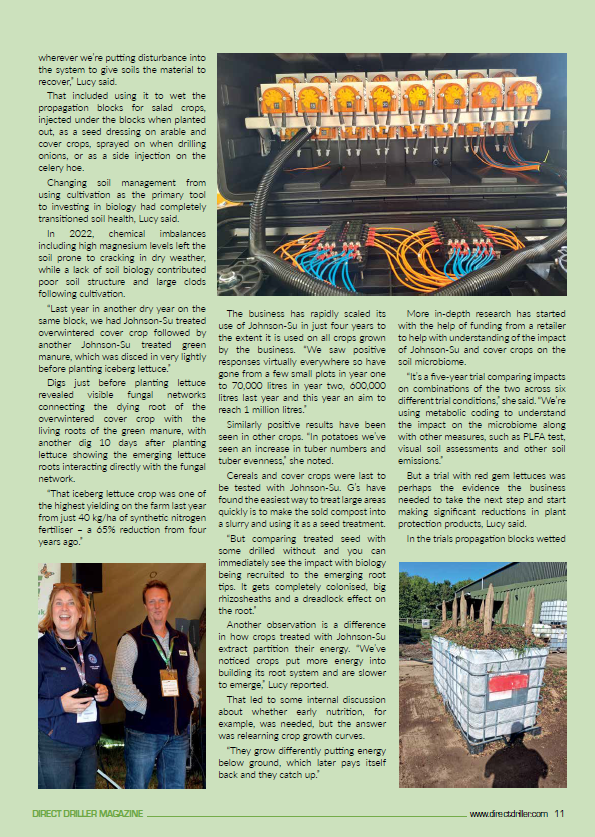
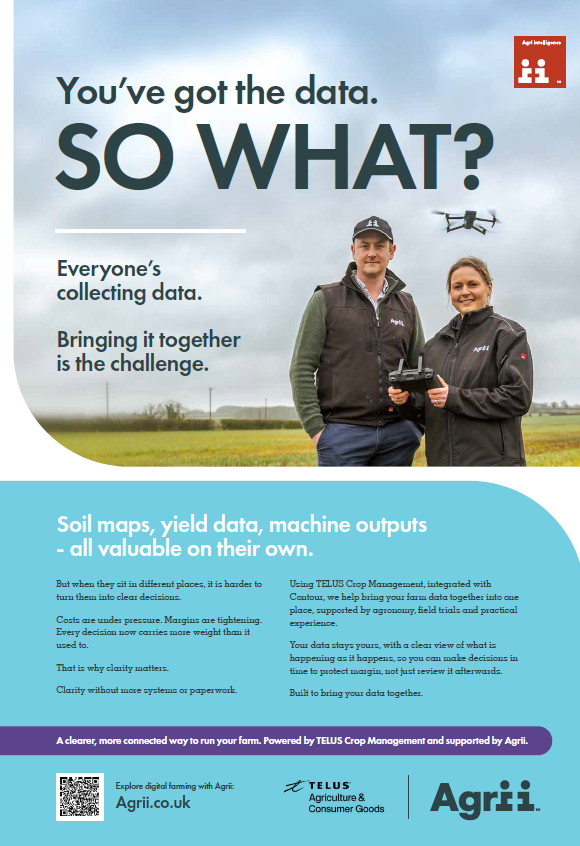
Stuart’s answer was to build his own peristaltic pump system to apply it at drilling. His research suggested that system, which operates at virtually zero pressure, was the best option for not killing the biology in the extract when applying it, he explained.
While he could have purchased an off-the-shelf system for around £10,000, his home-made version costs around a quarter of that figure. “Most of it is UK manufactured, available and if something goes wrong, I can get parts overnight,” he said.
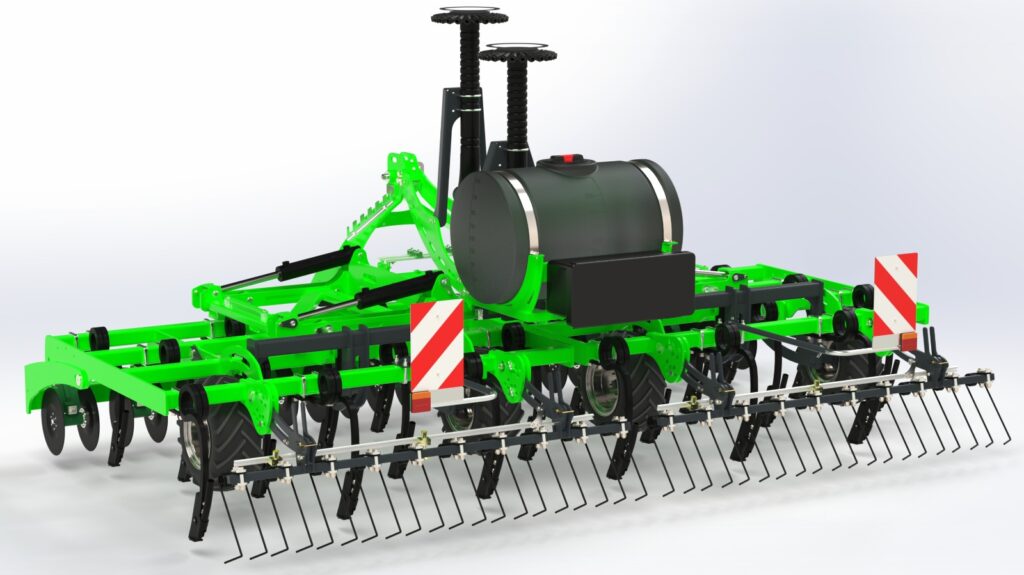
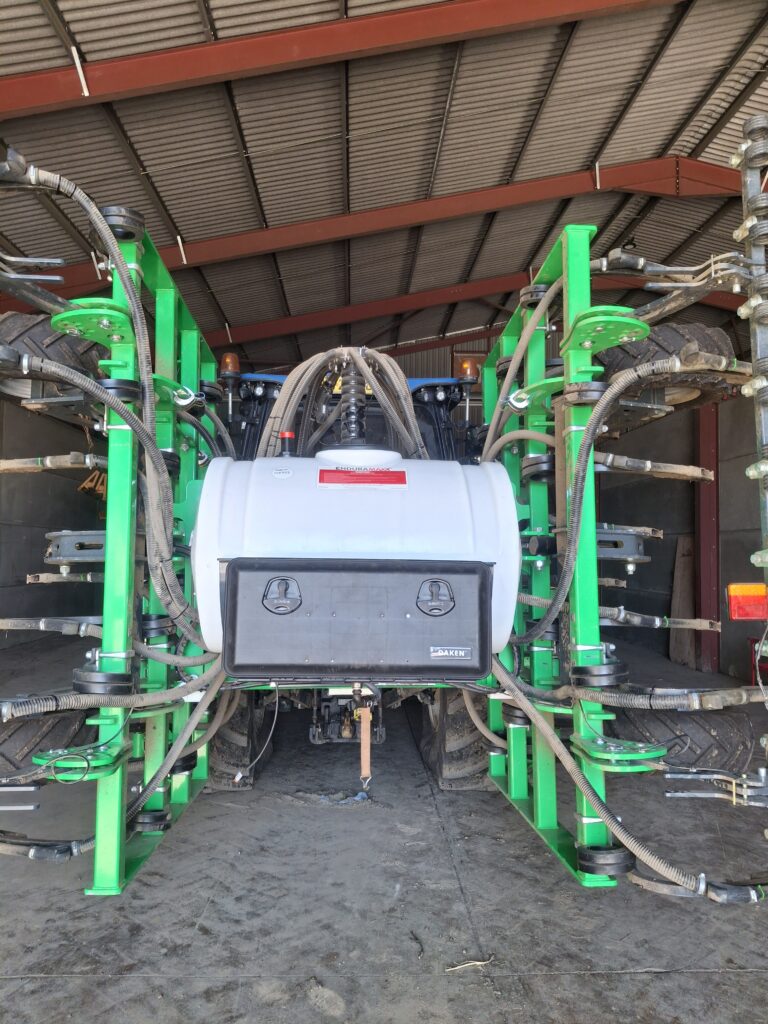
His drill’s manufacturer designed a frame to fit a tank for the extract. “The tank bolts directly on the back of the drill on existing mounting frames with no additions, no cutting, grinding or matching up paint. It looks factory made and the design and build cost under £1000.”
He’s welded 5mm hydraulic hose onto the steel drill coulters, connecting them to clear piping that allows Stuart to see any blockages or other issues. “Each of the pumps does 150 ml/min – a nice steady consistent dribble.”
Applications of 1-2 kg of compost, extracted through a filter bag into an IBC will be made per hectare together with 1 l/ha of liquid seaweed, 1 l/ha of a molasses-based product and 1 l/ha of fish hydrolysate at drilling.
“It’s been nine months in the making,” he said. “I know the pump works, the system works, but I’m still making the compost so haven’t put the compost extract through the drill yet.
“But all told, it’s cost me about a week in research, a week in the workshop, phone calls, a couple of days making the compost and we’ve spent less than £3000 to get going.
“While it is a big learning curve, it’s not something to be scared of to begin using biological solutions,” he concluded.
-
Farmer Focus – Ben Martin
Listen to this article Listen to this article My last session of the day at this year’s Groundswell brought me back down to earth with a bump….
The session, The Problem of Labour, looked at the exploitation of migrant and short-term labourers on British farms and how the alternative agriculture sector can be part of the solution.
We heard an excellent panel discuss real-life examples of horrendous living conditions seasonal labourers have experienced on UK farms recently.
Not just living conditions, but ridiculous working hours, poor welfare facilities and sometimes changes to terms without communicating to the workers.
A mentor of mine once said to me, “If the accommodation you’re offering isn’t good enough for your son or daughter to live in, it’s not good enough for anyone else.”
It was a sobering session to say the least, especially after the positivity, smiles and community feel I had witnessed (again) at Groundswell this year.
But I do feel that it was right to hold the session at the festival; these more niche sessions hold the most value to me personally, and I am not sure where else in UK Ag they can get the same sort of platform.
I also think that the general farming Groundswell ticket buyer can do (and is doing) such good work in this area. They are putting so much effort, time and money into improving their soils and nature on their farms; it goes without saying that the same level of commitment is going into their people as well…. doesn’t it?
After all, if we want to grow products that we are proud of, ensuring the people who plant, pick, process and pack those crops are treated fairly must be a top priority.
Details on this session can be found on the Groundswell website.
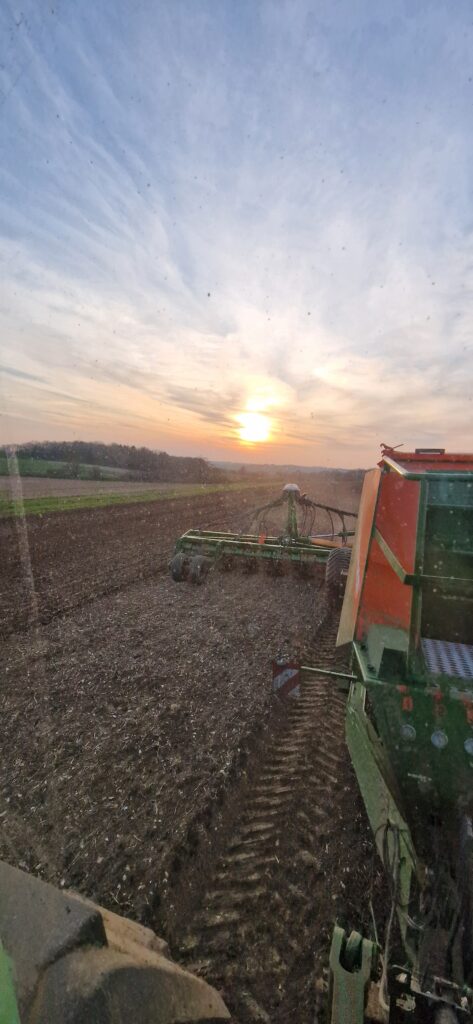
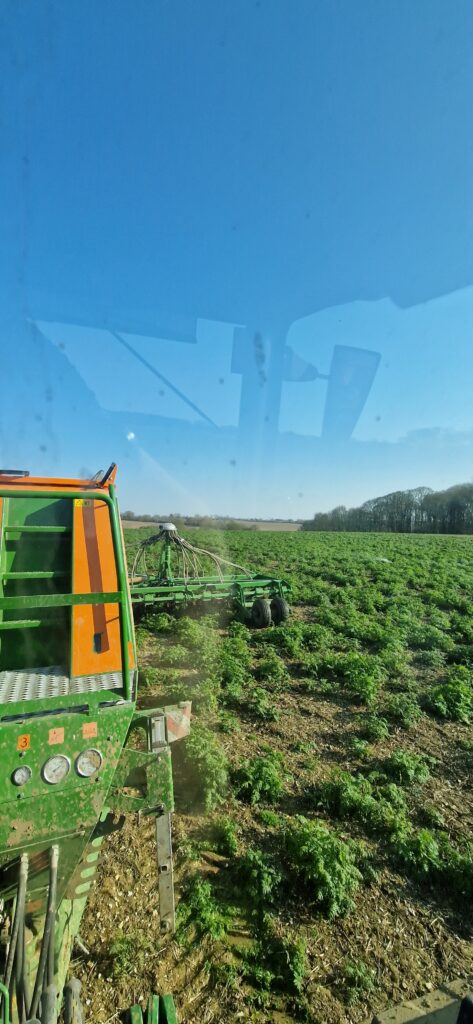
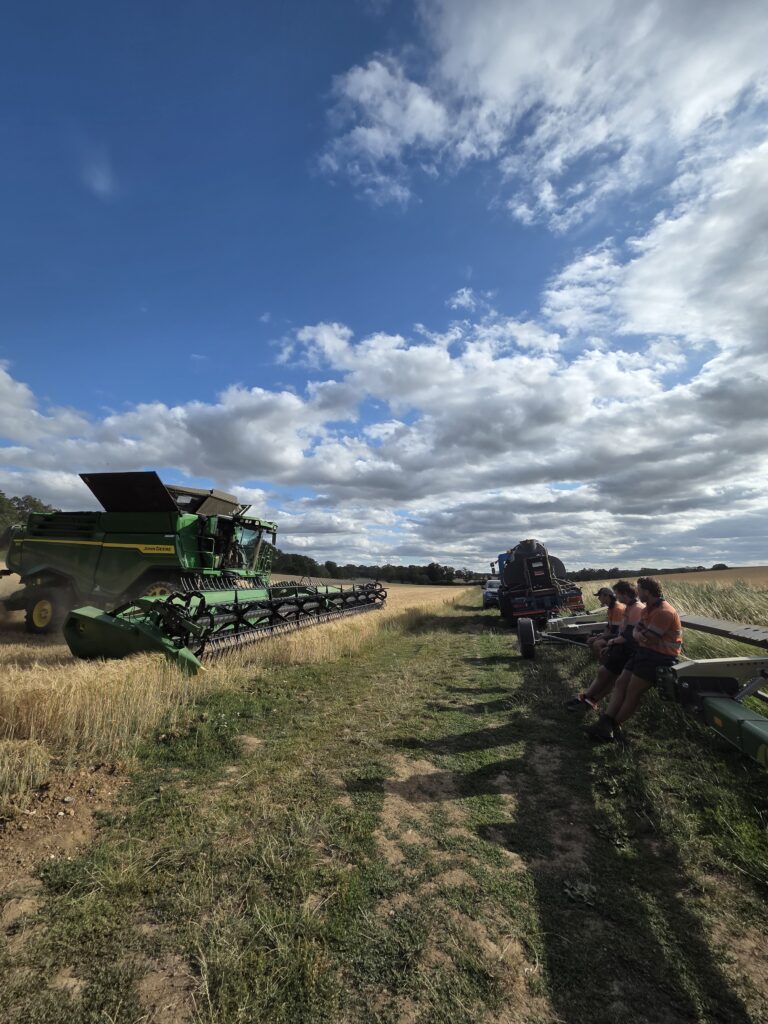
On the farm, harvest is progressing very well indeed – it’s the furthest ahead I have ever been with harvest at this time of year. I’m easily achieving 160-hectare combining days, helped by the early-morning starts and not needing to worry about moistures, etc!
The second heatwave we had in June seemed to be the point where crops said enough is enough and shut down. Of course, the long dry spring/summer has really hit the yield potential of these crops. They looked so good coming out of the winter, but that heatwave was the final straw.
Winter wheat on heavier ground is holding its own; lighter land has really suffered. Even in a single field, we have seen huge variations in yield depending on the soil types.
I do think the spring barley will be a reasonable crop; we will see in the next few days once the combine gets stuck into it. I am convinced the system we put in place to establish spring cereals goes a long way in preserving moisture and giving the crop the best chance in dry years.
No soil movement is done in the spring. Instead, we cultivate (where needed) and seed a cover crop in the summer. This is then drilled straight into some seven or eight months later with the Condor, Avatar and finer drills.
Despite the poorer yields, I want to wish everyone a safe and fun harvest. Try and enjoy it; it’s a special time of year and must still be celebrated for what it is – a result of everyone’s hard work during the past year.
[email protected]
ig – @thriveinfarming
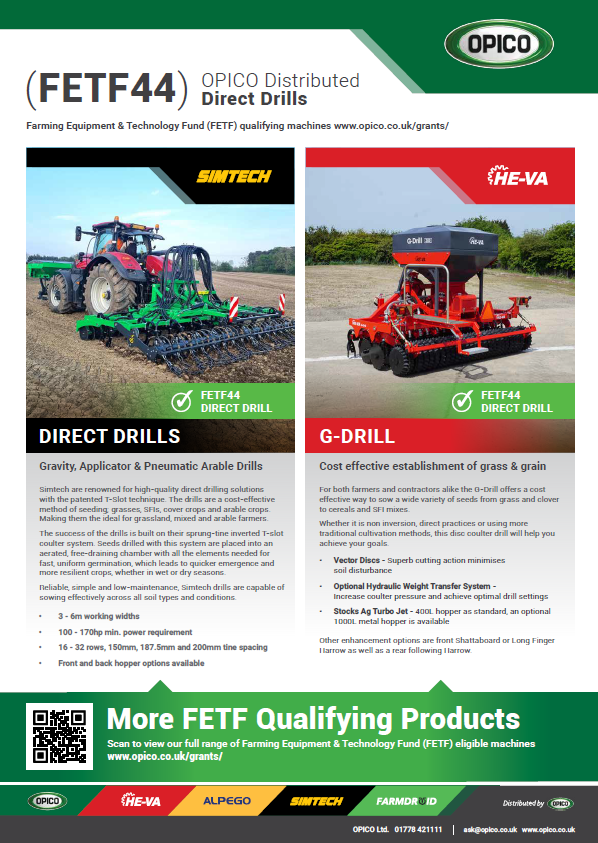
-

Forty Years of Worcester Innovation: Inside Weaving Machinery’s New Evesham Facility
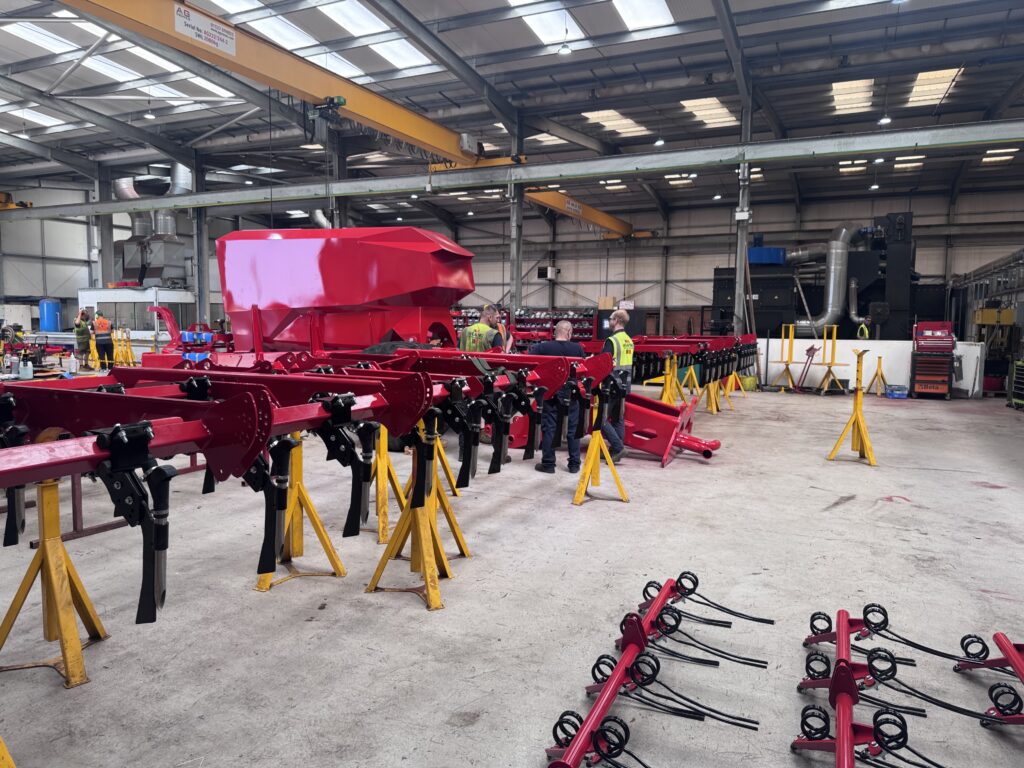
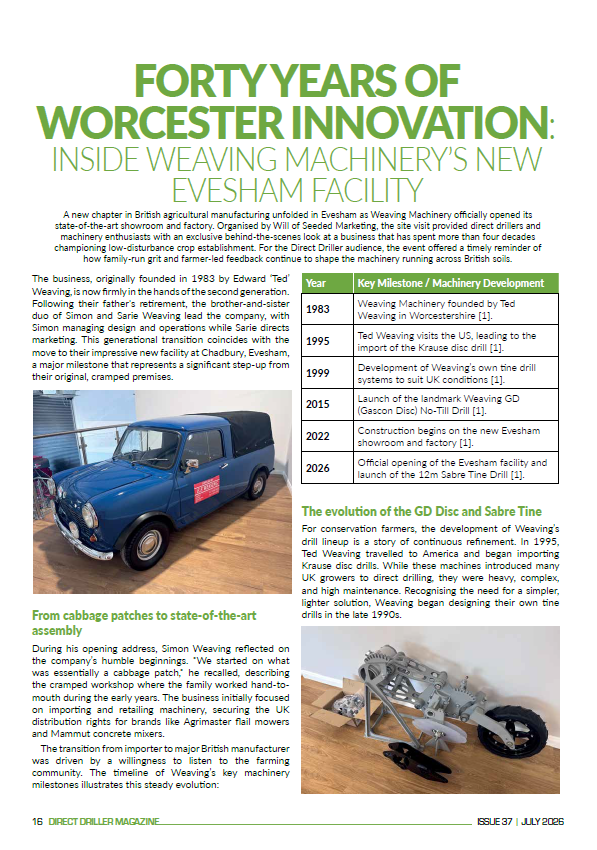
Listen to this article A new chapter in British agricultural manufacturing unfolded in Evesham as Weaving Machinery officially opened its state-of-the-art showroom and factory. Organised by Will of Seeded Marketing, the site visit provided direct drillers and machinery enthusiasts with an exclusive behind-the-scenes look at a business that has spent more than four decades championing low-disturbance crop establishment. For the Direct Driller audience, the event offered a timely reminder of how family-run grit and farmer-led feedback continue to shape the machinery running across British soils.
The business, originally founded in 1983 by Edward ‘Ted’ Weaving, is now firmly in the hands of the second generation. Following their father’s retirement, the brother-and-sister duo of Simon and Sarie Weaving lead the company, with Simon managing design and operations while Sarie directs marketing. This generational transition coincides with the move to their impressive new facility at Chadbury, Evesham, a major milestone that represents a significant step-up from their original, cramped premises.
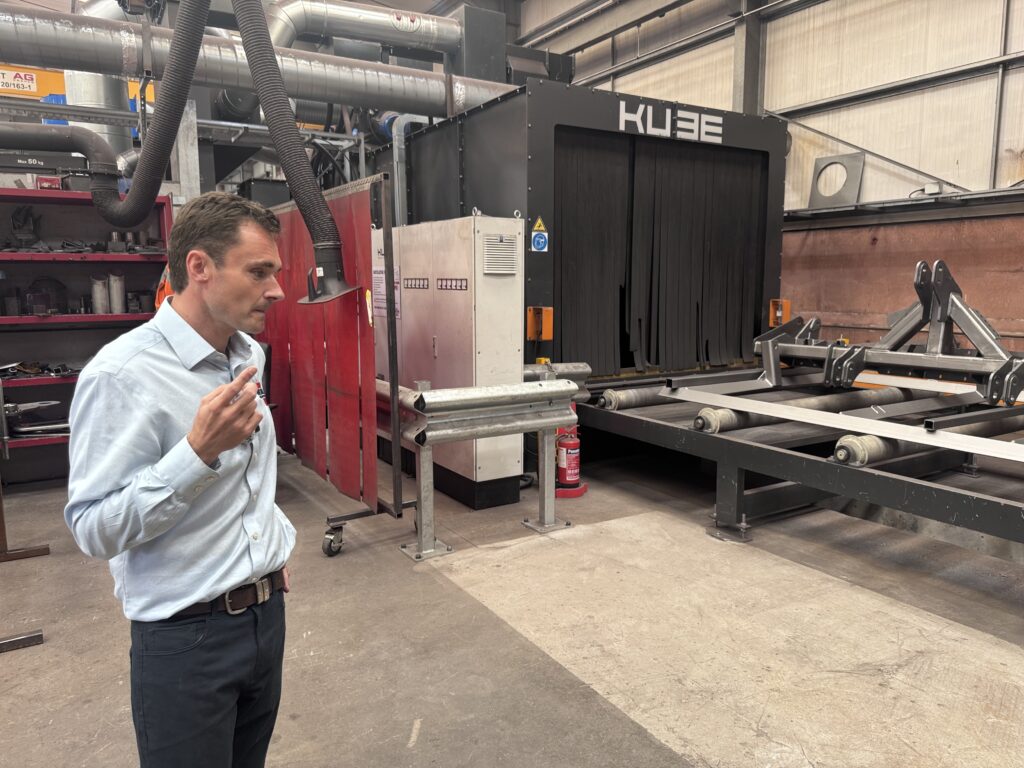
From cabbage patches to state-of-the-art assembly
During his opening address, Simon Weaving reflected on the company’s humble beginnings. “We started on what was essentially a cabbage patch,” he recalled, describing the cramped workshop where the family worked hand-to-mouth during the early years. The business initially focused on importing and retailing machinery, securing the UK distribution rights for brands like Agrimaster flail mowers and Mammut concrete mixers.
The transition from importer to major British manufacturer was driven by a willingness to listen to the farming community. The timeline of Weaving’s key machinery milestones illustrates this steady evolution:
1983 – Weaving Machinery founded by Ted Weaving in Worcestershire.
1995 – Ted Weaving visits the US, leading to the import of the Krause disc drill.
1999 – Development of Weaving’s own tine drill systems to suit UK conditions.
2015 – Launch of the landmark Weaving GD (Gascon Disc) No-Till Drill.
2022 – Construction begins on the new Evesham showroom and factory.
2026 – Official opening of the Evesham facility and launch of the 12m Sabre Tine Drill.
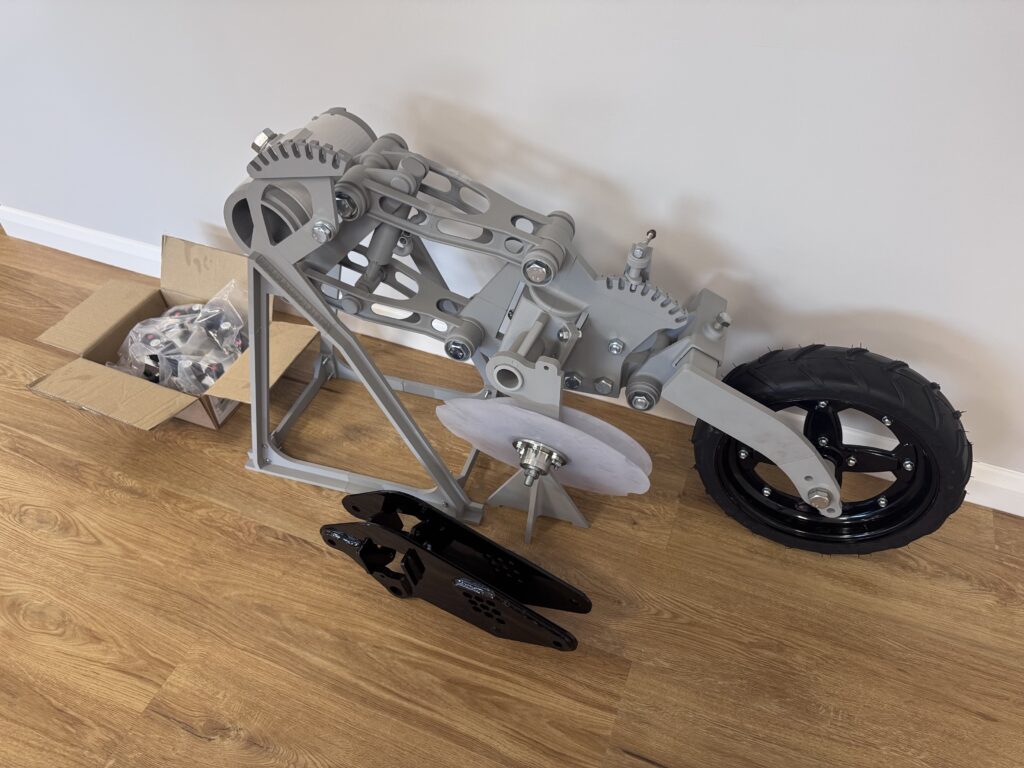
The evolution of the GD Disc and Sabre Tine
For conservation farmers, the development of Weaving’s drill lineup is a story of continuous refinement. In 1995, Ted Weaving travelled to America and began importing Krause disc drills. While these machines introduced many UK growers to direct drilling, they were heavy, complex, and high maintenance. Recognising the need for a simpler, lighter solution, Weaving began designing their own tine drills in the late 1990s.
The real breakthrough came with the development of the Weaving GD (Gascon Disc) drill, launched in 2015. The concept was heavily influenced by Tony Gent, a pioneering Lincolnshire farmer and regular contributor to Direct Driller Magazine. Gent, who had worked closely with no-till pioneer Tony Reynolds, had experienced persistent bearing and hairpinning issues with traditional double-disc setups. He conceived the idea of an angled single disc that lifts a flap of soil, places the seed and lets the soil fall back into place without exposing the slot.
Weaving took Gent’s patented angled disc design and spent years refining it into a commercial reality. The resulting GD coulter system runs at a double angle (25 degrees vertical and 5 degrees horizontal), reducing draft requirements and minimising soil disturbance.
The success of this design is evident on The Farming Forum, where the Weaving GD User Thread has run continuously since 2016, spanning over 80 pages of practical, farmer-to-farmer advice. Rather than ignoring online criticism, Simon Weaving credits this very thread as a vital research and development tool. “We read the forum to see what farmers don’t like and what we need to improve,” Weaving admitted. This feedback loop has directly influenced the latest iterations of both the GD Disc and the Sabre Tine drills, including the massive new 12-metre Sabre drill showcased on the factory floor.
The new Evesham site itself is designed to showcase this breadth of engineering. Visitors entering the modern, two-story office block are greeted by an unusual sight: a classic blue Mini pickup truck parked on the first floor, suspended some 20 feet above the main showroom floor. It stands as a quirky testament to the family’s mechanical passion and unconventional engineering spirit.
During the opening tour, prominent Lincolnshire farmer Andrew Ward MBE questioned Simon Weaving on how the family’s own local farming operations influence their machinery designs. Weaving explained that they actively farm land locally, testing new cover crop mixes, companion cropping, and direct drilling techniques firsthand. This hands-on experience ensures that the machinery built in Evesham is designed by farmers, for farmers.
A diversified Worcestershire business
While seed drills remain the flagship products for conservation growers, Weaving’s new facility highlights a surprisingly diverse business. Beyond tillage, the company continues to do a brisk trade in Mammut tractor-mounted concrete mixers and their own line of commercial and agricultural sliding electric gates.
As the agricultural sector faces ongoing economic and environmental pressures, Weaving’s massive investment in British manufacturing is a bold vote of confidence. By keeping assembly local, maintaining a massive stock of over 7,000 spare parts and keeping their pricing transparently listed online, the Weaving family has built a business that feels uniquely aligned with the practical realities of modern British farming.
-
A ‘Perfect Storm’ for Farming is Encouraging Many Businesses to Re-Evaluate Their Approach
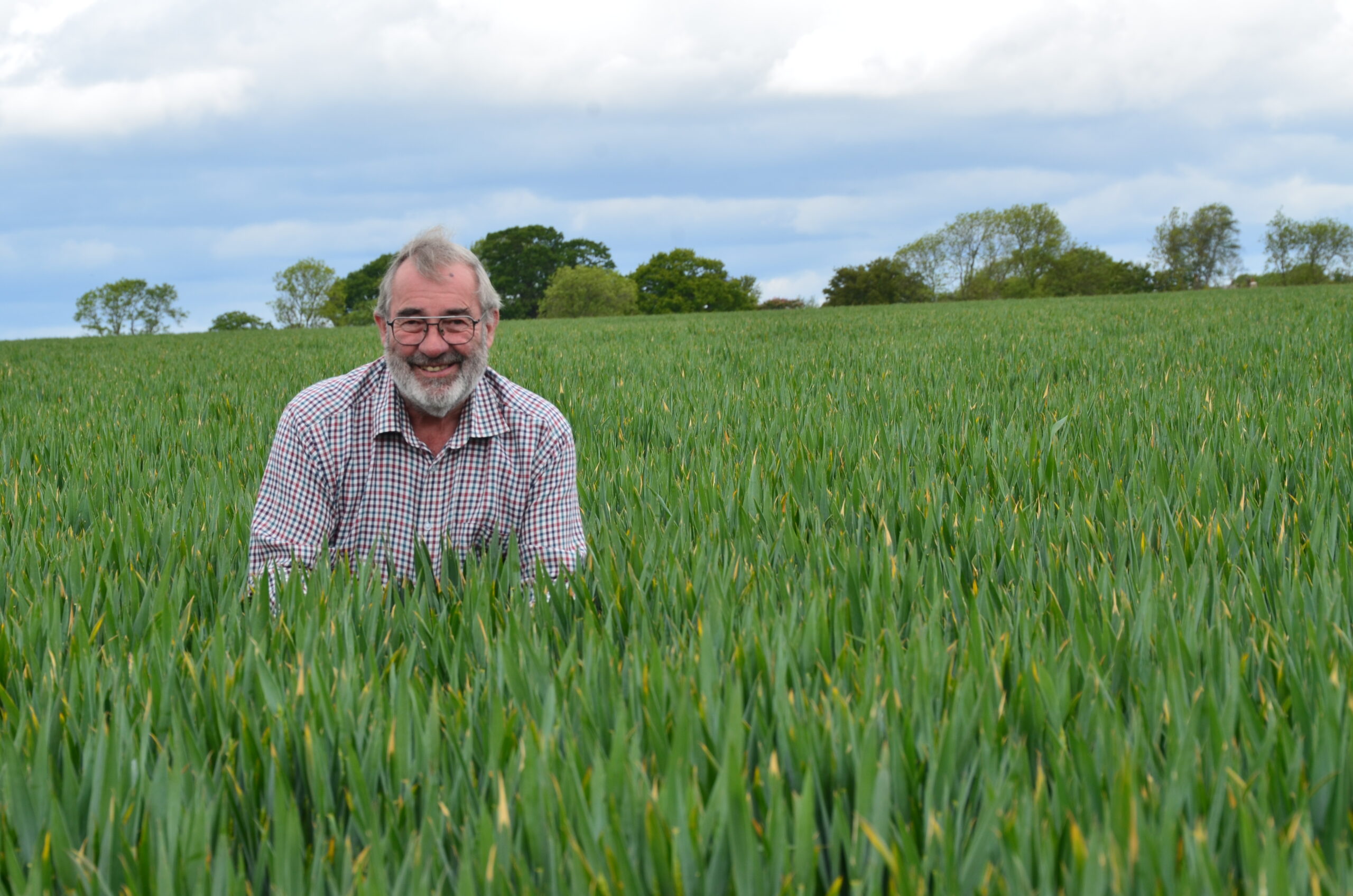
Listen to this article The farming sector is confronted by a ‘perfect storm’ in terms of the challenges which it faces, with many businesses now at a point where they need to make major operational changes to remain competitive, says Suffolk arable farmer Jeff Claydon.
Rethink Everything
22 May 2026
When I drafted my last article for Direct Driller on 23 February it had rained almost every day since the start of the year. The prolonged dull, drab conditions meant little field work had taken place on our farm and my evident frustration probably reflected what everyone was feeling at that time.
Ironically, since then we’ve had precious little rain, mostly in the form of brief showers following which the water evaporated quickly and provided little benefit to growing crops. By T0 all 80,000 litres of rainwater in our storage tanks had been used for spraying, which has never happened before. It only takes 30mm of rainfall to replenish them, but since then we have harvested just 18m3 from the 2660m2 factory roof, which equates to 6mm. Drawing from the mains, at considerable cost, has been the only option.
No-one questions that the farming industry is facing tough times. The combination of low commodity prices, rising fuel, fertiliser and other input costs, volatile markets, increasing environmental pressure, dry weather, political interference, lack of BPS payments, rising interest rates and more onerous requirements for credit are making everyone apprehensive. Unsurprisingly, farming businesses are considering their budgets very carefully and reluctant to invest, but that will be essential to remain competitive.
The question is what to do about it? Roll over and sell up, bury your head in the sand, pretend it’s not happening and hope it all goes away, or look for ways to turn things around? Farming will never be easy and currently there’s little financial room for manoeuvre as the margins are not there. But for those willing to address the current challenges, open their eyes and make changes this is a time of opportunity.
The need for change is highlighted by AHDB and Agri Benchmark figures which show that the five-year average variable costs of growing wheat in the UK is the highest amongst our global competitors. More than double that of Argentina, Australia and Ukraine, it is also £100-£180/ha higher than Denmark, France and Germany. Long gone are the days when a tonne of wheat would pay a farm manager’s wages for a week!
In an era when sticking to tradition without questioning it is no longer a safe bet, rethinking your establishment system could help to reduce costs significantly. Every farm is different, every situation is different, but one theme remains constant – change nothing and nothing changes. By questioning, trialling and taking that leap towards a system which works with nature, not against it, you don’t have to choose between productivity and sustainability – you can have both.
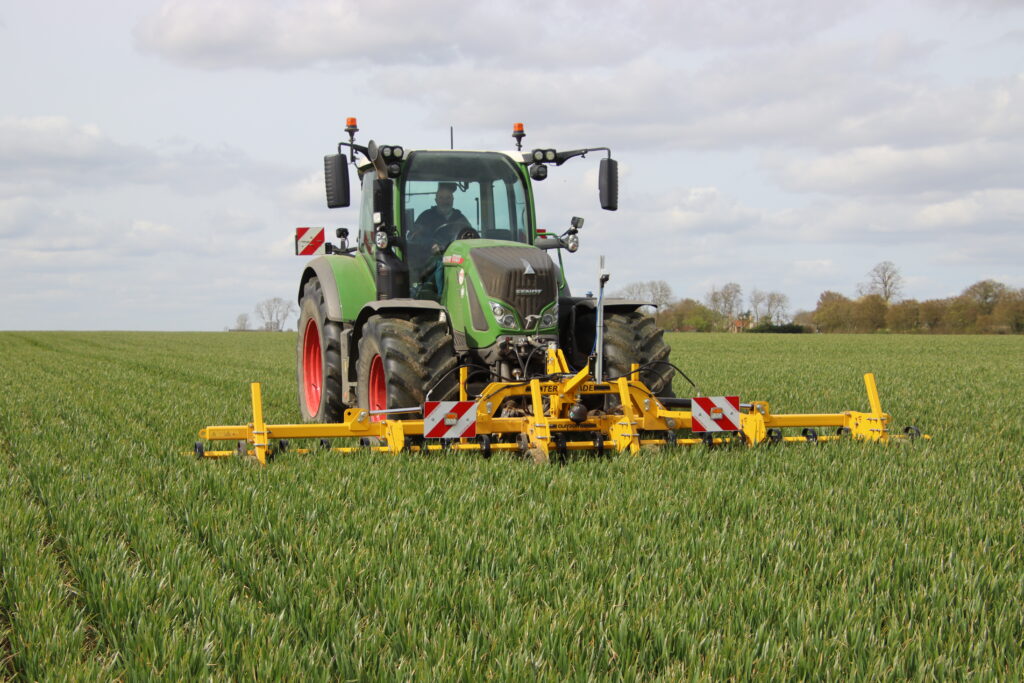
It’s never been more important to work smarter, not harder and as a family farming business I and my sons, Oliver and Spencer, understand that from first-hand experience. Our goal for the Claydon farm is to remain profitable, even before government funding, and the bottom line is that, before subsidies, which are becoming more of an unknown quantity, we have achieved that every year for 24 years.
Our aim is to produce high yields as economically as possible and Claydon Opti-Till®, the solution which I developed in 2002 to greatly reduce establishment costs, still works successfully today, getting better year-on-year. Over that time we’ve made mistakes, and we’re still learning, but we continue to change, adapt and refine the process.
A one-pass direct crop establishment system which delivers practical solutions to today’s most pressing issues, Opti-Till® reduces fuel usage, lowers input costs, saves time and improves performance, soil health and yields, our top priority. By enhancing soil biology and reducing erosion, it also helps to meet environmental goals and stewardship requirements while building a more sustainable, profitable business.
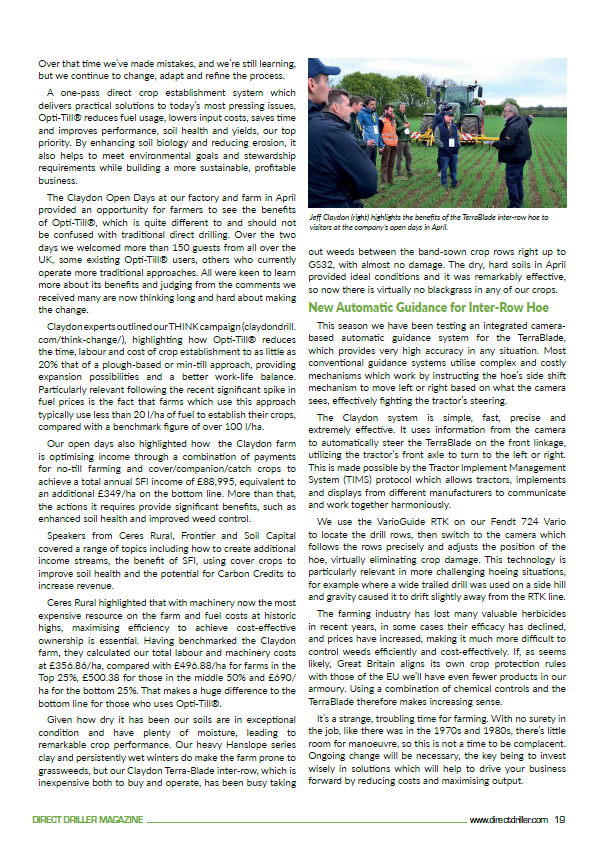
The Claydon Open Days at our factory and farm in April provided an opportunity for farmers to see the benefits of Opti-Till®, which is quite different to and should not be confused with traditional direct drilling. Over the two days we welcomed more than 150 guests from all over the UK, some existing Opti-Till® users, others who currently operate more traditional approaches. All were keen to learn more about its benefits and judging from the comments we received many are now thinking long and hard about making the change.
Claydon experts outlined our THINK campaign (claydondrill.com/think-change/), highlighting how Opti-Till® reduces the time, labour and cost of crop establishment to as little as 20% that of a plough-based or min-till approach, providing expansion possibilities and a better work-life balance. Particularly relevant following the recent significant spike in fuel prices is the fact that farms which use this approach typically use less than 20 l/ha of fuel to establish their crops, compared with a benchmark figure of over 100 l/ha.
Our open days also highlighted how the Claydon farm is optimising income through a combination of payments for no-till farming and cover/companion/catch crops to achieve a total annual SFI income of £88,995, equivalent to an additional £349/ha on the bottom line. More than that, the actions it requires provide significant benefits, such as enhanced soil health and improved weed control.
Speakers from Ceres Rural, Frontier and Soil Capital covered a range of topics including how to create additional income streams, the benefit of SFI, using cover crops to improve soil health and the potential for Carbon Credits to increase revenue.
Ceres Rural highlighted that with machinery now the most expensive resource on the farm and fuel costs at historic highs, maximising efficiency to achieve cost-effective ownership is essential. Having benchmarked the Claydon farm, they calculated our total labour and machinery costs at £356.86/ha, compared with £496.88/ha for farms in the Top 25%, £500.38 for those in the middle 50% and £690/ha for the bottom 25%. That makes a huge difference to the bottom line for those who uses Opti-Till®.
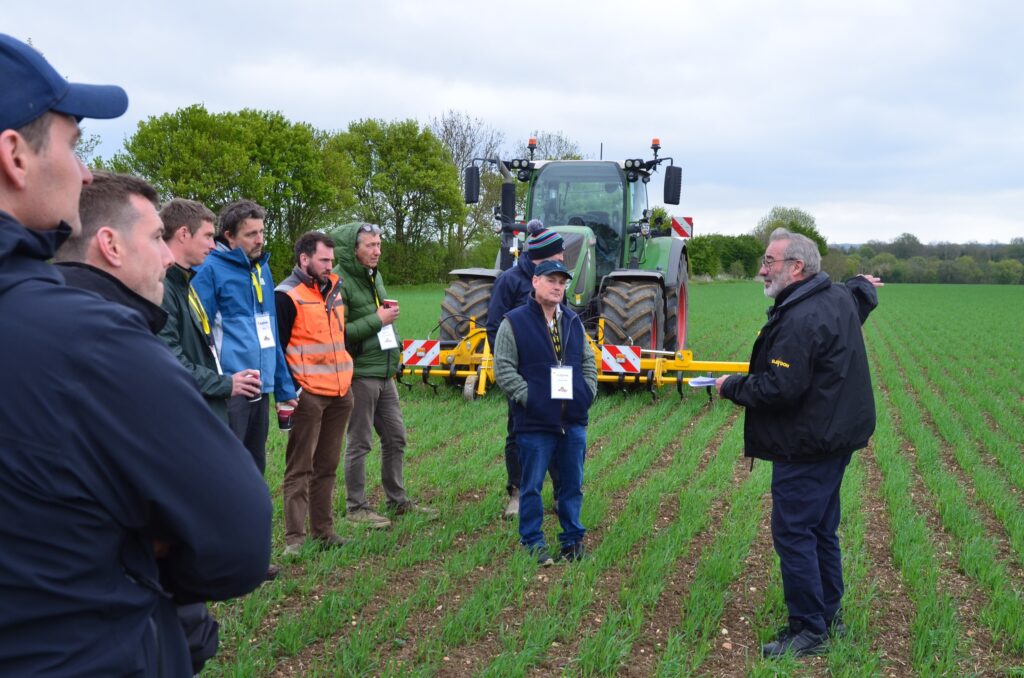
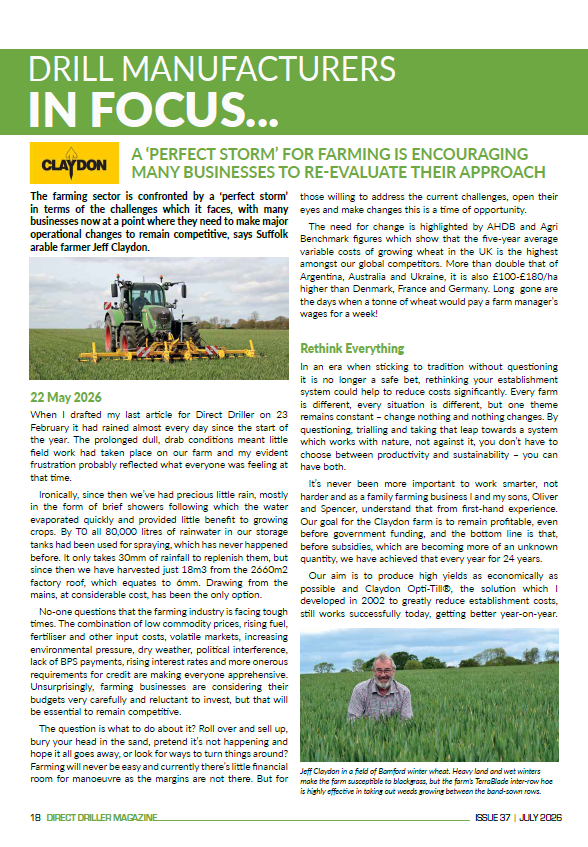
Given how dry it has been our soils are in exceptional condition and have plenty of moisture, leading to remarkable crop performance. Our heavy Hanslope series clay and persistently wet winters do make the farm prone to grassweeds, but our Claydon Terra-Blade inter-row, which is inexpensive both to buy and operate, has been busy taking out weeds between the band-sown crop rows right up to GS32, with almost no damage. The dry, hard soils in April provided ideal conditions and it was remarkably effective, so now there is virtually no blackgrass in any of our crops.
New Automatic Guidance for Inter-Row Hoe
This season we have been testing an integrated camera-based automatic guidance system for the TerraBlade, which provides very high accuracy in any situation. Most conventional guidance systems utilise complex and costly mechanisms which work by instructing the hoe’s side shift mechanism to move left or right based on what the camera sees, effectively fighting the tractor’s steering.
The Claydon system is simple, fast, precise and extremely effective. It uses information from the camera to automatically steer the TerraBlade on the front linkage, utilizing the tractor’s front axle to turn to the left or right. This is made possible by the Tractor Implement Management System (TIMS) protocol which allows tractors, implements and displays from different manufacturers to communicate and work together harmoniously.
We use the VarioGuide RTK on our Fendt 724 Vario to locate the drill rows, then switch to the camera which follows the rows precisely and adjusts the position of the hoe, virtually eliminating crop damage. This technology is particularly relevant in more challenging hoeing situations, for example where a wide trailed drill was used on a side hill and gravity caused it to drift slightly away from the RTK line.
The farming industry has lost many valuable herbicides in recent years, in some cases their efficacy has declined, and prices have increased, making it much more difficult to control weeds efficiently and cost-effectively. If, as seems likely, Great Britain aligns its own crop protection rules with those of the EU we’ll have even fewer products in our armoury. Using a combination of chemical controls and the TerraBlade therefore makes increasing sense.
It’s a strange, troubling time for farming. With no surety in the job, like there was in the 1970s and 1980s, there’s little room for manoeuvre, so this is not a time to be complacent. Ongoing change will be necessary, the key being to invest wisely in solutions which will help to drive your business forward by reducing costs and maximising output.
-
Farmer Focus – David Aglen
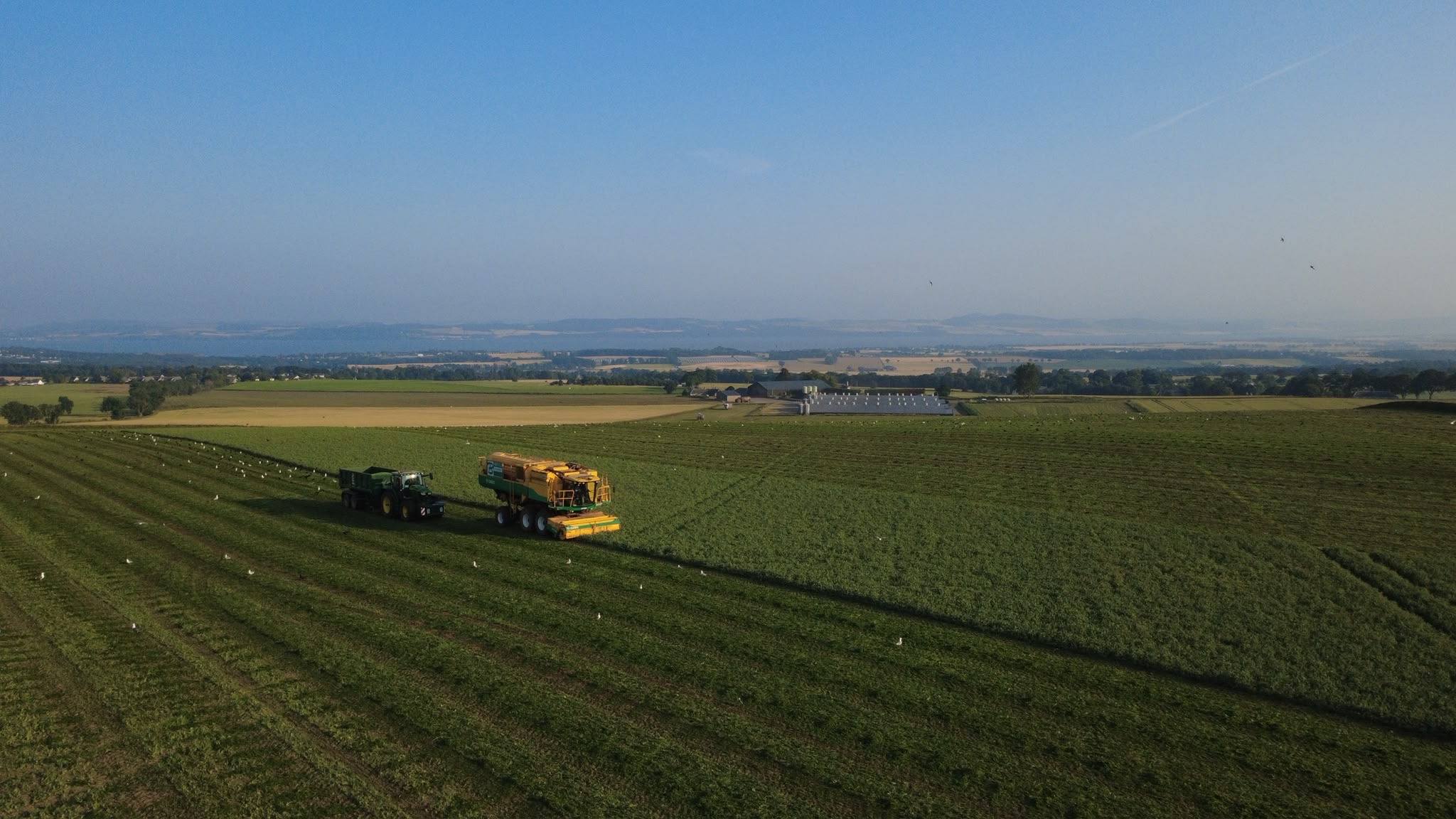
Listen to this article Listen to this article Welcome to Cransley. I have been here a little over a year now, enough time to settle in and get a good understanding of the business, its potential and the expectations of the directors.
The farm extends to a little over 500 hectares, currently all in arable cropping, except for some small areas of woodland, including an SSSI (Site of Special Scientific Interest), and a few grass margins. Soils are predominantly a sandy silt loam with a long history of poultry manure applications. This gives us plenty of fertility; however, they are prone to erosion and capping when we experience heavy rainfall events. There are three broiler sheds on the farm, currently rented out to a third party to manage. The farm gets all the poultry manure from these sheds.
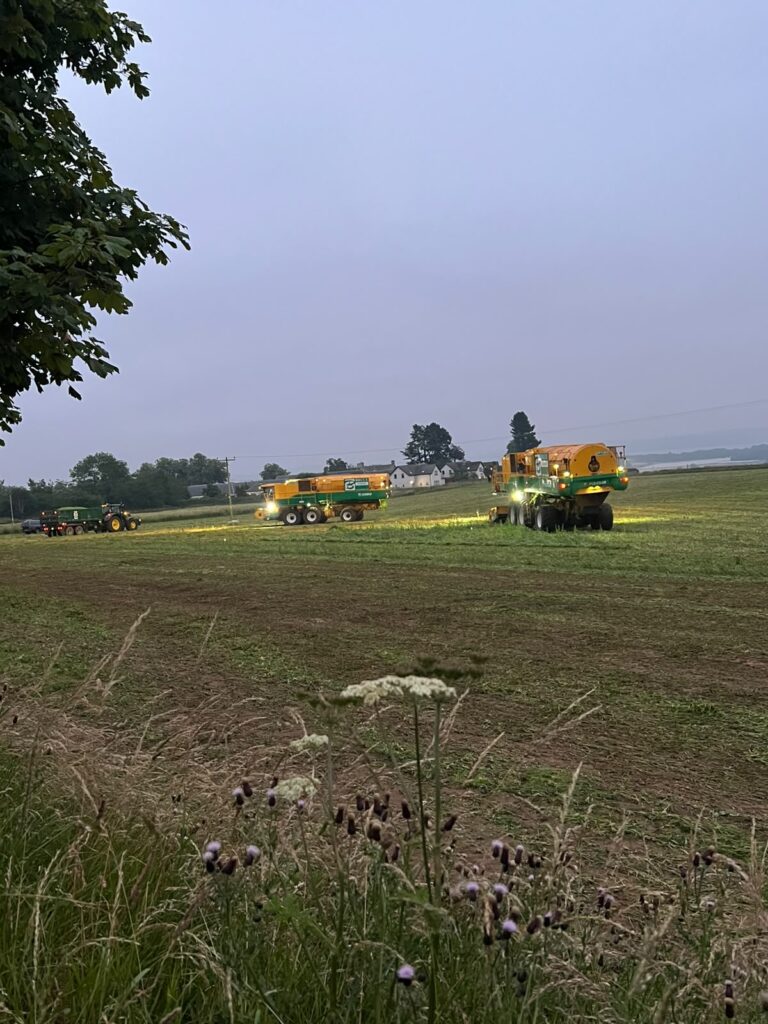
The harvest and autumn of 2025 was one to remember. The combine only took one day off from the start to the finish, with a reasonable tonnage of grain not needing to be dried at all; for the benefit of the southern readers, this is rare.
The easy and early harvest allowed us to establish all the winter oats and wheat early. I stuck with the farm’s current establishment method: the plough and power harrow. This kept the job simple and allowed me to see all the soil turned over. This, I find, is a crude but simple way to assess the state of the soil across the whole farm. I also tried some direct drilling with a Claydon drill. This appears to have worked well, so much so that I purchased a second-hand one over the winter. Like many in our industry, I find the cost of brand-new machinery hard to stomach, particularly when there seems to be a plethora of good used alternatives available at reasonable money.
There are several reasons for this decision. Firstly, the desire to reduce the impact of heavy rainfall events on the soil. As most readers of this article will be aware, the ability to establish a crop successfully, while leaving the soil protected by some crop residue, is very important under these circumstances. Secondly, the design of the drill will allow us to remove any shallow compaction generated by the manure spreaders as the hen pen is applied. Thirdly, this system will allow a reduction in the costs associated with crop establishment, important in a climate of ever-tightening margins. There will be plenty of other benefits like improvements in soil structure, I have no doubt, but they will perhaps take a bit longer to realise.
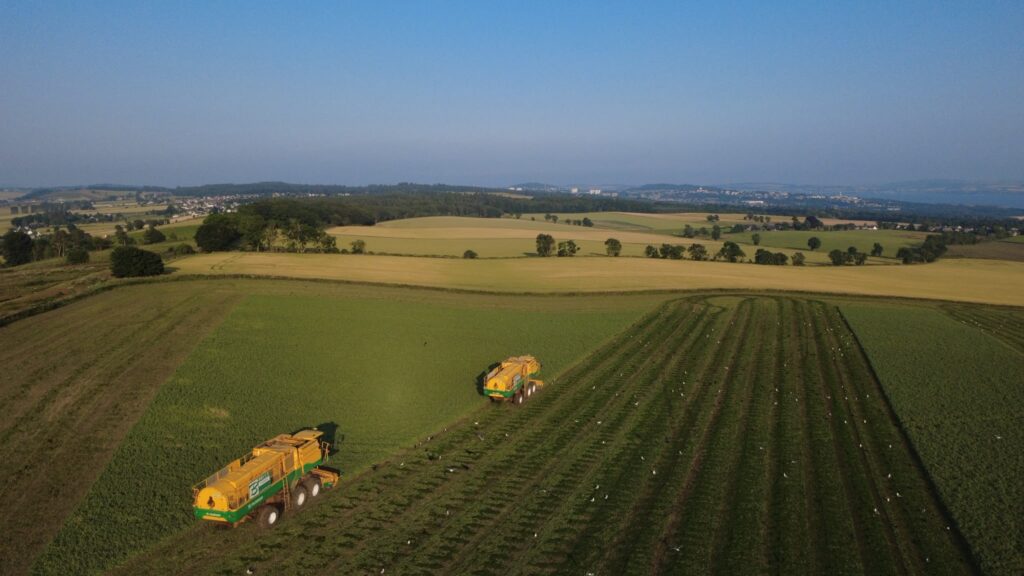
I have tweaked the rotation to allow maximum use of direct drilling, before ploughing for vining peas. (The pea growers are hesitant to move to non-inversion establishment at the moment.) The rotation will be vining peas, winter oats, OSR, winter wheat, spring oats, winter wheat. This sees a reduction in the wheat area by a third. Financially, this should not make a difference when balanced with a reduction in fixed costs; indeed, the overall margin should improve when all ducks line up in time.
We had a go at grazing sheep across some of the established crops over the winter. Unfortunately, we chose the wettest spell of the winter to start… hindsight is great stuff. There was a bit of damage on a couple of fields where the crop was thinned out too much. I think the fragility of the soil under such conditions became obvious during this period. However, we were soon out of this and grazing under better conditions. The results have been pretty much as I expected; visually, the grazed fields have much less disease within the crop canopy.
We had a group of New Zealand farmers visit us in June. The group were members of a forward-thinking organisation called Future Farmers New Zealand (www.futurefarmers.org.nz). They were touring farms in the UK, starting with The James Hutton Institute (www.hutton.ac.uk), which is next door to Cransley. They were following a 12-day itinerary that was very well organised by Rebecca Goodwin of BASE-UK (www.base-uk.co.uk) and finished with two days at Groundswell. All the farm visits were opened up to BASE-UK members. We hosted a group of a dozen people; this is a great number as it allows for some really good conversation with everyone getting involved.
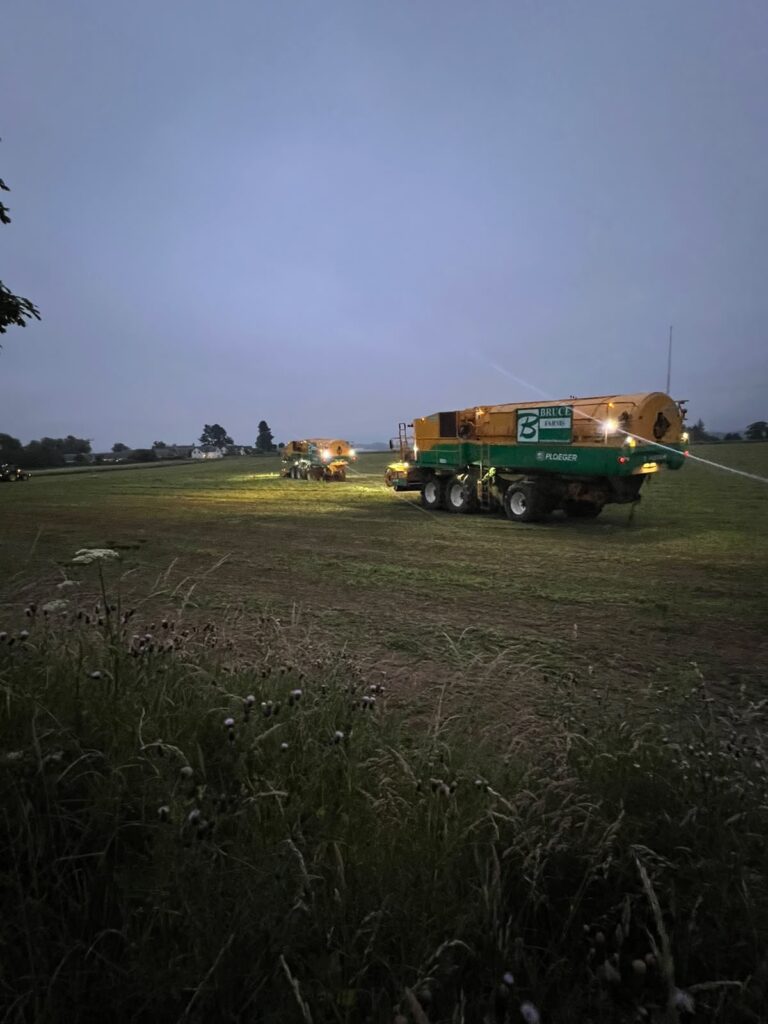
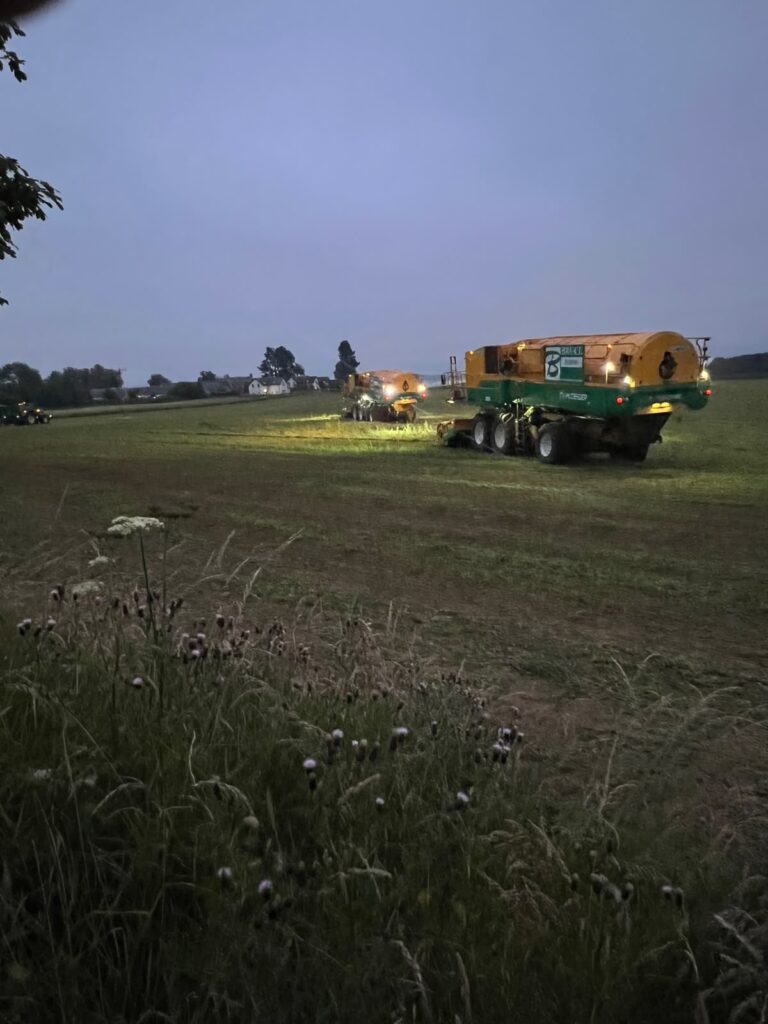
We dug a soil pit with a digger as a discussion point, and so I could get a good look at any damage that grazing sheep in the wet might have done. What we saw was pleasing: no pan created by the sheep, strong rooting down over 600mm, despite there being evidence of a plough pan, and sufficient moisture to see us to harvest. I would have liked to have seen deeper rooting, but that is something that can be worked on. I fully appreciate that we are lucky farming where we do, and I feel for those further south who are suffering in all the heat and dry conditions. I don’t think we will be immune from these events in the future, though; many Scottish soils do dry out quickly, and we seem to stumble from too wet to too dry in a very short space of time. Does this mean there is a bit of work to be done on our soil if we are honest with ourselves? Figures from the YEN (Yield Enhancement Network) suggest that rooting depth and yield are strongly linked, mostly as a result of the plants’ ability to access enough water for full production.
The discussion was wide and varied, with all points of view respected, but still rigorously tested. I find these meetings very invigorating, usually with a long list of ideas floating round my head for weeks afterwards.
Attention is now turning towards harvest; we will probably have something ready to cut by the second week of August. There are plans to broadcast cover crop seed into some standing crops if there is sufficient soil moisture for establishment. If not, then these will be drilled into harvested stubbles. With these cover crops and the winter cash crops to be sown, the plan is to have nearly all the farm benefitting from living roots over the winter, in readiness for more sheep.
I would like to wish you all a safe and successful harvest and autumn season, and hard though it may seem at times, try to take a little time to enjoy it too – harvest is a wonderful time of the year.

-
Soil Farmer of the Year 2026 Winners Announced
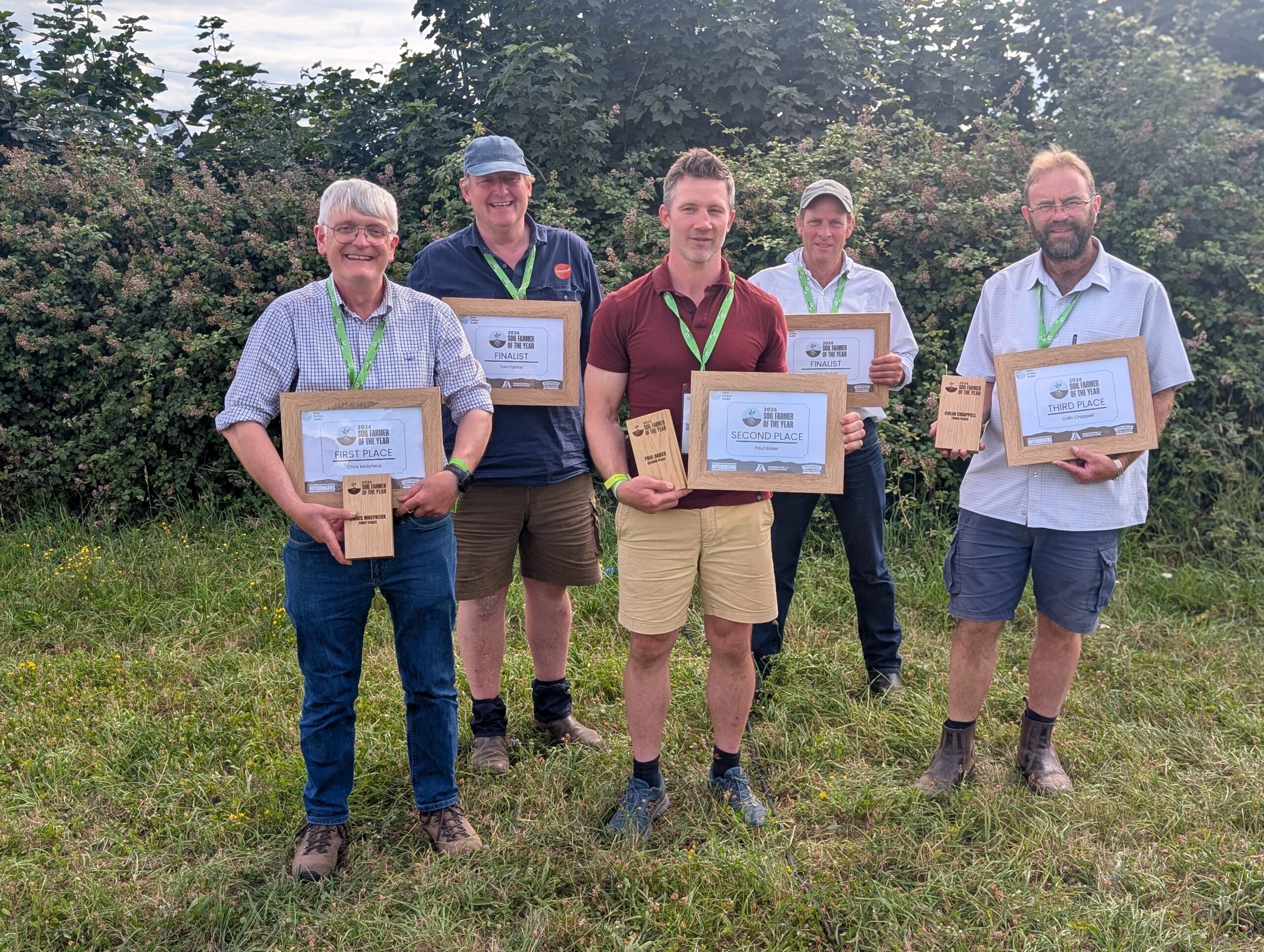
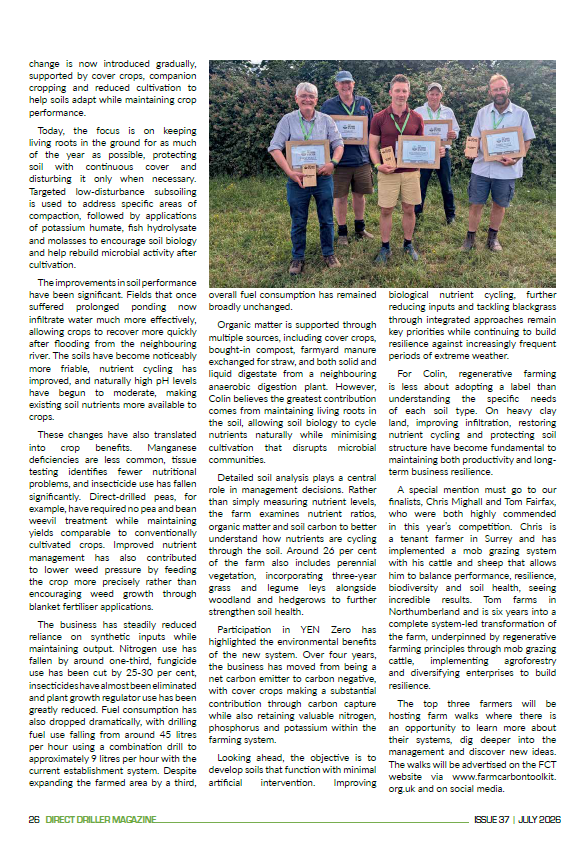
Listen to this article The Soil Farmer of the Year competition has been running for the last 10 years and aims to find, promote and champion those farmers who are putting soil health at the centre of their farm business. Over the last ten years, we have found and rewarded farmers from all across the UK who are running a range of farming systems and who have one thing in common: a drive to prioritise their most important asset on-farm – their soil. The competition is organised by Farm Carbon Toolkit and Innovation for Agriculture and kindly sponsored by Cotswold Seeds and Hutchinsons.
This year, we received over 20 applications from a diverse assortment of farmers, who were whittled down to eight for online interviews. Following these online interviews, five farmers were selected for in-person visits to understand more about their farming system and dig deeper into their soils. From these visits, the judges were able to decide on the winning farmers, who were awarded their prizes at a session at Groundswell. Farmers attending the ceremony heard directly from the winners about the practical changes they have made to improve soil health and the impact those changes have had on their business.
All three of our winning farmers were able to demonstrate during the session how better soil management had strengthened their farm business through improved profitability and enhanced resilience to increasingly challenging weather conditions.
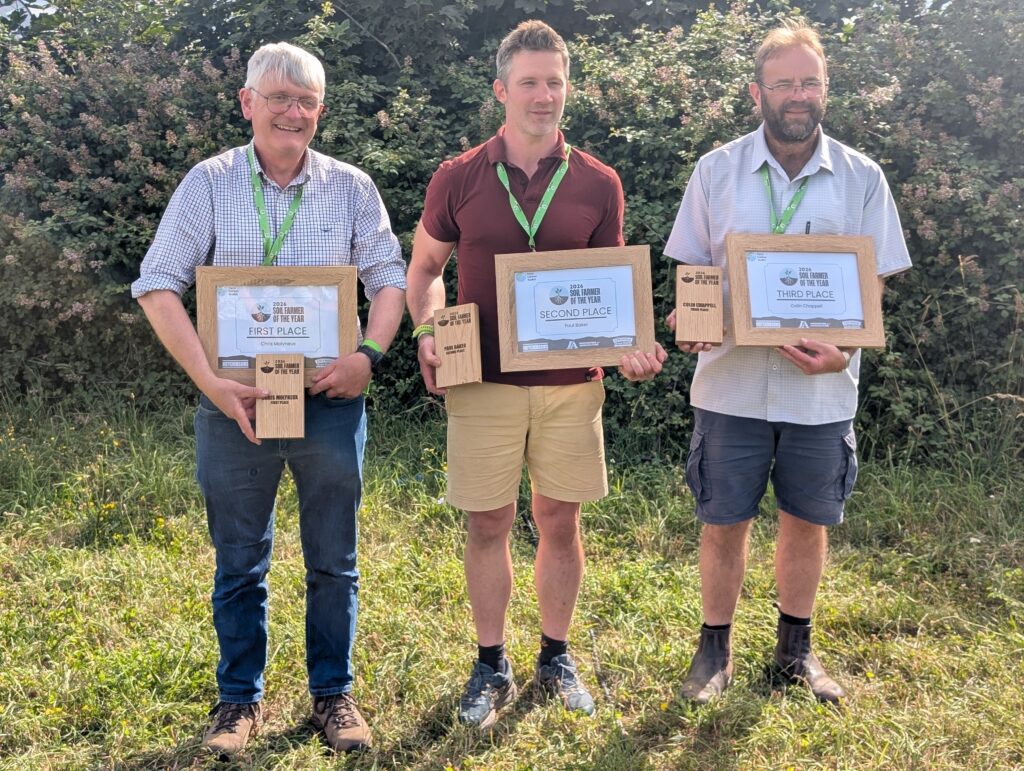
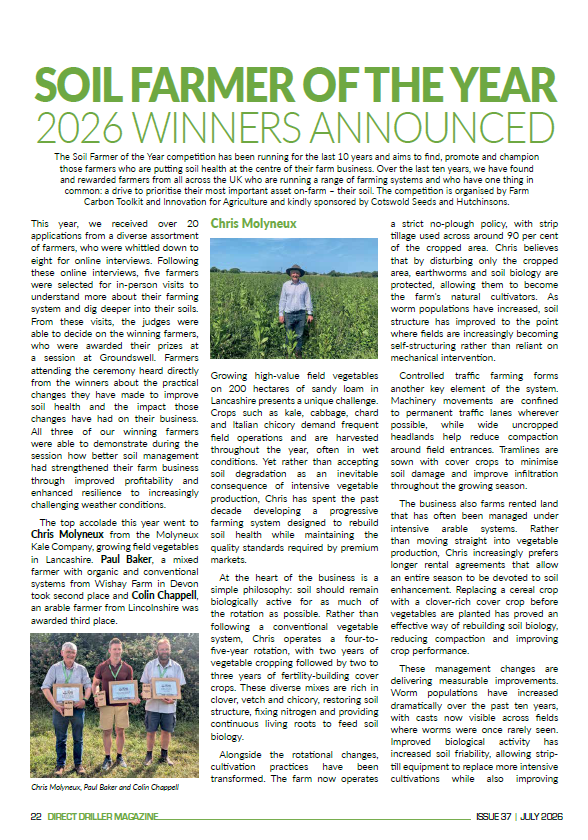
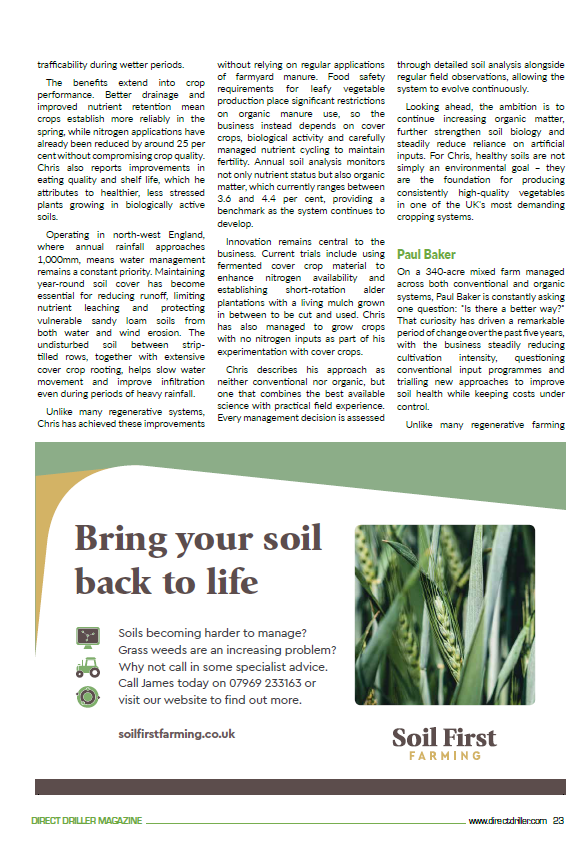
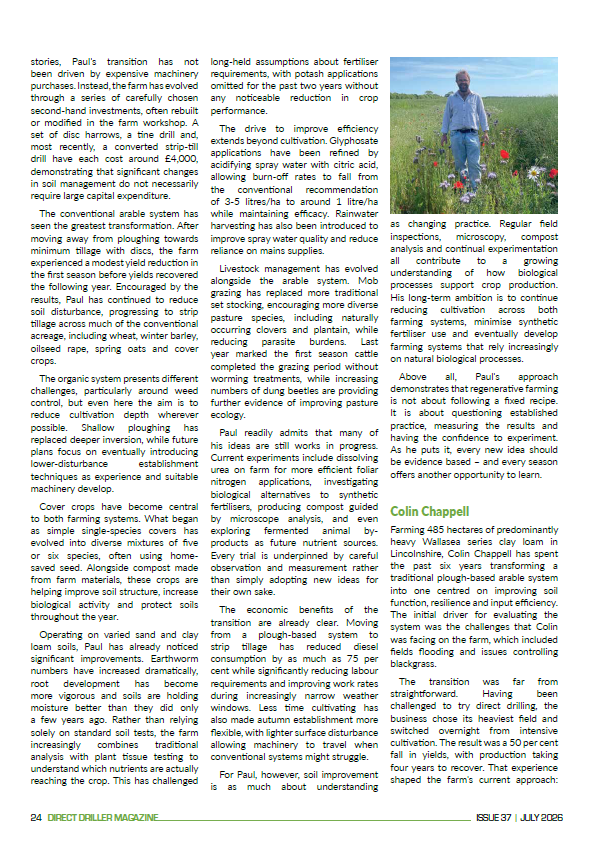
The top accolade this year went to Chris Molyneux from the Molyneux Kale Company, growing field vegetables in Lancashire. Paul Baker, a mixed farmer with organic and conventional systems from Wishay Farm in Devon took second place and Colin Chappell, an arable farmer from Lincolnshire was awarded third place.
Chris Molyneux
Growing high-value field vegetables on 200 hectares of sandy loam in Lancashire presents a unique challenge. Crops such as kale, cabbage, chard and Italian chicory demand frequent field operations and are harvested throughout the year, often in wet conditions. Yet rather than accepting soil degradation as an inevitable consequence of intensive vegetable production, Chris has spent the past decade developing a progressive farming system designed to rebuild soil health while maintaining the quality standards required by premium markets.
At the heart of the business is a simple philosophy: soil should remain biologically active for as much of the rotation as possible. Rather than following a conventional vegetable system, Chris operates a four-to-five-year rotation, with two years of vegetable cropping followed by two to three years of fertility-building cover crops. These diverse mixes are rich in clover, vetch and chicory, restoring soil structure, fixing nitrogen and providing continuous living roots to feed soil biology.
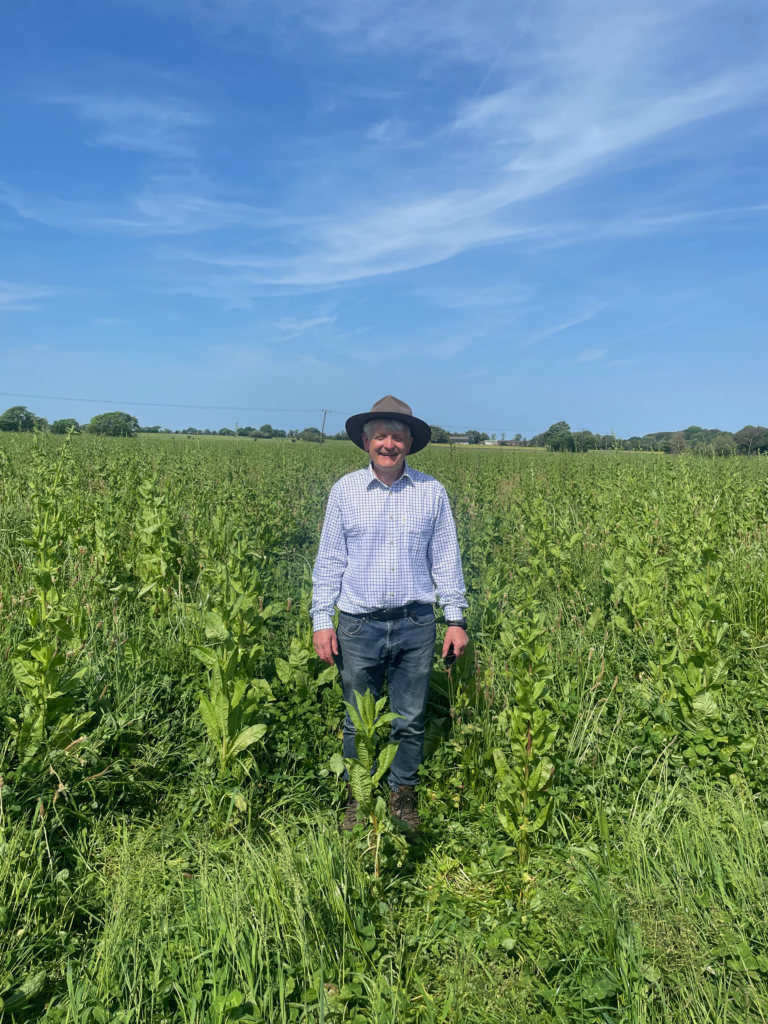
Alongside the rotational changes, cultivation practices have been transformed. The farm now operates a strict no-plough policy, with strip tillage used across around 90 per cent of the cropped area. Chris believes that by disturbing only the cropped area, earthworms and soil biology are protected, allowing them to become the farm’s natural cultivators. As worm populations have increased, soil structure has improved to the point where fields are increasingly becoming self-structuring rather than reliant on mechanical intervention.
Controlled traffic farming forms another key element of the system. Machinery movements are confined to permanent traffic lanes wherever possible, while wide uncropped headlands help reduce compaction around field entrances. Tramlines are sown with cover crops to minimise soil damage and improve infiltration throughout the growing season.
The business also farms rented land that has often been managed under intensive arable systems. Rather than moving straight into vegetable production, Chris increasingly prefers longer rental agreements that allow an entire season to be devoted to soil enhancement. Replacing a cereal crop with a clover-rich cover crop before vegetables are planted has proved an effective way of rebuilding soil biology, reducing compaction and improving crop performance.
These management changes are delivering measurable improvements. Worm populations have increased dramatically over the past ten years, with casts now visible across fields where worms were once rarely seen. Improved biological activity has increased soil friability, allowing strip-till equipment to replace more intensive cultivations while also improving trafficability during wetter periods.
The benefits extend into crop performance. Better drainage and improved nutrient retention mean crops establish more reliably in the spring, while nitrogen applications have already been reduced by around 25 per cent without compromising crop quality. Chris also reports improvements in eating quality and shelf life, which he attributes to healthier, less stressed plants growing in biologically active soils.
Operating in north-west England, where annual rainfall approaches 1,000mm, means water management remains a constant priority. Maintaining year-round soil cover has become essential for reducing runoff, limiting nutrient leaching and protecting vulnerable sandy loam soils from both water and wind erosion. The undisturbed soil between strip-tilled rows, together with extensive cover crop rooting, helps slow water movement and improve infiltration even during periods of heavy rainfall.
Unlike many regenerative systems, Chris has achieved these improvements without relying on regular applications of farmyard manure. Food safety requirements for leafy vegetable production place significant restrictions on organic manure use, so the business instead depends on cover crops, biological activity and carefully managed nutrient cycling to maintain fertility. Annual soil analysis monitors not only nutrient status but also organic matter, which currently ranges between 3.6 and 4.4 per cent, providing a benchmark as the system continues to develop.
Innovation remains central to the business. Current trials include using fermented cover crop material to enhance nitrogen availability and establishing short-rotation alder plantations with a living mulch grown in between to be cut and used. Chris has also managed to grow crops with no nitrogen inputs as part of his experimentation with cover crops.
Chris describes his approach as neither conventional nor organic, but one that combines the best available science with practical field experience. Every management decision is assessed through detailed soil analysis alongside regular field observations, allowing the system to evolve continuously.
Looking ahead, the ambition is to continue increasing organic matter, further strengthen soil biology and steadily reduce reliance on artificial inputs. For Chris, healthy soils are not simply an environmental goal – they are the foundation for producing consistently high-quality vegetables in one of the UK’s most demanding cropping systems.
Paul Baker
On a 340-acre mixed farm managed across both conventional and organic systems, Paul Baker is constantly asking one question: “Is there a better way?” That curiosity has driven a remarkable period of change over the past five years, with the business steadily reducing cultivation intensity, questioning conventional input programmes and trialling new approaches to improve soil health while keeping costs under control.
Unlike many regenerative farming stories, Paul’s transition has not been driven by expensive machinery purchases. Instead, the farm has evolved through a series of carefully chosen second-hand investments, often rebuilt or modified in the farm workshop. A set of disc harrows, a tine drill and, most recently, a converted strip-till drill have each cost around £4,000, demonstrating that significant changes in soil management do not necessarily require large capital expenditure.
The conventional arable system has seen the greatest transformation. After moving away from ploughing towards minimum tillage with discs, the farm experienced a modest yield reduction in the first season before yields recovered the following year. Encouraged by the results, Paul has continued to reduce soil disturbance, progressing to strip tillage across much of the conventional acreage, including wheat, winter barley, oilseed rape, spring oats and cover crops.
The organic system presents different challenges, particularly around weed control, but even here the aim is to reduce cultivation depth wherever possible. Shallow ploughing has replaced deeper inversion, while future plans focus on eventually introducing lower-disturbance establishment techniques as experience and suitable machinery develop.
Cover crops have become central to both farming systems. What began as simple single-species covers has evolved into diverse mixtures of five or six species, often using home-saved seed. Alongside compost made from farm materials, these crops are helping improve soil structure, increase biological activity and protect soils throughout the year.
Operating on varied sand and clay loam soils, Paul has already noticed significant improvements. Earthworm numbers have increased dramatically, root development has become more vigorous and soils are holding moisture better than they did only a few years ago. Rather than relying solely on standard soil tests, the farm increasingly combines traditional analysis with plant tissue testing to understand which nutrients are actually reaching the crop. This has challenged long-held assumptions about fertiliser requirements, with potash applications omitted for the past two years without any noticeable reduction in crop performance.
The drive to improve efficiency extends beyond cultivation. Glyphosate applications have been refined by acidifying spray water with citric acid, allowing burn-off rates to fall from the conventional recommendation of 3-5 litres/ha to around 1 litre/ha while maintaining efficacy. Rainwater harvesting has also been introduced to improve spray water quality and reduce reliance on mains supplies.
Livestock management has evolved alongside the arable system. Mob grazing has replaced more traditional set stocking, encouraging more diverse pasture species, including naturally occurring clovers and plantain, while reducing parasite burdens. Last year marked the first season cattle completed the grazing period without worming treatments, while increasing numbers of dung beetles are providing further evidence of improving pasture ecology.
Paul readily admits that many of his ideas are still works in progress. Current experiments include dissolving urea on farm for more efficient foliar nitrogen applications, investigating biological alternatives to synthetic fertilisers, producing compost guided by microscope analysis, and even exploring fermented animal by-products as future nutrient sources. Every trial is underpinned by careful observation and measurement rather than simply adopting new ideas for their own sake.
The economic benefits of the transition are already clear. Moving from a plough-based system to strip tillage has reduced diesel consumption by as much as 75 per cent while significantly reducing labour requirements and improving work rates during increasingly narrow weather windows. Less time cultivating has also made autumn establishment more flexible, with lighter surface disturbance allowing machinery to travel when conventional systems might struggle.
For Paul, however, soil improvement is as much about understanding as changing practice. Regular field inspections, microscopy, compost analysis and continual experimentation all contribute to a growing understanding of how biological processes support crop production. His long-term ambition is to continue reducing cultivation across both farming systems, minimise synthetic fertiliser use and eventually develop farming systems that rely increasingly on natural biological processes.
Above all, Paul’s approach demonstrates that regenerative farming is not about following a fixed recipe. It is about questioning established practice, measuring the results and having the confidence to experiment. As he puts it, every new idea should be evidence based – and every season offers another opportunity to learn.
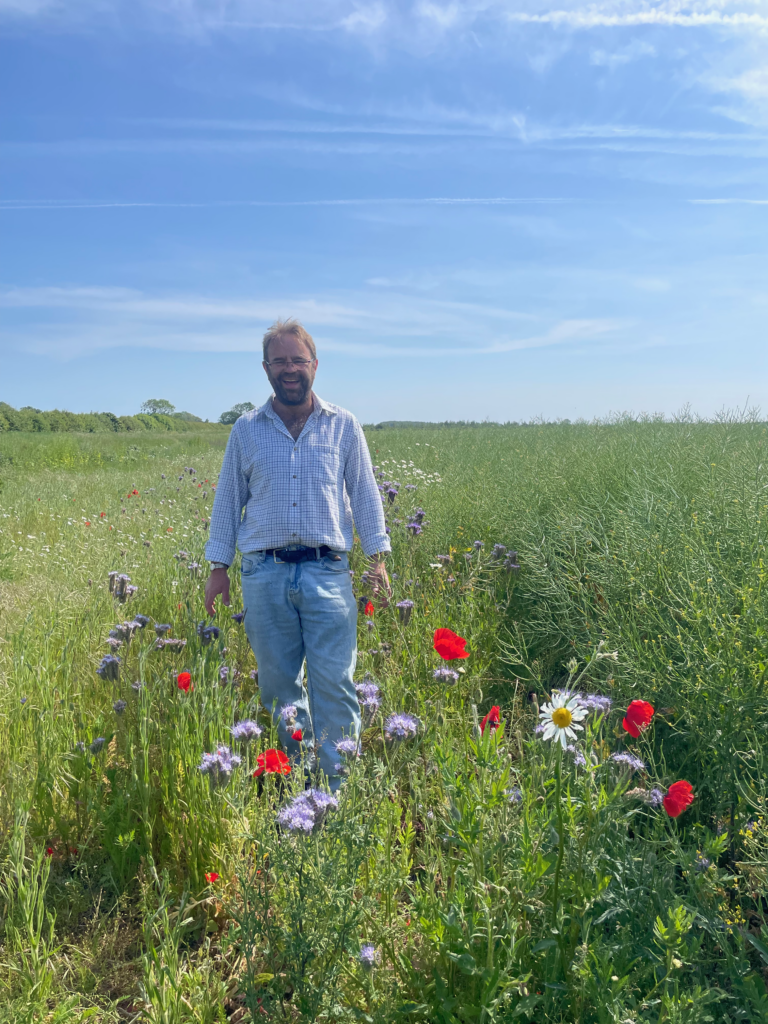
Colin Chappell
Farming 485 hectares of predominantly heavy Wallasea series clay loam in Lincolnshire, Colin Chappell has spent the past six years transforming a traditional plough-based arable system into one centred on improving soil function, resilience and input efficiency. The initial driver for evaluating the system was the challenges that Colin was facing on the farm, which included fields flooding and issues controlling blackgrass.
The transition was far from straightforward. Having been challenged to try direct drilling, the business chose its heaviest field and switched overnight from intensive cultivation. The result was a 50 per cent fall in yields, with production taking four years to recover. That experience shaped the farm’s current approach: change is now introduced gradually, supported by cover crops, companion cropping and reduced cultivation to help soils adapt while maintaining crop performance.
Today, the focus is on keeping living roots in the ground for as much of the year as possible, protecting soil with continuous cover and disturbing it only when necessary. Targeted low-disturbance subsoiling is used to address specific areas of compaction, followed by applications of potassium humate, fish hydrolysate and molasses to encourage soil biology and help rebuild microbial activity after cultivation.
The improvements in soil performance have been significant. Fields that once suffered prolonged ponding now infiltrate water much more effectively, allowing crops to recover more quickly after flooding from the neighbouring river. The soils have become noticeably more friable, nutrient cycling has improved, and naturally high pH levels have begun to moderate, making existing soil nutrients more available to crops.
These changes have also translated into crop benefits. Manganese deficiencies are less common, tissue testing identifies fewer nutritional problems, and insecticide use has fallen significantly. Direct-drilled peas, for example, have required no pea and bean weevil treatment while maintaining yields comparable to conventionally cultivated crops. Improved nutrient management has also contributed to lower weed pressure by feeding the crop more precisely rather than encouraging weed growth through blanket fertiliser applications.
The business has steadily reduced reliance on synthetic inputs while maintaining output. Nitrogen use has fallen by around one-third, fungicide use has been cut by 25-30 per cent, insecticides have almost been eliminated and plant growth regulator use has been greatly reduced. Fuel consumption has also dropped dramatically, with drilling fuel use falling from around 45 litres per hour using a combination drill to approximately 9 litres per hour with the current establishment system. Despite expanding the farmed area by a third, overall fuel consumption has remained broadly unchanged.
Organic matter is supported through multiple sources, including cover crops, bought-in compost, farmyard manure exchanged for straw, and both solid and liquid digestate from a neighbouring anaerobic digestion plant. However, Colin believes the greatest contribution comes from maintaining living roots in the soil, allowing soil biology to cycle nutrients naturally while minimising cultivation that disrupts microbial communities.
Detailed soil analysis plays a central role in management decisions. Rather than simply measuring nutrient levels, the farm examines nutrient ratios, organic matter and soil carbon to better understand how nutrients are cycling through the soil. Around 26 per cent of the farm also includes perennial vegetation, incorporating three-year grass and legume leys alongside woodland and hedgerows to further strengthen soil health.
Participation in YEN Zero has highlighted the environmental benefits of the new system. Over four years, the business has moved from being a net carbon emitter to carbon negative, with cover crops making a substantial contribution through carbon capture while also retaining valuable nitrogen, phosphorus and potassium within the farming system.
Looking ahead, the objective is to develop soils that function with minimal artificial intervention. Improving biological nutrient cycling, further reducing inputs and tackling blackgrass through integrated approaches remain key priorities while continuing to build resilience against increasingly frequent periods of extreme weather.
For Colin, regenerative farming is less about adopting a label than understanding the specific needs of each soil type. On heavy clay land, improving infiltration, restoring nutrient cycling and protecting soil structure have become fundamental to maintaining both productivity and long-term business resilience.
A special mention must go to our finalists, Chris Mighall and Tom Fairfax, who were both highly commended in this year’s competition. Chris is a tenant farmer in Surrey and has implemented a mob grazing system with his cattle and sheep that allows him to balance performance, resilience, biodiversity and soil health, seeing incredible results. Tom farms in Northumberland and is six years into a complete system-led transformation of the farm, underpinned by regenerative farming principles through mob grazing cattle, implementing agroforestry and diversifying enterprises to build resilience.
The top three farmers will be hosting farm walks where there is an opportunity to learn more about their systems, dig deeper into the management and discover new ideas. The walks will be advertised on the FCT website via www.farmcarbontoolkit.org.uk and on social media.
-
Farmer Focus – John Cherry
Listen to this article Listen to this article I’ll probably get chucked off Direct Driller magazine for admitting this, but I bought a 3m Treffler hoe to prepare our spring crops this year. I wanted to find out how easy it was to avoid using any sprays or fertiliser and grow ultra-low-input crops. As it happened, it turned out to be very easy, albeit quite slow with a three-metre working width. The Treffler does a lovely job of slicing off the heads of the weeds at one or two-inch depths and leaves a nice mulch to stop the soil blow drying out too much. We gave most of the ground two passes, which killed nearly all the plants left by the cattle that had been grazing the cover crops and then drilled beans and heritage wheat (April Bearded) into the moist, undisturbed topsoil.
Of course, that was at the beginning of the drought, but the beans came well, and the wheat came ok, and they both hung on until we got some rain a few weeks later. There’s something very pleasing about companion cropping; both crops seem to help each other along. The recent hot weather has taken the vim out of the beans, with only two or three pods per plant, and the wheat has at most two tillers, but it’ll be worth combining.
We’ve just cut our one field of no-input winter wheat, which yielded a stonking 3.8 tonnes to the hectare. It’s a lovely sample and cost us next to nothing to grow, but I don’t think it makes a lot of financial sense without an organic premium. Interesting though how little disease you get with a five-way variety mix and no nitrogen. We’ve just bought a grain mill so we can add a bit of value to wheat like this; there seems to be a ready market with local bakers, etc looking for a more interesting story to tell their customers – here comes the Grindswell project!
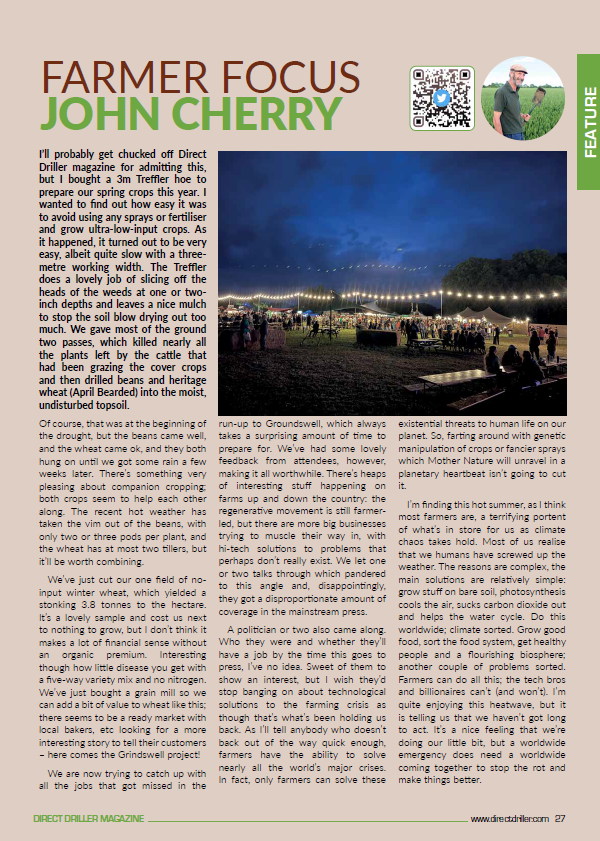
We are now trying to catch up with all the jobs that got missed in the run-up to Groundswell, which always takes a surprising amount of time to prepare for. We’ve had some lovely feedback from attendees, however, making it all worthwhile. There’s heaps of interesting stuff happening on farms up and down the country: the regenerative movement is still farmer-led, but there are more big businesses trying to muscle their way in, with hi-tech solutions to problems that perhaps don’t really exist. We let one or two talks through which pandered to this angle and, disappointingly, they got a disproportionate amount of coverage in the mainstream press.
A politician or two also came along. Who they were and whether they’ll have a job by the time this goes to press, I’ve no idea. Sweet of them to show an interest, but I wish they’d stop banging on about technological solutions to the farming crisis as though that’s what’s been holding us back. As I’ll tell anybody who doesn’t back out of the way quick enough, farmers have the ability to solve nearly all the world’s major crises. In fact, only farmers can solve these existential threats to human life on our planet. So, farting around with genetic manipulation of crops or fancier sprays which Mother Nature will unravel in a planetary heartbeat isn’t going to cut it.
I’m finding this hot summer, as I think most farmers are, a terrifying portent of what’s in store for us as climate chaos takes hold. Most of us realise that we humans have screwed up the weather. The reasons are complex, the main solutions are relatively simple: grow stuff on bare soil, photosynthesis cools the air, sucks carbon dioxide out and helps the water cycle. Do this worldwide; climate sorted. Grow good food, sort the food system, get healthy people and a flourishing biosphere; another couple of problems sorted. Farmers can do all this; the tech bros and billionaires can’t (and won’t). I’m quite enjoying this heatwave, but it is telling us that we haven’t got long to act. It’s a nice feeling that we’re doing our little bit, but a worldwide emergency does need a worldwide coming together to stop the rot and make things better.
-

The Sustainable Regenerative Agriculture Scheme (SRAS): A Blueprint for the Future
Listen to this article Written by Bill Young
For over 40 years, the arable sector has been treading water. While livestock and horticulture enterprises have seen vast improvements in productivity, cereal yields have remained largely stagnant. At the same time, the costs of production have risen sharply and disproportionately. The only savings in this key sector have come through economies of scale, larger equipment, better technology and reduced labour costs. The inconvenient truth is that many cereal yields today are no better than they were in the 1980s.
In that same period, independent evidence has charted a steep decline in habitat, biodiversity, and pollinators, resulting in a fall in wildlife numbers and species across many areas. Coupled with this is the decline in soil health, which has exacerbated the situation and contributed to flatlining yields. This stands in stark contrast to milk yields and livestock growth rates, which have outperformed their arable counterparts over the same period.
As support mechanisms change and the era of direct subsidies draws to a close, there is a recognised need to rethink the way we farm. The Sustainable Regenerative Agriculture Scheme (SRAS) has been written in the genuine belief that it is possible to increase food production while simultaneously protecting the environment, enhancing animal welfare and increasing biodiversity. This is not just about producing more food; it is about producing safe, wholesome, nutritious food that meets the expectations of today’s discerning consumer. It is about improving the nutritional content of what we eat and becoming more self-sufficient as a food-producing nation.
The inspiration for this scheme draws heavily on pioneers like Bill Jordan, whose foresight with the Conservation Grade Scheme laid the foundations for regenerative farming as we know it today. It also recognises the drive of organisations like The Green Farm Collective, who recognised earlier than most the need to rethink farming to break yield plateaux and meet increasing demand. SRAS builds on the successes and good practice of the past to take agricultural production to the next level.
Central to this thinking is a conviction that the way we measure agricultural success must change. Working alongside Rob Ward and David Rose through an organisation called Vitagri, the SRAS is grounded in the belief that nutrient content from crops, milk and meat produced from more fertile and friable soils will be demonstrably superior to that from depleted, high-input systems. The groundbreaking work being done in this field is startling. In the future, nutrient content per hectare may become more important than overall yield. The number of people a crop can healthily and efficiently feed, and its calorific and micronutrient value, may ultimately prove a more meaningful measure of farm output and profitability than tonnes per hectare alone.
The scope and mission
The SRAS mission is clear: to use collective knowledge, experience and expertise to create a scheme that shapes the future of farming. The goal is to increase the availability of regional food sources while increasing biodiversity, improving soil health, and elevating livestock welfare standards through sustainable mixed farming.
A central tenet of SRAS is that livestock has a key role to play. The demonisation of both ruminant and monogastric production systems by certain pressure groups has had a negative impact on soil structure and agricultural production in general. Organic matter from agricultural manures, grazing livestock, and even anaerobic digestate or treated sewage sludge applied sensibly at professionally advised rates have a huge role to play in the future of agricultural production. This organic matter is the key to breaking the wheat plateau, along with unprecedented levels of soil management.
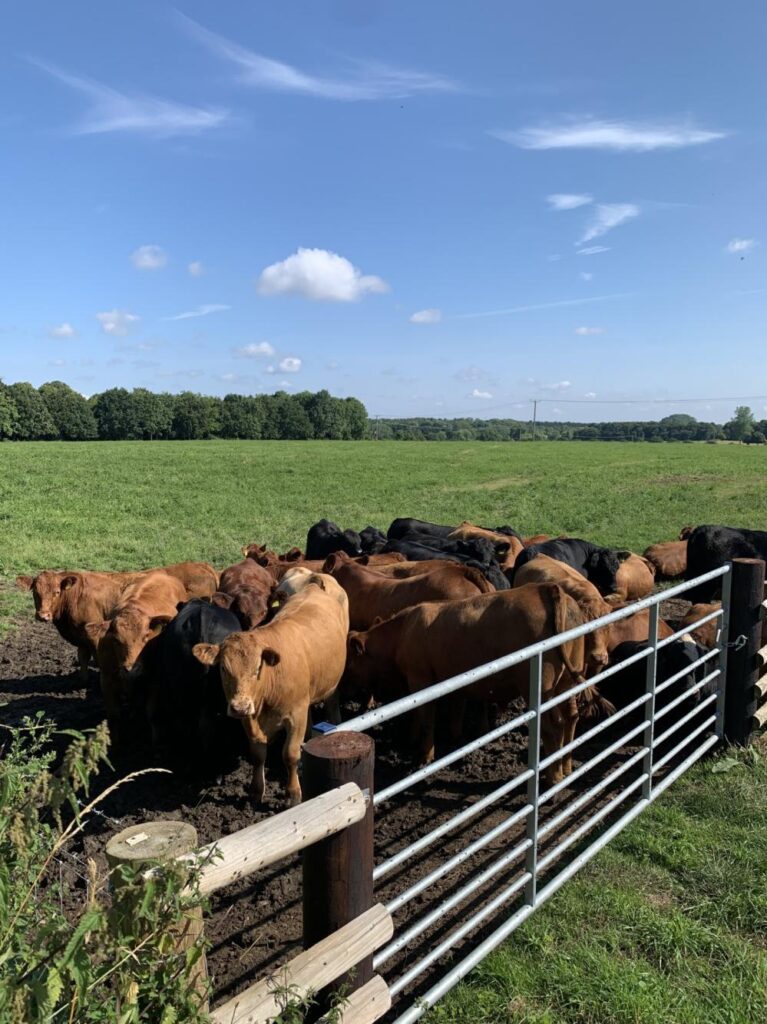
Mixed livestock systems play a vital role in regenerative agriculture by boosting soil fertility. Mixed farming, combined with proper rotations, is seen in this scheme as the salvation of agriculture. It is the resultant benefits that will enable an increase in production while reducing the use of fertilisers and pesticides, increasing wildlife and diminishing pollution risks to provide a true win-win scenario.
The standard: Taking land out to produce more
The cornerstone of the SRAS is a requirement to take at least 10 per cent of agricultural land out of production on the total farmed acreage (arable and rotational crops, including non-permanent pasture). The aim is to reach the same levels of production or more from the remaining 90 per cent of acreage, while wildlife and species count levels increase.
The 10 per cent taken out is at the discretion of the farmer but is likely to be difficult corners of fields or unproductive poorer land. Of this 10 per cent, at least 30 per cent must be sown with pollen and nectar mixes, 30 per cent in recognised bird food mixes, with the balance coming in the form of grass-managed headlands, planted trees, beetle banks, created wetland areas, or farm tracks. Failure to comply with this requirement is a critical failure point within the scheme.
Farmers who take more than 10 per cent out of agricultural production will be recognised and scored positively, provided overall average yields do not decline. Those who increase overall production levels above those achieved before the additional land was taken out of production will be rewarded under the SRAS points scoring system.
Soil health and cultivation
The second key cornerstone of SRAS is the health of the soils, which will be assessed and scored by four independently assessed barometers: improvement in organic matter, earthworm count, increased soil biological activity (determined through CO2 burst measurement and/or designated probes), and improved soil infiltration with reduced compaction, runoff and erosion.
All four metrics are expected to show continual, ongoing improvement annually. These improvements are likely to be achieved by strong rotational policies, including fertility-building crops and mixed systems using home-produced manures or grazed livestock on rotational pastures.
While SRAS appreciates that direct drilling has significant benefits in carbon emission reduction, it acknowledges that it does not suit all farming systems or crops. However, it is strongly encouraged, owing to the longer-term soil benefits and dramatic reductions in carbon output. Minimum tillage and ploughing, where deemed necessary for good agricultural practice, are also acceptable according to the farming regime and soil conditions. The philosophy is that a farmer must “earn the right to plough”, with shallow ploughing permissible when soil situations permit and it is not detrimental to soil structure.
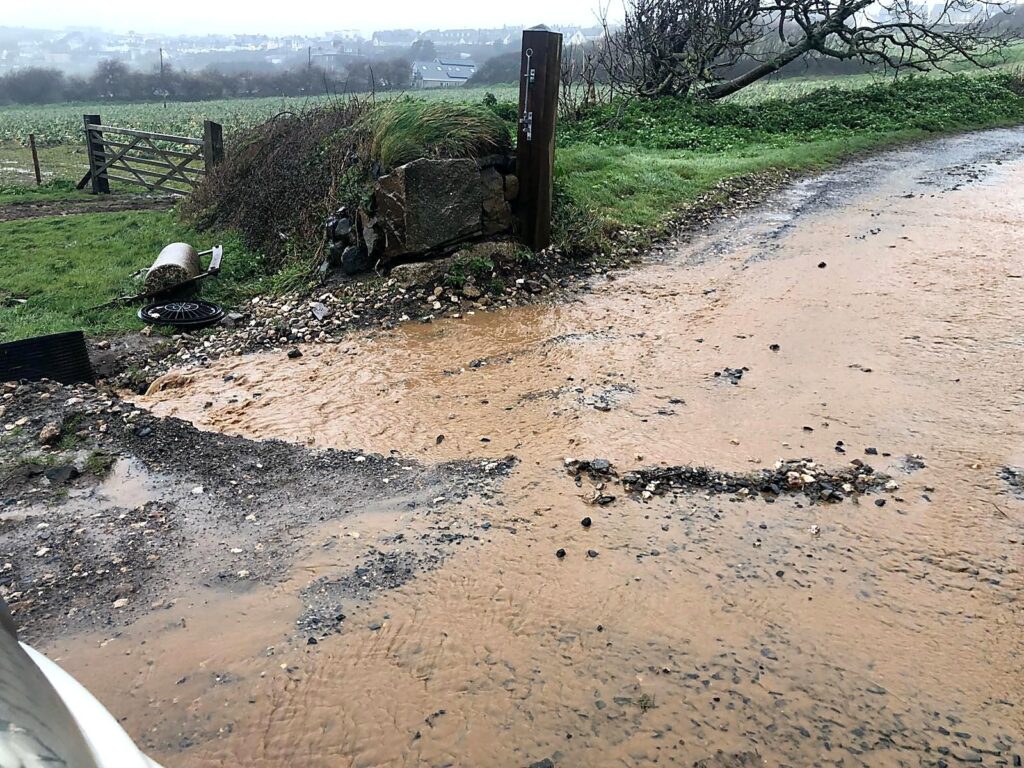
Soil runoff and erosion must be managed through improved infiltration and soil health Rotations and nutrient management
A strong rotational policy is essential. Monocropping, with the exception of established permanent pasture or perennial crops, is not permitted. Rotations must not be less than four crops and ideally more, provided overall productivity from the farm is maintained or increased. In all cases, rotations must include a fertility-building crop.
Farmers must use a qualified professional adviser to oversee the spreading and application of nutrients unless they are FACTS qualified themselves. Members must be prepared to adopt a standard over and beyond baseline schemes, with all applications calculated on the back of comprehensive soil testing programmes and rotational policies.
The use of organic fertilisers and compost is actively encouraged but can be complemented by inorganic compounds where proven to be needed. Members are expected to demonstrate a reduction in the use of inorganic fertilisers over time through better nutrient advice and practice, improving soil quality without a demonstrable drop-off in yield and margin. Liquid fertiliser and the use of slow-release urea are encouraged, as liquid is viewed as easier to apply more accurately and therefore more environmentally friendly.
Welfare, traceability and biosecurity
High welfare standards are essential. Members must set levels over and above baseline Red Tractor standards, which will be monitored and inspected. Lameness levels, stockmanship, stocking rates, body scores and general health are key barometers that must back up a professionally prepared animal health plan. A fully qualified veterinary adviser is deemed essential and seen as the key to delivering good welfare on the farm.
All finished animals should be slaughtered in approved licenced premises and fully non-recoverably stunned before slaughter. Meat must be labelled as such to give consumers choice. Where animals are religiously slaughtered, they must also be clearly labelled.
Disease risk is an ever-present threat on modern farms, often arriving due to illegalities and failures in the supply chain. Good biosecurity is an essential weapon in combatting this. Members must have a full biosecurity and contaminants action plan, implemented daily. There is a clear link between high welfare and good biosecurity, and the two go hand in hand.
Protecting the environment and water management
Improving the environment is as important as increasing yield and profitability. The controlling business must take every step to reduce pollution and lessen the environmental impact of farming. This requires bespoke, farm-specific plans covering waste management, water usage, integrated crop management, grazing management and energy consumption.
Water has now become the most influential factor in agricultural production, and the contrast with other countries is stark and distressing. Twenty-five years ago, farmers in the South Island of New Zealand were budgeting for the same wheat yields as their UK counterparts, around 10 tonnes per hectare. With irrigation, many are now budgeting for 15 tonnes. In the UK this year, 7 to 8 tonnes have become the norm. It is difficult to avoid the conclusion that had many of the crops being harvested now been irrigated by gantry or centre pivot irrigators, a significant proportion would be yielding 12 tonnes per hectare or more. Water usage, harvesting and storage are therefore becoming massive issues that need addressing as a matter of urgency.
With extremes in weather bringing more floods and droughts, it is essential that scheme members manage and store water effectively using rain harvesting, reservoirs and wetlands. The use of irrigation is becoming more prevalent and vital to modern production. Farmers who store water for this purpose and use modern technology to apply water and slurry to the correct areas and crops will be recognised under the scheme and efficiency rewarded in the scoring mechanism. In some years, irrigating cereals is likely to become essential in the UK, as it already is in the South Island of New Zealand, as a route to closing the yield gap.
Watercourses passing through the farm must leave in an equivalent or improved condition. Baseflow and periods after heavy rainfall should be monitored at the point of entry and exit to the farm. Where increased turbidity or nutrient content is identified, testing must be carried out for sediment, nutrients (such as nitrates and potassium), organic pollutants and pesticide contamination. Where potential sources of contamination occur, corrective action must be taken, with nutrient neutrality as the desired goal.
High welfare standards from birth to slaughter are central to the SRAS ethos. Measuring success and scoring
SRAS is risk-scored to give compliance-based transparency. It is measured according to success for each question and section, with every farm business given an overall grade (Bronze, Silver or Gold). Artificial Intelligence (AI) will be used in the creation of the annual report for each member to get to the final score, measuring improvement, shortcomings, barriers to success, and gains.
Continuous and ongoing improvement is a vital part of measuring success in SRAS. This provides tangible proof that year-on-year improvements are being made, silencing doubters, promoting the gains of the scheme and improving public support. Members must maintain farm statistics documenting yields and output by crop per hectare, with the base year being the one before joining SRAS.
Crucially, monitoring increases in biodiversity, natural predators and wildlife needs to be independently verified by committed experts to gain credence. This gives naturalists and nature enthusiasts the opportunity to measure, buy into the scheme, and work with the farmer for a common goal.
To be in the SRAS, the farm must already be a member of the appropriate baseline scheme, such as Red Tractor, FAWL, SQC or QMS. Membership of other higher-tier assurance schemes, such as LEAF, Pasture for Life, The Green Farm Collective or specific retailer schemes, will also be recognised and contribute to the final grade to give earned recognition.
Member benefits and financial returns
The SRAS is designed to help open other income streams to accredited farms. These will come from access to more markets unlocked by scheme accreditation and regenerative premiums paid by buyers for certified produce.
Carbon measurement is a requirement of the scheme. Verified increases in soil organic carbon, biomass or emissions reductions can be converted into carbon credits, creating a recurring income opportunity. Similarly, Biodiversity Net Gain (BNG) provides an opportunity for farmers to receive annual payments for creating or enhancing habitats. Nutrient credits offer a financial mechanism for farmers to be rewarded for actions that reduce nutrient pollution entering rivers and catchments.
Participation in a recognised regenerative scheme enables farms to provide auditable, spatially referenced evidence of carbon storage, soil health, biodiversity and water-management improvements. These verified outcomes can be integrated into corporate sustainability reporting, positioning members as credible delivery partners for businesses seeking to demonstrate environmental stewardship and compliance with international sustainability standards while producing food.
Members of the SRAS will thus be in a better position when direct payments and support are scheduled to come to an end, having other income streams in place which could ultimately replace direct subsidies.
A not-for-profit philosophy
SRAS is designed to be run on a not-for-profit basis or through a licenced certification body, with all profits being returned to the UK agricultural industry. This includes donations to rural charities or educational projects that will benefit the industry. The scheme will never be corporatised and become a cash cow for corporate investors. It will be overseen by a fully independent governing board picked to complement skill sets and identifiable knowledge gaps, giving robustness and balance to the scheme.
This is a point I feel strongly about, and I speak from experience. Farm assurance has been exploited as an overseas cash cow for corporate interests, and too much has been taken out of farm profits as a result. I was part of that system, and I know how it works. Assurance should have been run independently from the start, with profits returned to market British produce. The Red Tractor governance review, for all its merits, has missed this fundamental point. The SRAS is my attempt to put something back into an industry that has been good to me throughout my career. Any surplus generated will be invested back into British agriculture, not into corporate shareholders.
Politicians of every creed and government departments need to realise that food security is national security. We need to capitalise on our natural advantages in climate and geography. We must increase the amount of home-produced food on our plates, while our proximity to ports and high standards of production mean we should be able to export top-quality products competitively, backed by a convincing and genuine sales story.
Our supply chain is both “just in time” and fragile. We need to change it sooner rather than later, while we can, or it will be too late. It is possible to increase food production while protecting the environment, improving biodiversity and increasing wildlife at the same time. SRAS provides the framework to do exactly that.
Bill Young is an agribusiness consultant and the former Chief Executive of The Addington Fund.
You can download a full copy of the report here.
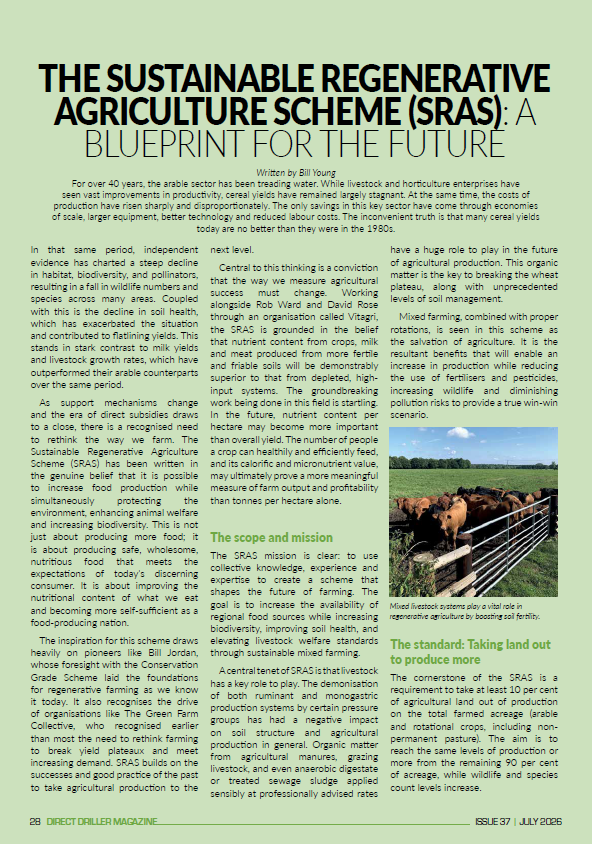
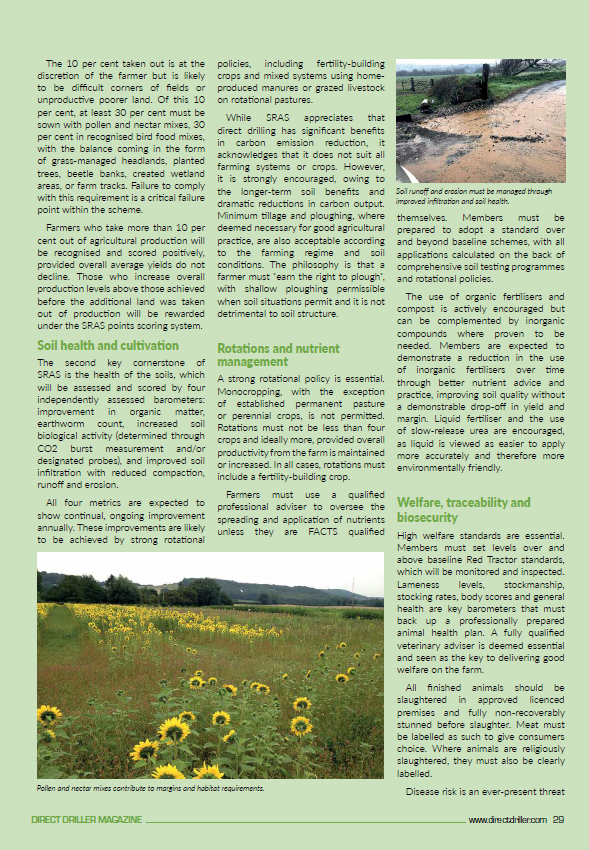
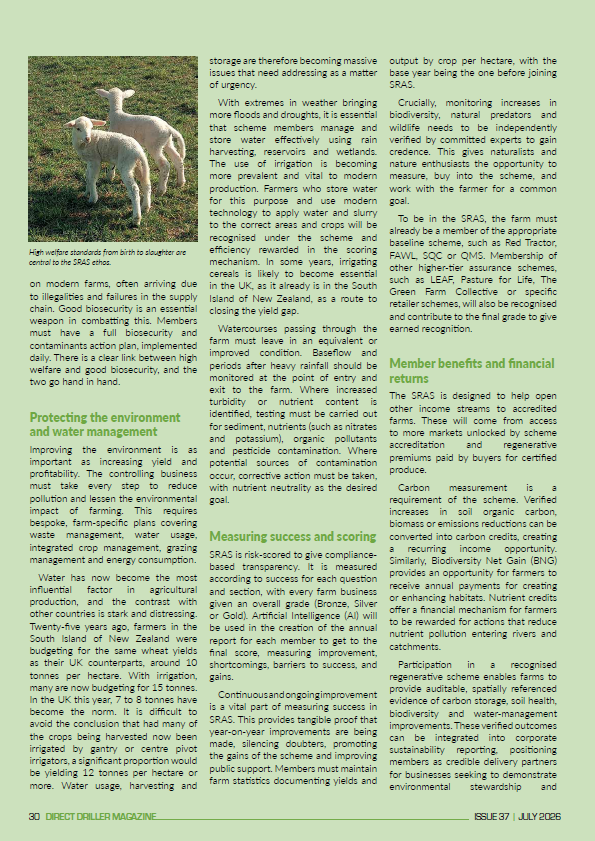
-
Farmer Focus – Tom Martin
Listen to this article Listen to this article As I write, we are harvesting our second field of milling wheat, with yields an absolutely dire six tonnes to the hectare. Throughout the year our wheat has looked really strong, as has everybody else’s in the area, but a triple whammy of BYDV, yellow rust and finally just two inches of rain between March and July has turned promise into disappointment.
I enjoyed David Walston’s observation that things must be difficult this year because even Farmers Weekly isn’t running its traditional harvest headline: “I’m devastated with my 11 tonnes per hectare.” The usual parade of humblebraggers appear to have taken the year off.
But rather than dwell on the beginnings of what is likely to become a six-figure loss on our farm, I’d much rather look back to something altogether more enjoyable, uplifting and encouraging: Groundswell.
I had the privilege of facilitating the final session in the Big Top, attempting the impossible task of distilling nearly 200 seminars, 500 speakers and countless conversations into one closing hour. It quickly became obvious that delegates don’t simply learn in seminar tents; they learn while queuing for coffee, comparing notes over lunch, wandering through the demonstration plots and past stands of exhibitors, and – perhaps most famously – in the Earthworm Arms. As one delegate put it: “All the gold is at the bar and on the walkways.”
I suspect they’re right.
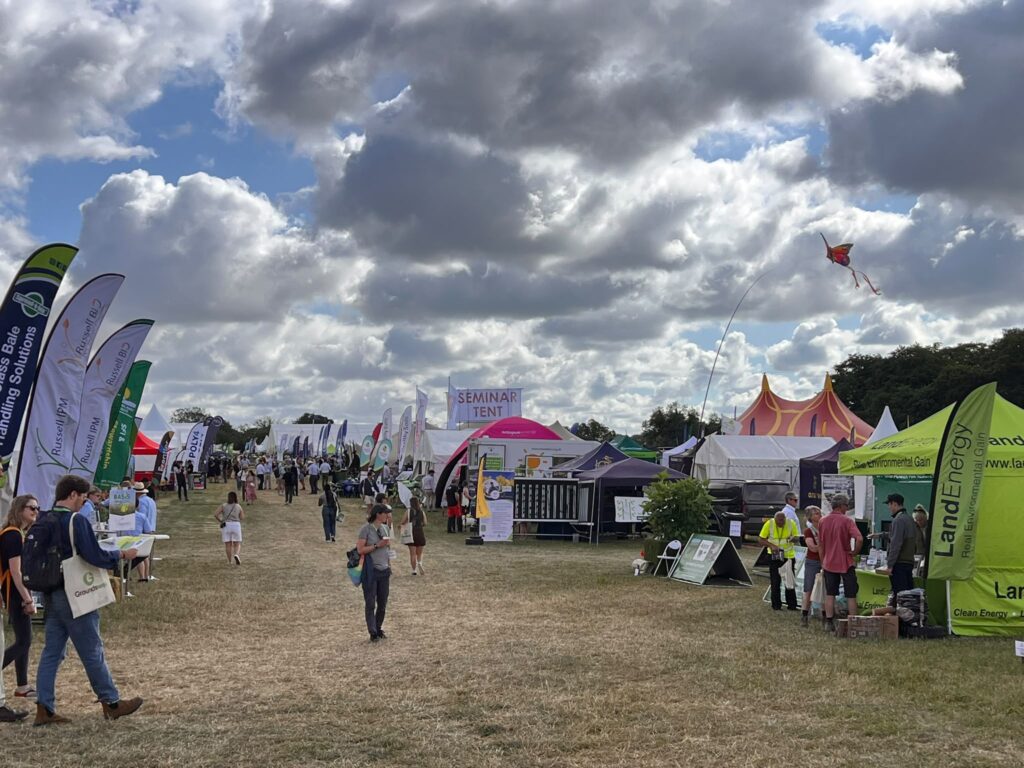
Community before chemistry
If there was one word that quietly threaded its way through Groundswell’s tenth year, it was community.
Not in the sentimental sense, but in the practical one. Farmer-led trials. Grazing groups. Community farms. School visits. Researchers listening to farmers as much as presenting to them. It felt as though regenerative agriculture is becoming less about adopting a prescribed system and more about building networks that allow ideas to travel.
Henry Astor remarked that “Community has become one of the defining issues for my farm and I’m trying to win that back.” That struck a chord with many people.
Perhaps regenerative agriculture’s greatest innovation isn’t biological at all. Perhaps it’s social.
As part of the summary session, I had ChatGPT write a selection of poetry capturing the thoughts of those who fed back to me directly or via the nifty Groundswell app. Here’s one that fits at this point.
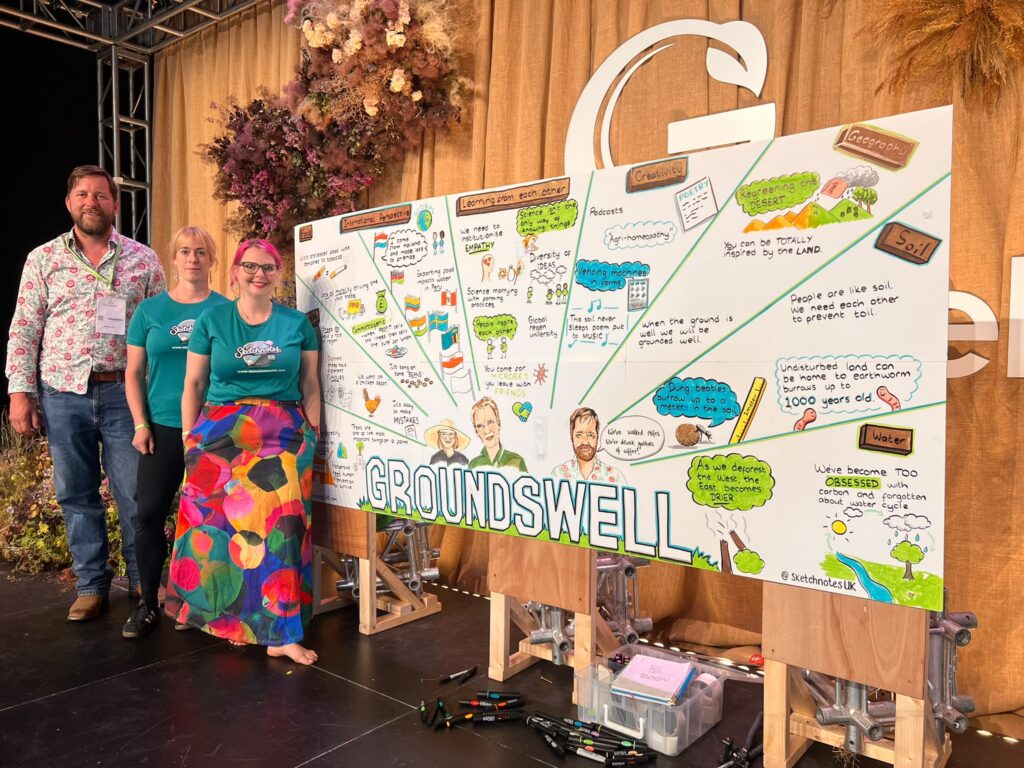
Community First. A Quatrain
Build the shed, improve the soil, measure every field –
none of it means very much if friendships never yield.
Grow the crop, but grow trust too; both are worth the wait.
Healthy farms are built by people – that’s where futures germinate.Soil keeps gatecrashing every conversation
Something else fascinated me. Almost every discussion eventually became a soil discussion. Talk about human health, and someone mentioned fungi. Talk about food quality, and somebody raised nutrient density. Talk about rivers, and before long you were discussing infiltration, roots and organic matter. One delegate commented simply: “Soil is key.” Three words. Probably the shortest summary of Groundswell.
I came away with a notebook full of extraordinary facts:
- Black ants move more soil than earthworms.
- Dung beetles can burrow over a metre into the ground, relieving compaction and improving drainage.
- There are over 7,000 perennial edible plants that could find a place in our diets.
- Charles Whitbread relayed a seminar describing “atmospheric rivers” carrying moisture eastwards, suggesting that our lost western rainforests once acted as stepping stones for rainfall to reach the (now-parched) east of England.
Broadly, Groundswell encourages curiosity. And curiosity changes farming.
Food is becoming the conversation
A few years ago, regenerative agriculture was largely about soil. Now it increasingly seems to be about food as well.
Dr Chris van Tulleken’s sessions prompted countless discussions around nutrition, ultra-processed foods and public health. Bethan Gulliver, in sharing her highlights from his talk, introduced many of us to a new word: commerciogenic – diseases driven by commercial systems that profit from unhealthy choices.
Meanwhile, Darina Allen, the founder of the internationally famous Ballymaloe Cookery School, managed to steal the show with what may have been the quote of the festival: “Carrots take months to grow, and it’s hard work, so don’t you dare boil the hell out of them in the kitchen.”
It’s funny. It’s memorable. And hidden inside is profound respect for farming.
Several delegates also talked about children becoming agriculture’s greatest ambassadors. As Darina put it, use children’s pester power. Once a child has met a farmer, grown a carrot or visited a farm, the questions don’t stop when they get home. They start around the dinner table.
Hope is becoming evidence-based
Perhaps my biggest takeaway was this: Groundswell has become noticeably more hopeful.
Not because people are ignoring the challenges. Far from it. The conversations around profitability, climate, policy and markets were refreshingly honest. But hope increasingly seemed to be grounded in evidence rather than wishful thinking.
Agroecologist Dr Jonathan Lundgren inspired one delegate to admit: “I thought regenerative agriculture was overblown before Groundswell. Jonathan Lundgren’s data completely changed my mind.”
Meanwhile, environmental journalist and author Fred Pearce offered what another delegate described as an antidote to the “doom loop”, reminding us that conservation success stories rarely make the headlines. Wolves continue to expand across western Europe. Tiger populations in India are recovering. Sometimes progress whispers while disaster shouts.
Even the World Bank, one attendee noted, has shifted its assessment. The greater risk may now be not changing.
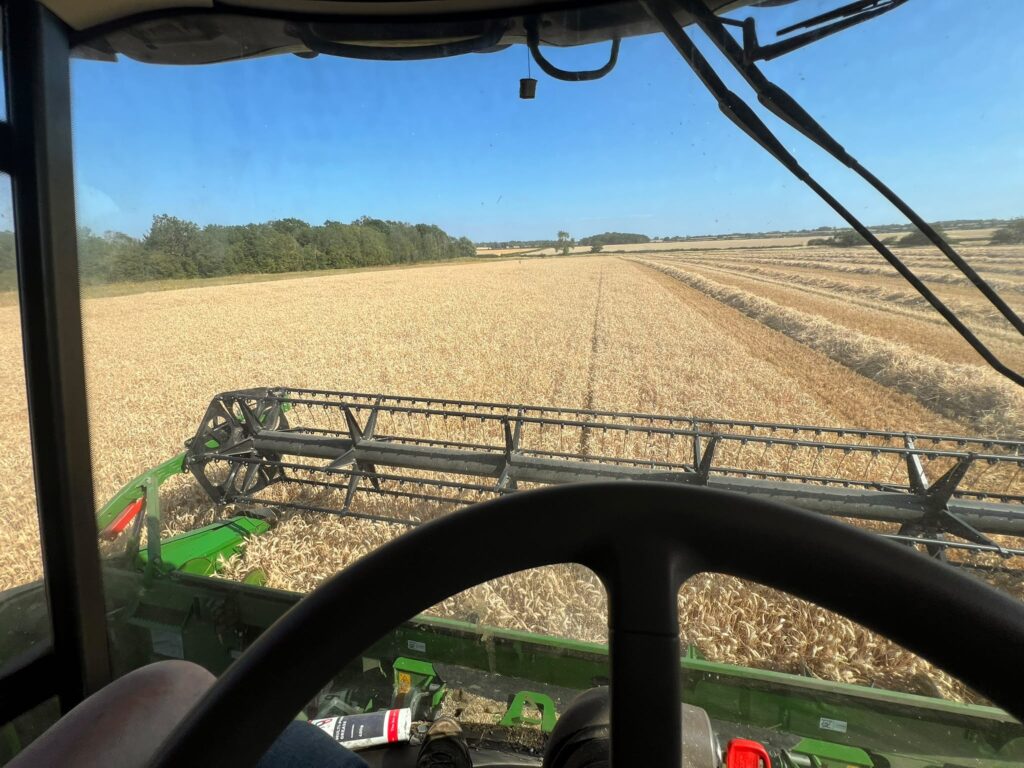
The conversations between the sessions
Groundswell’s organisers deserve enormous credit for assembling world-class speakers. But I increasingly wonder whether the greatest value lies in what happens after the applause. Ideas collide. Notebook margins fill up. Someone introduces you to someone else. A passing comment changes the direction of your next trial.
As another delegate observed: “Knowledge is power, but sharing that knowledge is world-shattering.” That may be the best description of Groundswell I’ve heard.
For all the impressive research, dazzling presentations and practical demonstrations, Groundswell remains gloriously human. People arrive looking for better ways to farm. Many leave thinking just as much about better ways to connect.
As harvest reminds us every year, we cannot control rainfall, disease pressure or commodity prices. We can, however, remain curious. We can keep asking questions. We can borrow ideas generously. We can try something different.
Groundswell doesn’t send us home with all the answers. It sends us home asking better questions, and with a notebook full of contacts who can help with the solution. And perhaps, in the end, that’s a far greater gift.
I can’t finish without thanking the Cherry family and their remarkable team. For 10 years they have quietly created far more than a conference; they have built a community where ideas are shared generously, friendships are formed freely, and optimism is allowed to flourish.
So, if you’ll indulge me, one final poem (thanks Chat!).
The Cherry Family. A Ballad Stanza
They planted more than crops that day, more than tents in summer’s glow;
they sowed a place where questions bloom, and better farmers grow.
A thousand conversations drift like swallows through the sky;
some leave with plans, some leave with hope, none leave quite the same as they arrived.
So here’s to those who cleared the fields, who welcomed every voice;
who proved that changing agriculture begins with someone’s choice.
The marquees soon will disappear, the tramlines fade away;
but seeds once scattered hand to hand outlive a single day.
For harvests come, and harvests go, with fortunes high and low;
yet one of Britain’s finest crops is Groundswell – and it grows.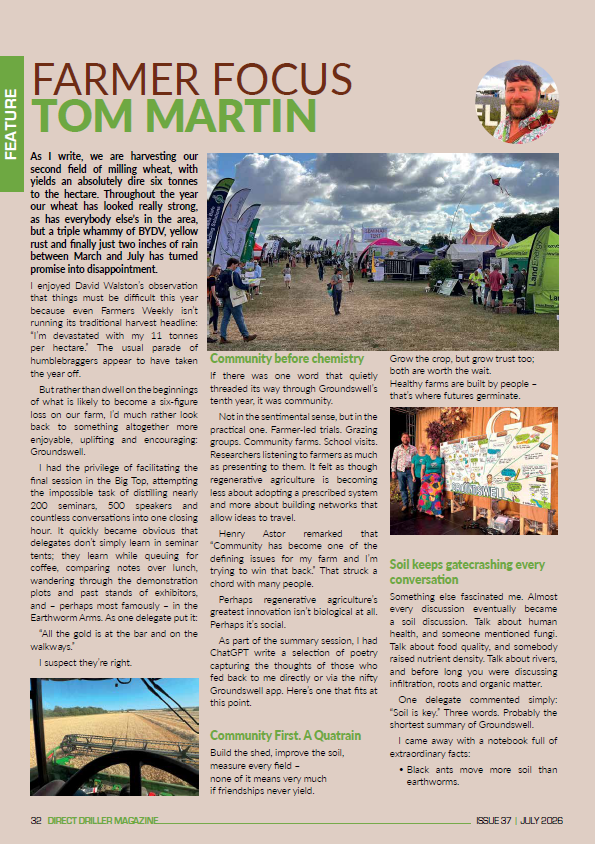
-
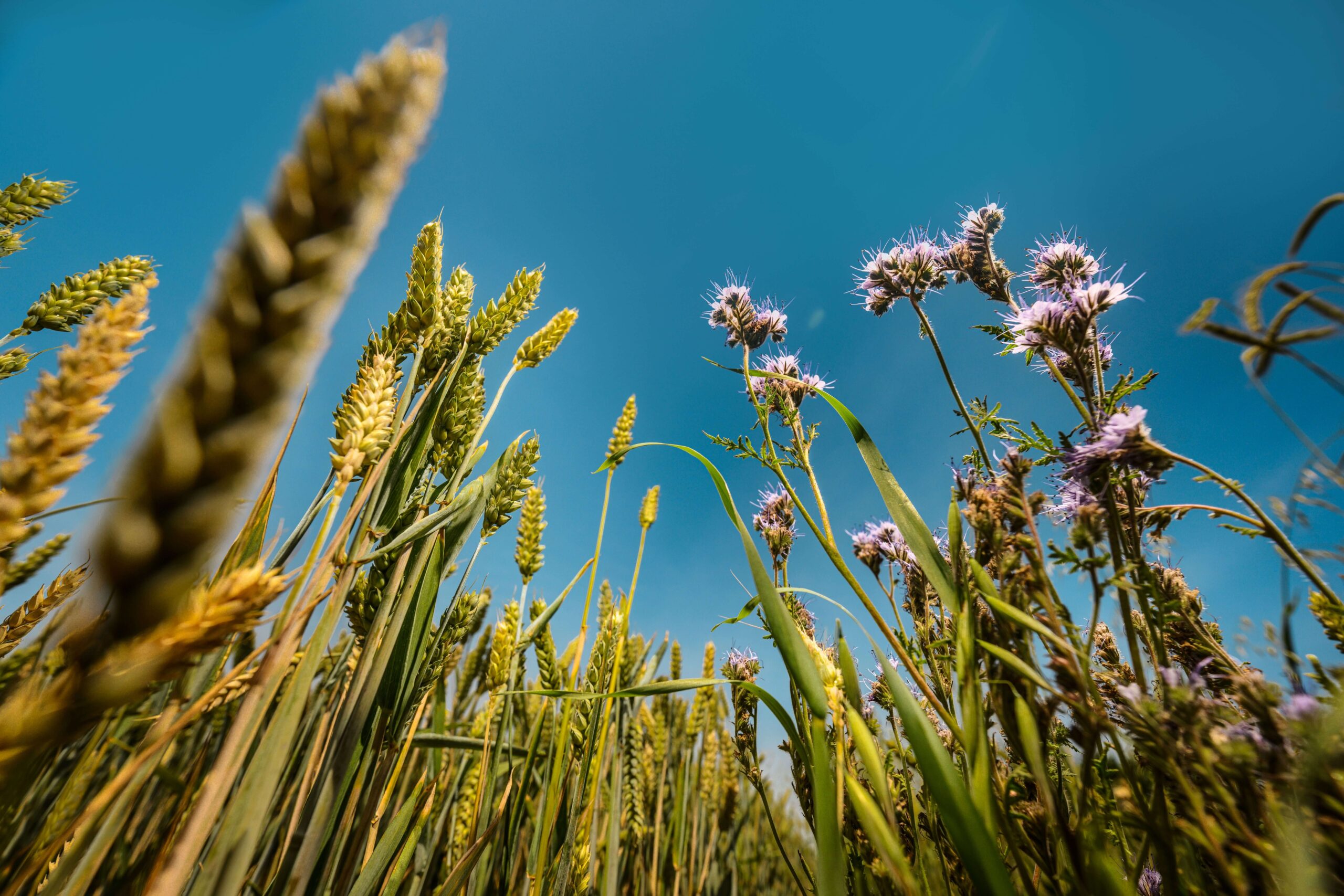
Lloyds Banking Group and Wildfarmed ‘Food & Nature Resilience Fund’ to Scale Investment in UK Regenerative Farming
Listen to this article Lloyds Banking Group and Wildfarmed, the regenerative food and farming business, have partnered to pool investment to accelerate the transition to nature-positive farming and help secure the long-term future of the sector.
The ‘Food and Nature Resilience Fund’ comes at a pivotal moment for the sector as analysis by the Green Finance Institute, conducted with input from Defra and HM Treasury, estimates that ecosystem decline could amount to a 12% hit to GDP over the next decade if nature degradation is not addressed.
The ‘Food and Nature Resilience Fund’ incentivises farmers to farm with nature without taking land away from food production. This allows farmers to make positive improvements to nature recovery on their land, without compromising on economic outcomes. Unlike many existing nature finance schemes, this distinct fund supports the principle that nature recovery and food production are not competing priorities. A core ethos of the partnership is that in order to build a more sustainable food system, the UK needs to advance both of these priorities at the same time.
The fund enables investment from banks, utility companies, insurers and other businesses across food and non-food value chains, bringing together organisations that share a common interest in more resilient food and farmed landscapes to help accelerate the transition of land to regenerative practices.
Water companies Severn Trent and Affinity Water, along with global commercial insurer AXA XL, are among the first organisations committed to the initiative, with further partners expected to be announced.
By pooling investment across sectors to support farmers, the fund aims to create a model that better reflects the reality of farming as central to a resilient economy.
Ben Makowiecki, Agriculture Sustainability Director, Lloyds Banking Group Ben Makowiecki, Agriculture Sustainability Director at Lloyds Banking Group, says: “We have a responsibility to support farmers during this transition. By bringing together businesses with a stake in resilient farming, healthy soils, clean water and thriving natural ecosystems, this fund can help set in motion the pace of change needed to scale regenerative agriculture across the UK while creating a more reliable financial model for farmers.
“This partnership builds on our broader support for farmers through our Agricultural Transition Finance proposition, which rewards the adoption of regenerative practices, as well as our established partnerships with Soil Association Exchange and the Woodland Trust. We also offer Exchange Market, which rewards farmers for reducing carbon emissions through payments from the supply chain, and Routes to Regen, a collaboration between leading food, finance and agribusiness organisations that gives farmers access to a menu of shared resources and support to help them transition to regenerative agriculture.”
Mr Makowiecki says the ‘Food & Nature Resilience Fund’ is focused on ensuring regenerative farming businesses can thrive commercially, so they are well placed to continue supplying food and protecting the environment for generations to come.
He adds: “It is all about resilience. We have 45,000 farming customers across the UK and we want them to be here in 30 years’ time. To do that they need to have resilient, profitable businesses.
“They need to have resilient soils and they need to be able to cope with a changing climate, such as we have witnessed in recent years with the extremes of drought in the summer and wetter winters.
“Therefore, everything we are doing in this space is about making them more profitable, more resilient, and we believe that regenerative farming is one of the key ways to do that. Reducing input costs, having businesses and farms that can cope with heat, flooding, droughts, and so forth.”
The fund also shows the important role private finance can play alongside public grant support, says Mr Makowiecki: “Public funding is important, but to deliver the transition at the pace and scale needed, we also need to bring more private-sector investment into agriculture. That was one of the key outputs from the Farming Roadmap, and it is where products, propositions and initiatives from private companies can play an important role alongside government schemes.
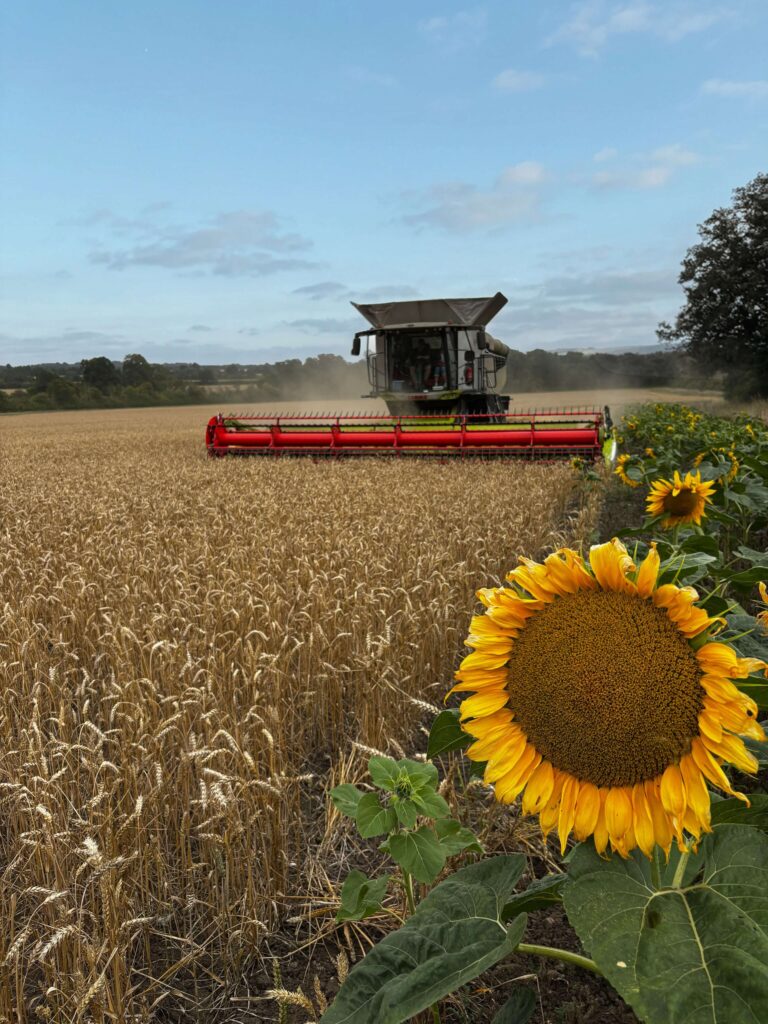
Wildfarmed harvest – the Food & Nature Resilience Fund aims to reward farmers for delivering environmental improvements while keeping land in production “The key thing is that, as well as developing these types of private finance offerings, we need to talk about them and help farmers understand the opportunities that are out there, helping them plan, finance and evidence change in a way that works for their business. The collaboration between Lloyds and Wildfarmed is a good example of that: scaling an existing model that already works for growers by broadening the investment behind it.”
A fundamental principle of the fund is that the shift to regenerative practices must be commercially viable for the farmers undertaking it.
Wildfarmed works with a wide range of world-class research partners to analyse and report on in-field data to demonstrate how its farming practices are making meaningful contributions to improve soil health, increase biodiversity, minimise water pollution and reduce carbon.
The University of Bristol recorded a 79% increase in insect biomass compared to conventionally farmed land (2024). Research organisation NIAB (2025) also found 15 Red List bird species – some of the UK’s most endangered – recorded within Wildfarmed fields.
That wildlife is returning to actively farmed, food-producing land demonstrates that nature recovery and agricultural productivity are not mutually exclusive, and that with the right farming practices and financial support, both can be achieved at scale.
The case for change is also a human one. In a recent survey, 91% of Wildfarmed growers reported a positive impact on their wellbeing and job satisfaction, a finding that reflects the broader ambition of the fund: to build a farming system that is better for nature, better for soils, and better for British farmers.
For Andy Cato, co-founder at Wildfarmed, that support for farming and nature is key.
He says: “Historically, our food system has priced nature at zero. The consequences of this are everywhere, from food price inflation to the fragility of the ecosystems on which we all depend.”
“Nature and food production are too often seen in opposition, with payment schemes forcing farmers to choose one or the other. Yet a resilient, abundant future depends on nature-rich food-producing land. For many years, it has been an ambition for farmers to be rewarded for delivering nature and resilience whilst growing food, not instead of it. This partnership is a big step forward in making this a reality at scale.”
-
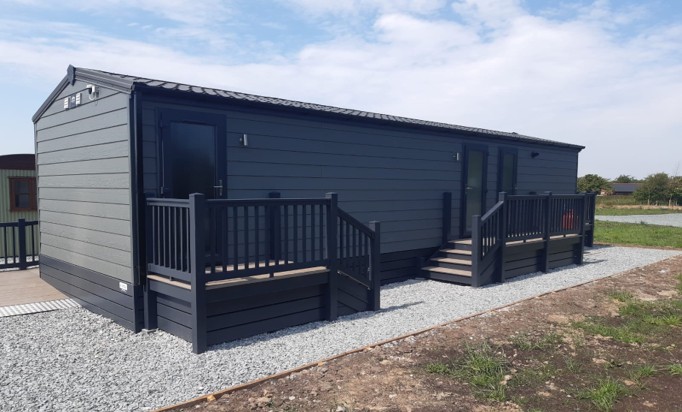
From Field to Facility: Supporting Farm Diversification with Modular Buildings
Listen to this article Written by Lewis Johnson
Being based on the same farm as Direct Driller magazine has allowed us to build some fantastic relationships within the farming and agricultural community. Farmers have become a big part of our business, particularly those looking to diversify or improve their campsites with high-quality, bespoke facilities. We have a huge appreciation for the work farmers do and are proud to support them with practical, cost-effective buildings that help their businesses grow.
If you’re considering a project, we’d love to welcome you to our workshop. Come and see our buildings being manufactured, chat through your ideas with the team, and see what’s possible. We can build just about anything, so if you have an idea, we’d love to hear it. While you’re here, you can also take the opportunity to visit the farm and meet the Direct Driller team.
Across the UK, farm diversification has become an increasingly important part of running a successful rural business. Whether driven by rising costs, changing markets or the desire to create a more resilient income stream, many farmers are looking beyond traditional agriculture and exploring opportunities such as campsites, glamping sites, holiday accommodation, farm shops and visitor attractions.
The good news is that demand for rural tourism remains strong. More people are looking to spend time in the countryside, and farms are perfectly placed to offer unique experiences that simply can’t be replicated elsewhere. However, turning an idea into a successful business often comes down to having the right infrastructure in place.
One of the first challenges many farmers face is facilities. Visitors may love the location, but they still expect clean toilets, quality showers and a professional welcome when they arrive. In today’s world of online reviews and repeat bookings, those facilities can have a significant impact on the success of a site.
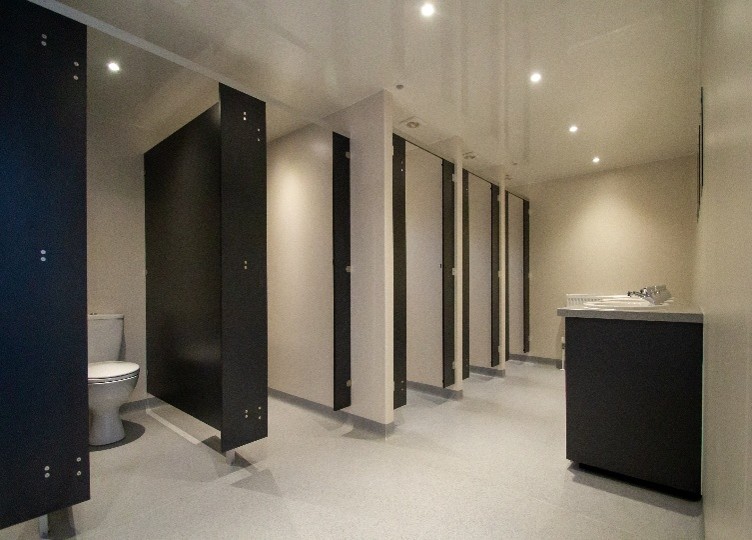
At Arkem Leisure, we’ve worked with countless farmers over the years, helping them develop and improve their tourism businesses through bespoke modular buildings. From toilet and shower blocks to site reception units, accessible facilities and welfare buildings, we’ve seen first-hand how the right infrastructure can help a diversification project grow from a small idea into a thriving business.
Unlike traditional construction, our buildings are manufactured off-site and delivered ready for installation. For busy farming businesses, this can be a major advantage, reducing disruption and allowing projects to move forward without months of contractors on-site.
We’ve worked with campsite operators at all stages of their journey. Some start with a handful of pitches and a simple toilet block before expanding as demand increases. Others are investing in larger developments, including luxury lodges and dedicated reception buildings to create a premium visitor experience.
For many farmers, the question is no longer whether diversification is worth considering, but how best to deliver it. Having the right facilities in place from the outset can make all the difference, helping to create a positive visitor experience, encouraging repeat business and providing a strong foundation for future growth.
In England, you can run a pop-up campsite on your farmland for up to 60 days in any calendar year without needing full planning permission, under Schedule 2, Part 4, Class BC of the Town and Country Planning (General Permitted Development) Order.
- Maximum of 50 pitches at any one time (tents, campervans and motorhomes — not static caravans).
- You must provide on-site toilet and waste disposal facilities.
- Notify your Local Planning Authority in writing before opening each calendar year, including details of facilities and operational dates.
- Restrictions: Does not apply near Scheduled Monuments, listed buildings, SSSIs or in certain flood zones.
Always check with your local planning authority first, as individual sites and local interpretations can vary.
In many cases, the ability to add facilities in phases, starting with essential modular toilet and shower blocks, gives farmers the flexibility to test the market and grow at a pace that suits both their business and their budget.
Cost is another important factor. Traditional construction projects can quickly become expensive and time-consuming, particularly in rural locations. Modular buildings offer a practical alternative, typically costing around half the price of a conventional build while still providing a durable, long-term solution.
Every diversification project is different. Some farmers are creating family-friendly campsites, others are developing glamping sites, educational facilities or farm-based visitor attractions. Whatever the project, the common theme is the need for practical, reliable buildings that can be installed quickly and adapted as the business evolves.
As diversification continues to play an increasingly important role in British farming, the demand for flexible infrastructure is only likely to grow.

-

A New BYDV Tool Arrives This Summer
Listen to this article AHDB will launch a powerful new BYDV tool in August. Jason Pole explains how it will give farmers greater control over aphids in winter cereals.
The challenge
Barley yellow dwarf virus (BYDV) can cause major yield losses in winter wheat and winter barley, so virus-spreading aphid vectors need careful management, especially in higher-risk situations. When neonicotinoid seed treatments were withdrawn in 2018, it set back aphid management by decades and saw a return to the routine use of foliar pyrethroid sprays in the autumn. Although pyrethroids are relatively cheap, every spray puts pressure on non-target organisms and increases insecticide-resistance risks (some UK grain aphids already have moderate levels of resistance).
With no other mode of action groups authorised for BYDV management, minimising pyrethroid sprays is a critical resistance-management tactic.
Additionally, as the UK climate warms, aphids are flying for extended periods and staying active in the crop for longer. Certainly, the relatively warm conditions in winter and spring have contributed to a relatively high number of reports of BYDV symptoms in UK crops this year.
The new BYDV tool will underpin better management decisions to keep disease at acceptable levels.
In this article, I discuss what sets the new BYDV tool apart from its predecessor, how farmers shaped its development and where you will find the tool.
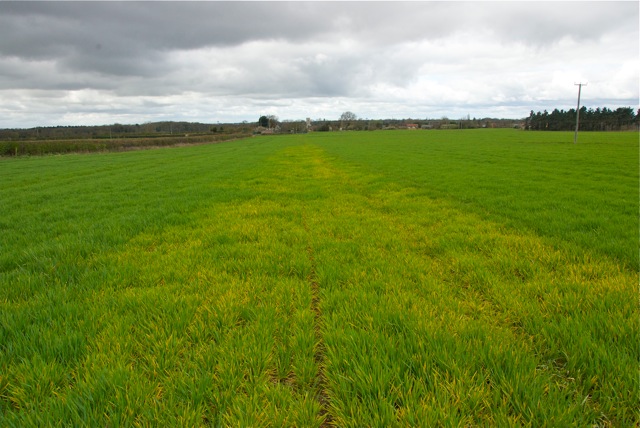
A field of barley yellow dwarf virus (BYDV) Cereals & Oilseed Region: East. Description: A field of winter barley infected with BYDV in Eriswell, Spring 2012 Photo must be credited. Image Type: Print. Tags: outdoor. Current tool
The current BYDV T-sum tool has been around for several years. It predicts the presence of the second aphid generation (which is most associated with BYDV spread) in crops with just two inputs:
- A start date (crop emergence or spray date)
- Accumulated daily air temperatures (from the start date)
It is a simple and effective approach but overlooks many nuances that influence virus-transmission risks. To compensate, it is conservative and tends to suggest more sprays than may be required to prevent unacceptable yield losses.
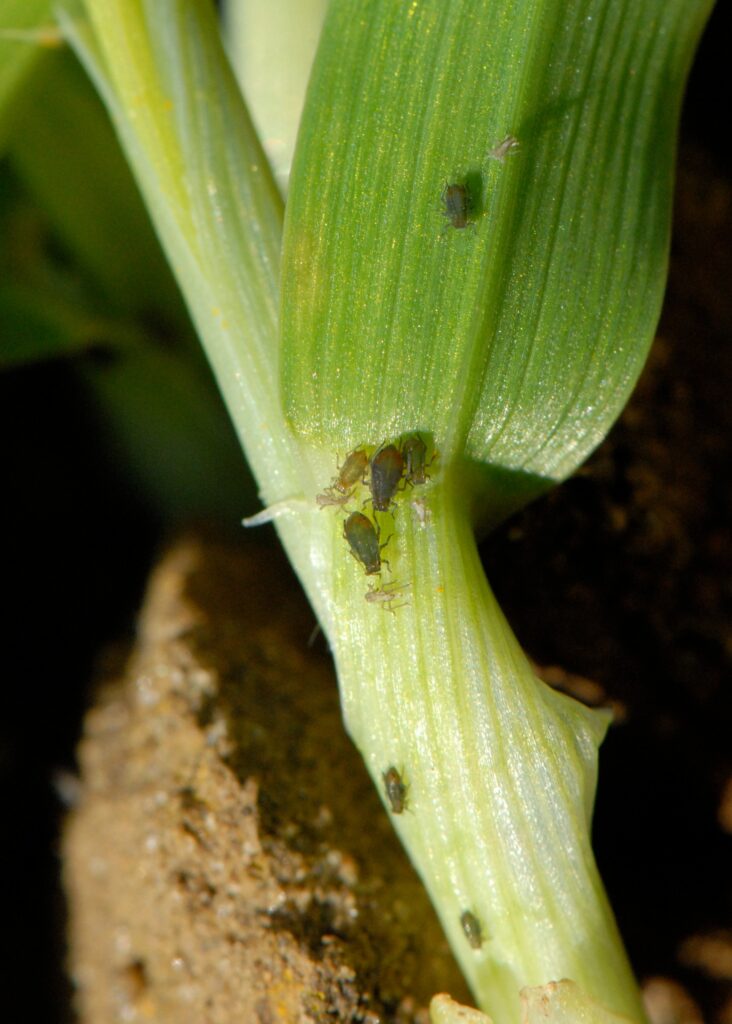
Bird cherry-oat aphid (Rhopalosiphum padi) on winter barley Cereals & Oilseed Region: UK. Description: Bird cherry-oat aphids on a winter barley leaf sheath Photo must be credited. Used in AHDB Encyclopaedia of pests and natural enemies in field crops. Image Type: Print. Aphid advances
Following decades of advances in aphid biology science, virus epidemiology and computer modelling, we knew there was scope to develop a much better tool. In fact, this was a key conclusion of a 12-month review of BYDV risk (2018–19) by the Game and Wildlife Conservation Trust (GWCT).
Based on the review’s recommendations, we funded ADAS in 2019 to develop a model to account for additional measures of risk and provide comprehensive information on BYDV. Although bird cherry-oat aphid, rose-grain aphid and grain aphid all transmit BYDV to cereals, the ADAS work confirmed that the former aphid is by far the most significant virus vector across the UK, so we trained the model on this species.
Rose-grain aphid is rarely seen in winter crops (it overwinters on roses) and grain aphid flies in relatively low numbers in the autumn, which was confirmed by recent in-field monitoring work and results from the Rothamsted Insect Survey (RIS) suction-trap network (across England and Wales).
Although grain aphid can spread BYDV, this only happens in limited situations, such as when relatively high summer infestations use green bridges (e.g. grass weeds or cereal volunteers) to move to following cash crops, with early emerging cereals (before mid-September) mostly affected.
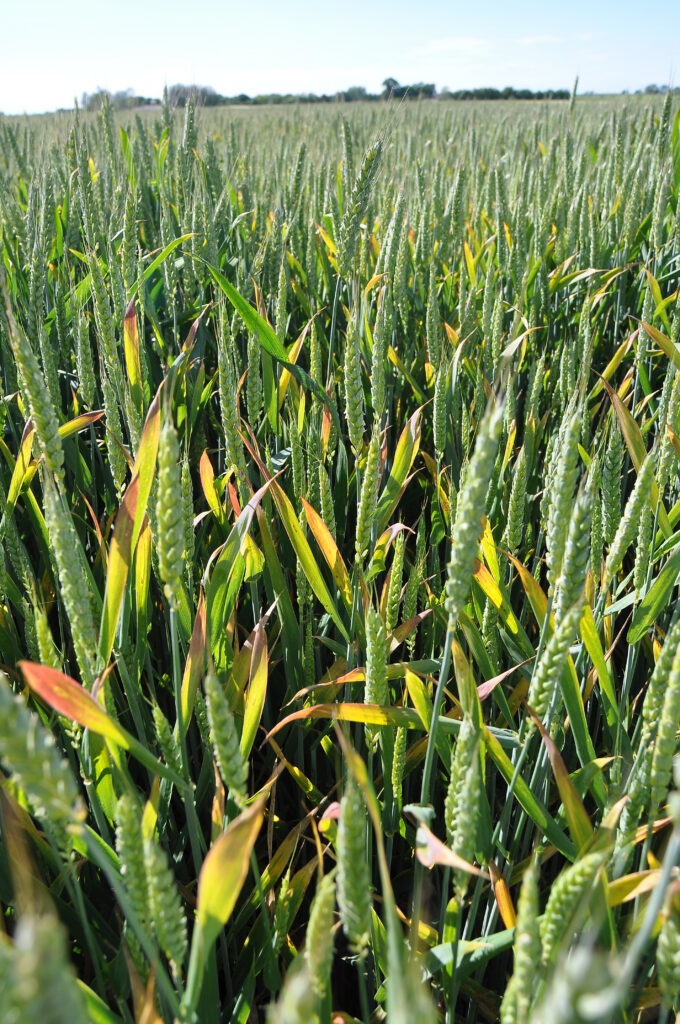
BYDV symptoms in cereals taken by Paul Gosling during a visit to AU Flakkebjerg research centre located near the heart of the Danish cereal and seed production. Tool data
The current BYDV T-sum tool assumes aphids are present and all carry the virus at the start date, whereas the new BYDV tool makes use of aphid data from suction traps.
According to RIS, suction trap data is representative of aphids flying over a radius of about 80 km. The ADAS project found that suction traps provide a good indication of aphid migration trends, crop infestations near traps (especially up to 10 km away) and the proportion of aphids carrying virus up to 40 km away.
Based on our virus screens of aphids caught in suction traps over several autumns, the model assumes about 20% of aphids carry BYDV, but this figure is replaced with in-season data (when available) to provide the best indication of risk. Although the 20% value may appear low, it is because the virus is not passed from parent to nymph, so new aphids need to feed on infected plants to take it up.
The investment (skill, time and money) needed to locate and identify aphids (and determine if they carry BYDV) means that suction-trap results provide a very useful proxy for in-field pressures.
In addition to aphid pressures, the new tool considers many other data sources automatically. For example, it imports local temperature (minimum, maximum and mean) data. For forecasting, it uses five-year historic data for full growing seasons (1 September to 31 August), as well as in-season forecast temperature data (typically, up to the next ten days), which is continually replaced with actual local data.
The tool also considers pyrethroid insecticide persistence (which can still deliver high levels of control several days after application) and accounts for the diminishing returns associated with follow-up sprays.
The tool only requires a few farm-specific inputs to run initial risk reports:
- Field location (to tell the tool where nearest suction trap is and the best weather data to use)
- Field surroundings (arable or other)
- Drill date
- Crop type (winter wheat or winter barley)
To fine-tune the results for your field, we recommend you override the default economic and agronomic values:
- Established plant population density
- Predicted yield
- Grain price (current or expected)
- Sustainable Farming Incentive (SFI) participation (yes or no)
- Treatment cost
- Spray dates
When you run an assessment, the tool indicates the daily risk level for the next few weeks based on the estimated proportion of plants infected. It also shows the potential impact on yield and financial losses.
Critically, it reveals when you need to consider a spray based on the economic threshold, which is the predicted point when the cost associated with yield loss starts to exceed the treatment cost.
Even though aphid activity drops significantly during the winter, the tool will continue to track risk, which is particularly important in our warming climate.
Finally, the tool also projects financial and yield losses over time based on drilling dates. This can inform sowing decisions to minimise BYDV-infection risk and the need for sprays.
In high-risk situations, consider drilling crops after mid-October or grow a variety with BYDV resistance or tolerance – the Recommended Lists for cereal and oilseeds (RL) 2026/27 features several options.
As resistance/tolerance is complex and diverse, the new tool does not currently account for it. However, such varieties are more forgiving when weather forces sub-optimal or missed sprays.
Initial validation work on the model that underpins the tool found it could accurately predict BYDV risk, based on symptom development in untreated crops.
It also guided control as good as or better than the current BYDV tool in treated tramline and plot trials. The best news is that it did this with fewer insecticide applications and provided yield benefits (where BYDV was present).
As a decision support tool, it needs to be used alongside local knowledge and reflect risk attitudes to determine optimum spray dates.
This year, we’ve worked with farmer groups to perfect the tool in time for its mid-August release, which will be available at ahdb.org.uk/bydv
Investment summary
The new tool follows a combined investment in BYDV research of over half a million pounds since 2018, which includes £124,500 (cash and in-kind contributions) from BASF, KWS, Limagrain and Syngenta. The investment covers the final phase of tool development and maintenance until the end of the 2028/29 financial year. ADAS led most of the research and development activity.
-
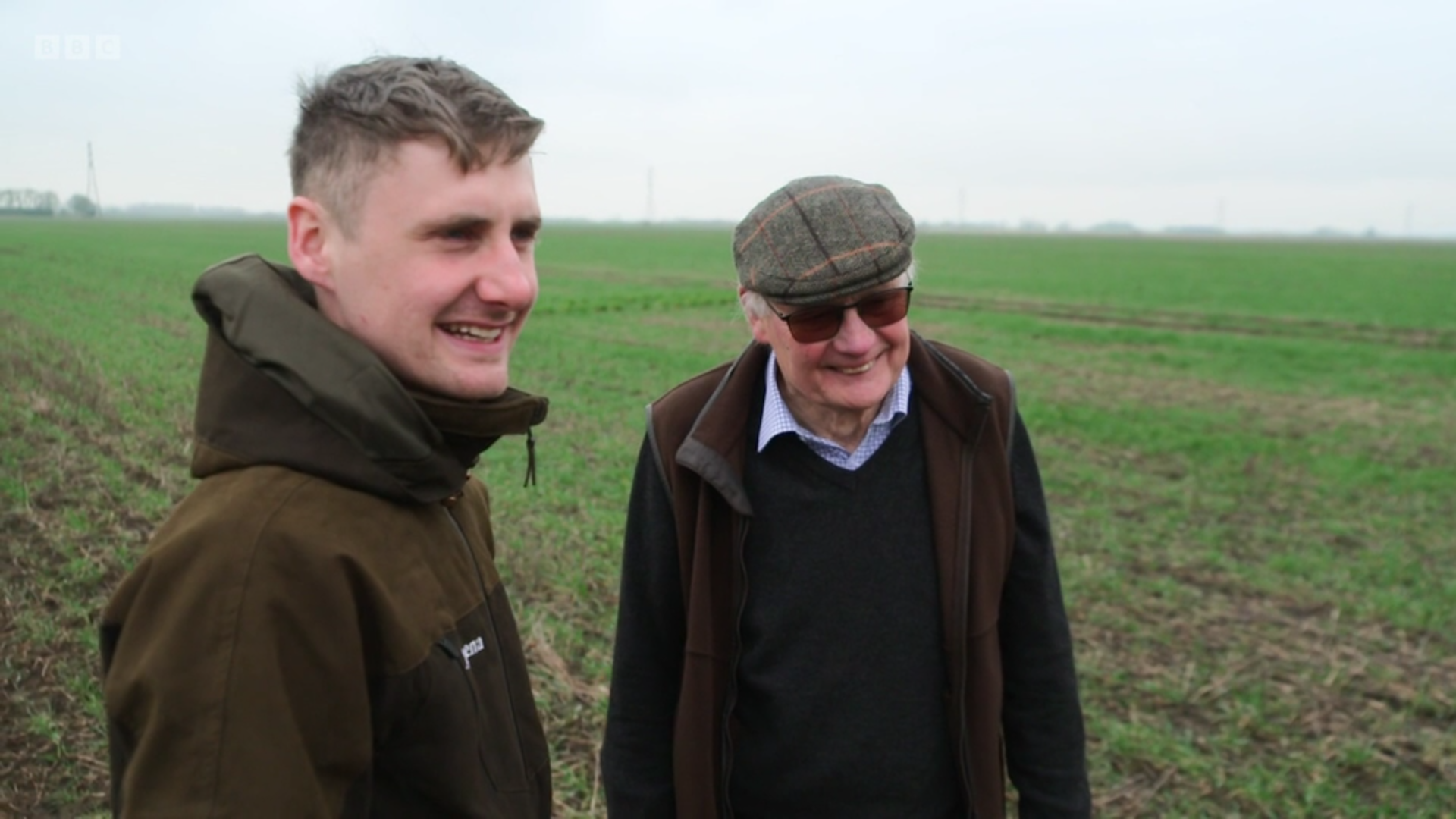
Farmer Focus – Gent Family
Listen to this article Listen to this article Two generations, one vision
The Gent family has been farming in South Lincolnshire for four generations, but while the mission of growing food remains the same, the world around it has changed beyond recognition.
On their 800-hectare family farm, the Gents have been practising no-till farming since 2008. Today they operate under the Gentle Farming brand, born out of a desire to bridge the gap between regenerative practices on the ground and the opportunities this brings in the wider world. By focusing on soil health, carbon sequestration and nature, the aim is to turn environmental stewardship into tangible value.
This time it’s just two of the three generations writing: Tony Gent brings his hands-on experience of spring drilling in a changing climate, while Thomas Gent looks at the hard numbers behind the UK’s emerging nature markets.
Navigating the reality of nature markets
By Thomas Gent
The policy trajectory in British agriculture has reached an unmistakable crossroads. The government’s updated 25-year environmental and agricultural blueprints make one point perfectly clear: with public accounts facing immense structural pressure, the state explicitly expects a substantial portion of future farm income to be generated from private nature markets.
Conceptually, as entrepreneurial farmers, we should welcome this. If corporate balance sheets can be leveraged to fund soil health, carbon sequestration and habitat restoration, rather than relying solely on the British taxpayer, why wouldn’t we want that? It represents a massive potential injection of capital into rural economies.
However, as we transition into this new era, we need to strip away the environmental rhetoric and look at a cold, hard mathematical reality. Right now, there is a fundamental issue of scale that the wider agricultural industry is entirely ignoring.
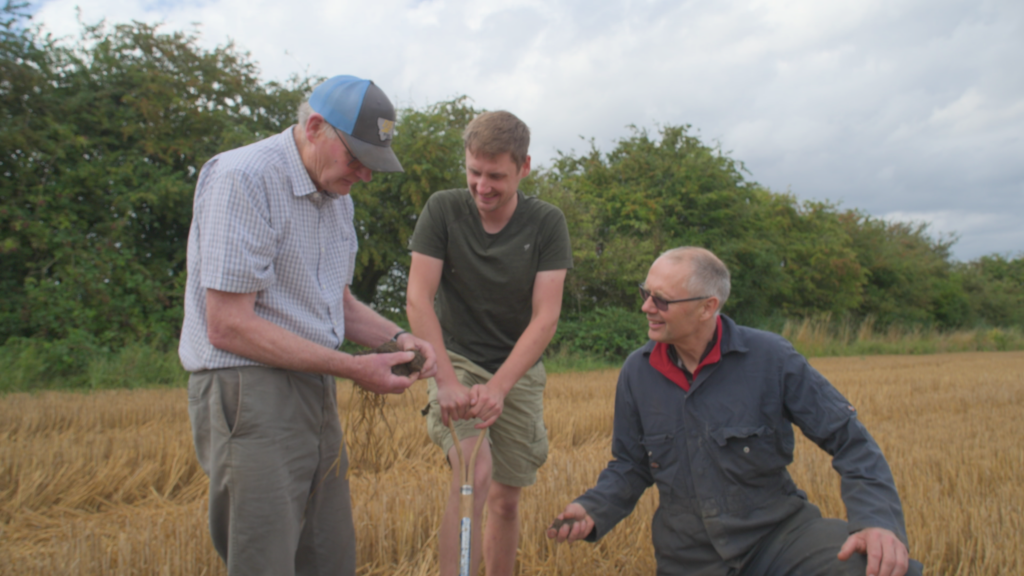
Let’s look at the actual numbers shaping our landscape:
- The UK agricultural budget: following the 2025 Spending Review, Defra now has a commitment of over £2.7 billion a year for sustainable farming and nature recovery from 2026/27 onwards.
- The global voluntary carbon market (VCM): recent estimates from Fortune Business Insights and Roots Analysis put the entire global VCM at somewhere between $1.6 billion and $2.8 billion (roughly £1.25–2.2 billion) — worth noting that market-sizing methodology varies enormously between analysts, with some estimates running much higher and others much lower.
- The UK biodiversity net gain (BNG) market: while growing at a staggering pace since becoming mandatory, the latest analytics from Biodiversity Units UK show the total BNG transaction market at around £93 million annually — closing in on the £100 million mark.
Put those figures side by side, and the illusion of a seamless transition evaporates. The entire global voluntary carbon market is smaller than, or at best roughly on a par with, the domestic farming budget of the United Kingdom alone. Meanwhile, our home-grown BNG compliance market — despite all the headlines and intense developer demand — currently represents little more than 3 per cent of the state funding it is ultimately meant to relieve pressure from.
The takeaway isn’t that nature markets are a fad; far from it. There is a genuinely revolutionary opportunity for landowners spanning soil carbon, habitat banking and natural flood management. But fundamentally, these are still developing, highly illiquid markets. Right now, they are simply not deep enough or mature enough to pay for everything farmers want or need to do on the ground.
Beyond the sheer volume of money, we have to acknowledge that nature markets operate on a completely different playbook to the one British agriculture has used for generations. Historically, farmers are accustomed to state-backed environmental schemes. Government payments under old systems — and even newer iterations like SFI — carry very specific traits:
- They are largely non-competitive; if you meet the baseline criteria, you get the contract.
- They are structurally straightforward.
- They carry zero counterparty risk. The state will not default on your payment mid-agreement.
Private nature markets turn this entire dynamic on its head. In the private arena, you are entering a highly commercial, competitive market. You are dealing with corporate buyers, legal covenants, additionality clauses and permanence risks. If a corporate buyer goes bust or market integrity standards pivot mid-contract, you carry genuine business and counterparty risk.
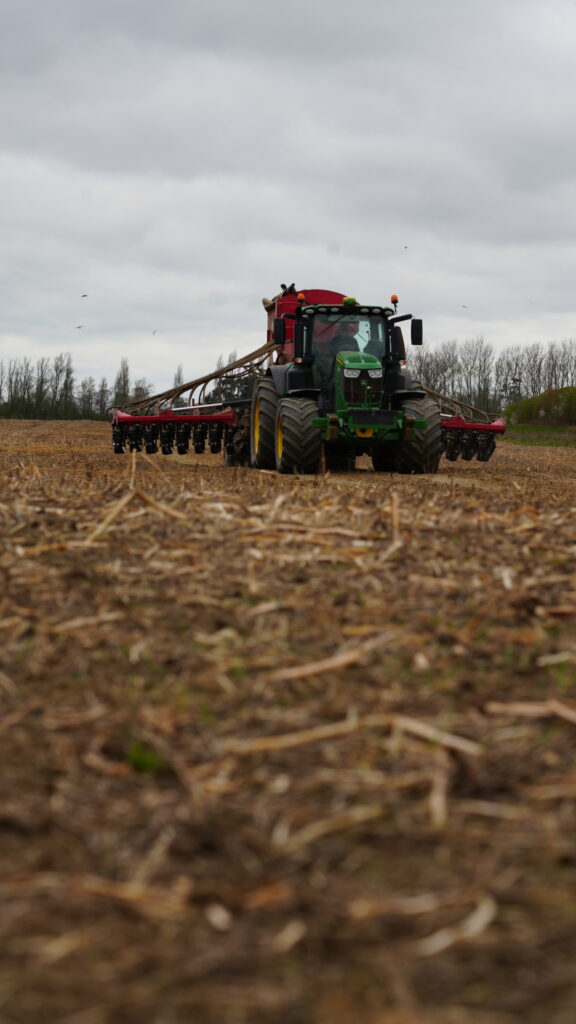
Having been actively developing and trading within nature markets for around five years now through Gentle Farming, I can tell you firsthand: the serious money is there, and the opportunities are entirely real. But it is not low-hanging fruit. Success in this space requires a radical upgrade in how we manage farm data, contracts and risk. It requires us to stop thinking like passive land managers filling out subsidy forms and start thinking like sophisticated asset managers trading a complex ecological commodity. You need to understand your baselines, protect your legal liabilities, and know how to market your farm’s unique environmental data directly to corporate customers.
We are moving away from a world of guaranteed safety nets and into a world of competitive commerce. We shouldn’t shy away from it; this is arguably the most exciting, entrepreneurial era in which to be part of British farming.
Spring establishment in a changing climate
By Tony Gent
Climate change has brought us wetter winters, followed increasingly by a run of dry spring and summer conditions. That’s a real challenge for spring crop establishment on all soils, but especially so on heavier land, where patience is constantly tested waiting for the right conditions.
The shift from what feels like continuous rain to bone-dry, with nothing in the forecast, is happening more suddenly and more extremely than it used to. Traditionally, cultivated soil can look deceptively dry on the surface – bare, rough and uneven – while hiding a wet, soft, cold layer just a few centimetres underneath. That layer has to be treated with real care to avoid damage.
With a no-till structure, the soil hasn’t retained excess water in the same way and is much firmer, allowing it to carry traffic. What we don’t have is the luxury of forcing it open with a coarse tine to help it dry and warm. Like cultivated bare soil, no-till soil will still swing to very hard and dry, and the ideal seeding window is short either way.
In recent years, retained surface residue and cover crops have helped us manage that drying period. There are two ways to handle cover crops ahead of seeding. The first is to leave them in place to draw off excess moisture and support soil biology as the ground warms, then destroy them at seeding, either chemically or with a roller crimper. This approach only really suits lighter soils; on heavier land the structure at depth may be fine, but the surface stays too wet and sticky.
For our soil, the method that works best after years of experience is to manage the density of the cover crop carefully enough to let sun and wind reach the surface and dry out the top crumb, but with enough shade to soften the extremes between wet and dry. Combined with a good build-up of root structure, worms and biology, this is the best compromise we’ve found for spring seeding.
When it comes to putting seed in the ground, the rule of thumb is that the larger the seed, the better it copes. Spring beans are usually first in, sown a little deeper than wheat, though not much, given how firm the no-till soil is. That keeps them in warmer soil and lets them root quickly into the moisture underneath. Beans are the ultimate test of soil structure and moisture retention, and we find they respond exceptionally well to soil that’s had years to build structure under no-till, even in heavily trafficked tramlines.
Spring wheat can be drilled into no-till ground before conventional cultivation would allow, giving it an early start on heavy soil, with worms and biology quickly repairing any damage caused by compromised timing.
Spring oats go in last, being the most tolerant of both timing and drier establishment conditions. They establish quickly and produce strong, robust growth.
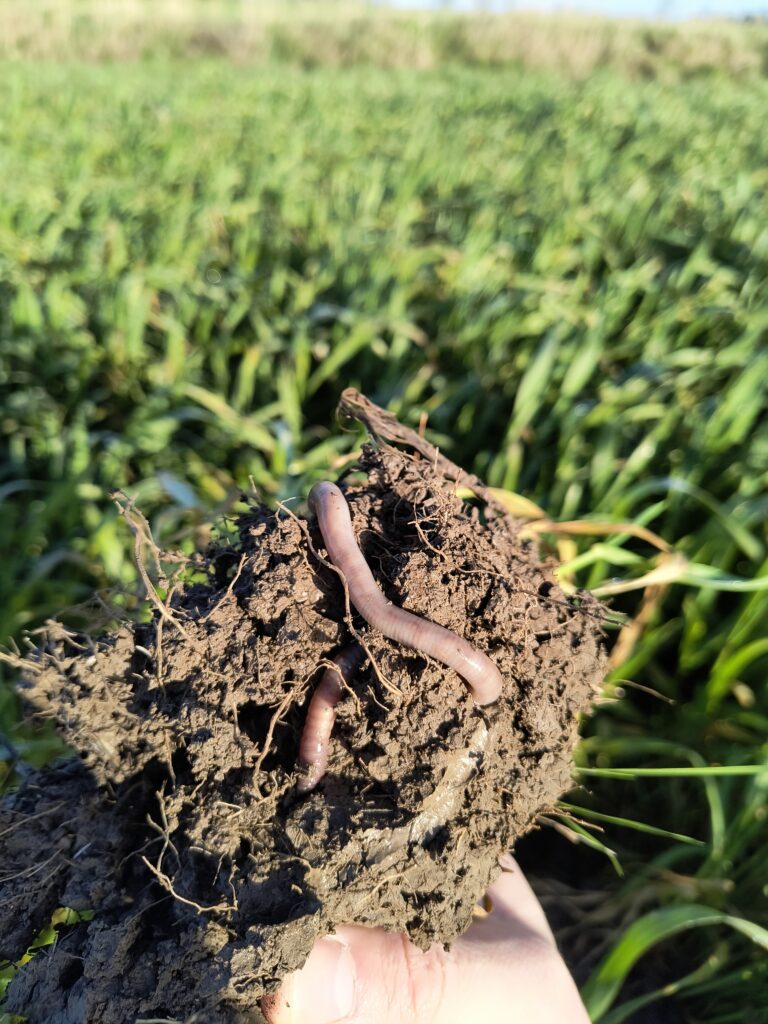
The key, particularly on heavy soil, is to use a disc-based drill to minimise soil disturbance and keep surface residue intact. That’s essential for stabilising moisture as the now near-inevitable dry spell sets in.
It’s also striking how much more stable moisture at depth is once you have an established no-till system in place. Good capillary action holds water in the open pore structure created by microbial activity, worms and old roots; a structure that stays in place because the soil’s underlying framework is no longer being pulled apart by machinery.
Taken together, these two perspectives show why Gentle Farming works as a family business: Tony’s decades of hands-on soil knowledge keep the farm resilient through increasingly volatile weather, while Thomas’s focus on nature markets is building the commercial infrastructure to turn that resilience into long-term value. The soil comes first; everything else, from carbon credits to biodiversity units, has to be built on top of it, not instead of it.
That’s the balance we’re trying to strike: patient, hard-won agronomy on the ground, matched with a clear-eyed, unsentimental view of where the real money currently sits.
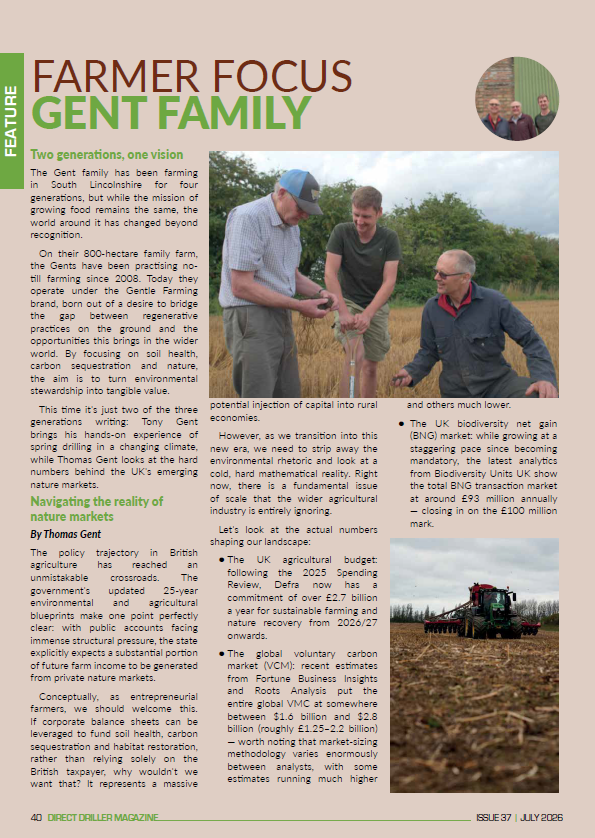
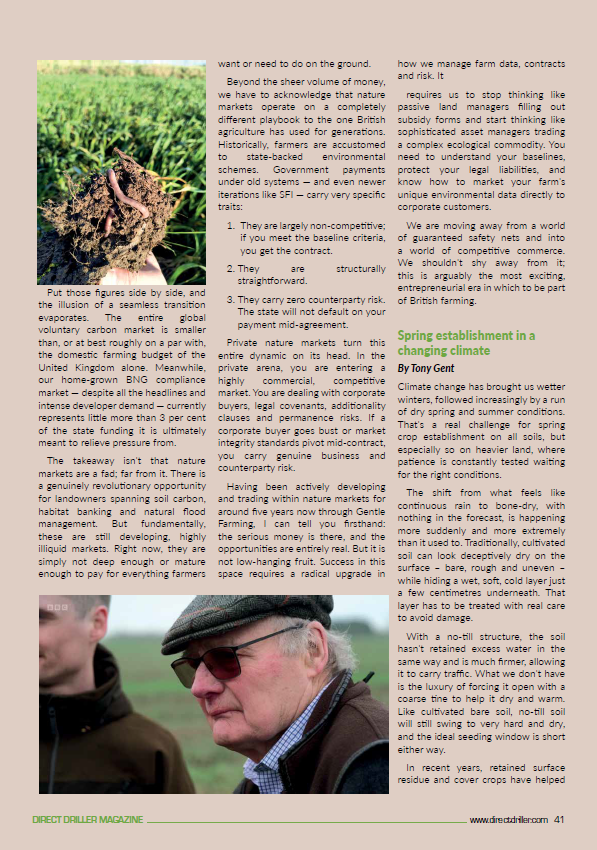
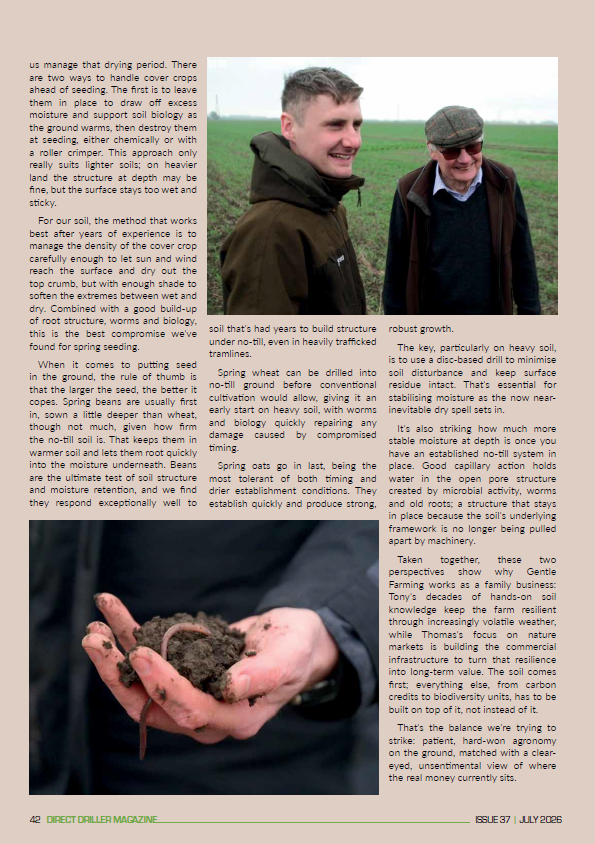
-
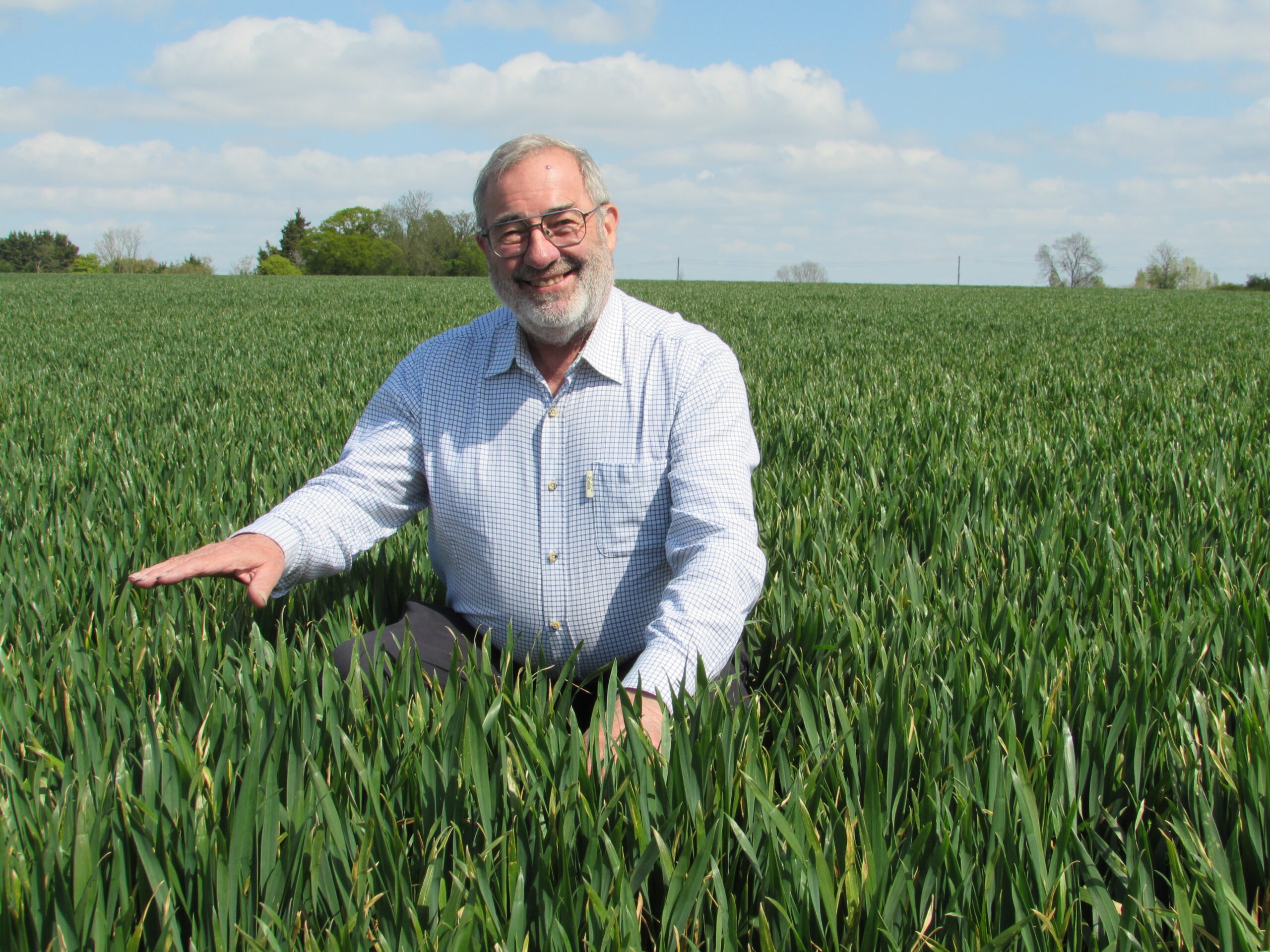
Can the UK’s Market-Leading Winter Wheat Continue Its Positive Trajectory?
Listen to this article Following its arrival on the 2024 Recommended List (RL) just two and a half years ago, Group 3 soft wheat Bamford became the UK’s market-leading winter wheat for the 2025/2026 season – the first Group 3 variety to achieve that number one position since Robigus in 2005. However, with just two commercial seasons under its belt, ever-rising popularity among growers and strong seed industry support, could Bamford’s best years still lie ahead, suggests Hutchinsons’ National Seed Manager David Bouch.
David says: “With three end markets and a yield still rivalling the best hard Group 4 feed wheats, it’s not hard to understand why Bamford has been on a continuous upward curve. An overall market share of just over 14% of C2 seed sales for 2025, achieved against a very competitive line-up of other varieties, was remarkable, particularly when you consider the total percentage of Group 3 seed sales for harvest 2024 was just 1.6%.
“For any variety to become a market leader, it has to perform consistently well from day one, and Bamford has done that since I first observed it in 2022 trials. Even last season, when we saw the impact of the breakdown in yellow rust resistance, it was interesting to note that Bamford was judged as being safer than many other popular varieties.
“So, have we seen the best of Bamford yet in term of its yield performances? Based on a broad assessment of the last three seasons, during which we’ve had two extremely dry years and one year when it never seemed to stop raining, I’m tempted to say no. Hopefully, 2026 will finally deliver better growing conditions for all our farmers across all regions and prove me right.
“Whatever happens weather-wise in the run-up to harvest, it’s important for growers to remember that Bamford has already proved itself on different soil types and in differing conditions across all regions. On treated yield, it competes favourably against other popular Group 4 feed varieties, such as KWS Scope, Champion and LG Beowulf and, importantly, it possesses both a higher untreated yield and has far superior end market potential than all of them.
“Whether it will retain its number one position for crop27 is difficult to say (given the competitive nature of the RL and arrival of other newer varieties), however I can certainly see it remaining as the dominant Group 3 variety and, for me, it still sets the benchmark as the UK’s current leading soft wheat,” he concludes.
Suffolk-based arable farmer and successful machinery manufacturer Jeff Claydon has always had a preference for soft wheats capable of delivering a premium. Now on his second crop of Bamford, Jeff first saw the variety in 2023 at Elsoms’ Cowlinge trials site and recalls a tall, imposing variety that definitely caught the eye.
Jeff says: “Although many farmers might know me better through products like the Yield-o-Meter and the Claydon Opti-Till® system, the truth is farming was always my first love since taking over the family farm in the early 1970s.
“Based near Wickhambrook, in a very dry part of Suffolk, we farm 380ha built around a simplified rotation of spring oats and winter wheat, having fallen out of love with oilseed rape following the impact of cabbage stem flea beetle and the advent of SFI, which meant we were unable to put a cover crop in front of the rape.
“Beyond low annual rainfall, heavy land and long-term issues resulting from our historically narrow wheat/rape rotation, blackgrass has always been our most significant opponent. But, having improved our establishment strategy in recent years via improved drilling techniques and manufacturing better drills, a subsequent switch to spring oats (an excellent and underrated cleaning crop for winter wheat in my opinion) has also made a massive improvement to our rotation. On variety choice, we’ve gone with Caledon this year, replacing another Elsoms’ variety – Lion. Topping the RL ratings with a treated yield of 105%, it’s working well alongside our cover crop, and I’m hopeful that we’ll still receive all the agronomic benefits we got from Lion, with an uplift on yield.
“On winter wheat, after seeing Bamford in three separate trials in 2023, and having heard about its tremendous early vigour, ability to suppress grass weeds and wide marketability, it really became a case of ‘when’ rather than ‘if’ we grew it.
“In our first season with the new Group 3, we grew 240ha. But, despite being unable to drill until late October in 2024 due to poor drilling conditions and then only seeing a further 60mm of rain between April and August, the crop still achieved average yields of 9t/ha – well ahead of previous wheats that we’d grown under similar restrictive conditions.
“Although Bamford has a very solid disease package, for me, its standout traits are its competitiveness and its grain quality. In the first season we grew it there were no rejections from any of the homes it went to – everything made spec.
“Our current crop looks strong and exceptionally clean following some inter-row hoeing to improve our weed management systems. We’ve always used a 4-spray fungicide programme – applying both a T0 and T1, with a ‘safety-first’ approach to controlling both rust and, more importantly, Septoria, which I see as a greater threat to yield potential.
“On yield potential, I tend to agree with David in that I don’t really think we’ve seen the best of Bamford yet. Hopefully, this season we’ll receive a bit more rain and achieve the 11-12t/ha yield that I believe the variety fully merits,” adds Jeff.
Farmacy agronomist, Tom Smith, currently advises six farmers (including Jeff) across a combined area of just under 500ha of Bamford. With a territory encompassing both Essex and Suffolk, he has followed the varieties’ progress closely over the last three years.

Tom says: “With many of Jeff’s fields carrying blackgrass, good seedbed preparation with use of glyphosate-based products such as Azural, followed by tactical use of Avadex post drilling is key to ensuring winter wheat crops get away well. Although Jeff is more well known for successfully designing and selling drills, he’s also a forward-thinking, risk-adverse arable farmer who has successfully utilised the benefits of direct drilling and a 4-spray fungicide programme for many years now.
“His philosophy (to give each crop the best opportunity to achieve its optimum yield and end market potential) is one I obviously endorse, and I can see the link with his choice of Bamford in terms of its high yield potential, wide marketability, high specific weight and consistent grain quality. Based on those key traits, it deserves its current position as the UK’s most popular winter wheat, and there’s a strong argument that Bamford’s rapid market growth as a soft wheat has definitely helped to rebalance a grain market that had become very hard-wheat centric,” he concludes.
Kirsty Richards, Technical Manager for Seed with Frontier Agriculture, believes Bamford was the “right variety at exactly the right time” in terms of its impact on a Group 3 soft wheat sector that had completely stagnated.
She adds: “The offer of distilling, soft biscuit and export, giving growers multiple opportunities to achieve a premium, with the fallback of also being a high yielding feed wheat ensured Bamford’s success.
“By 2024, it had caught the favourable attention of Frontier Agriculture for supply to their range of soft wheat and biscuit wheat grain consumer customers. Bamford featured as the main variety within the Back to Farm supply chain programme that Frontier manages for Pladis, owner of McVitie’s and several other leading biscuit brands – an important initiative focusing on sustainability and improving soil health.
“Fast forward two years, and Bamford is now the key variety within the 36,000t of soft wheat grain supplied to Pladis via Frontier, enough grain to produce 50 million packets of McVitie’s original Digestive biscuits. Pladis aim to use this scheme to eventually cover enough wheat for the whole McVitie’s range. With continued interest in high-quality soft wheat from partners such as Pladis, and, provided that Bamford continues to deliver on yield, disease resistance and grain quality, it certainly has the right credentials for market longevity,” she concludes.
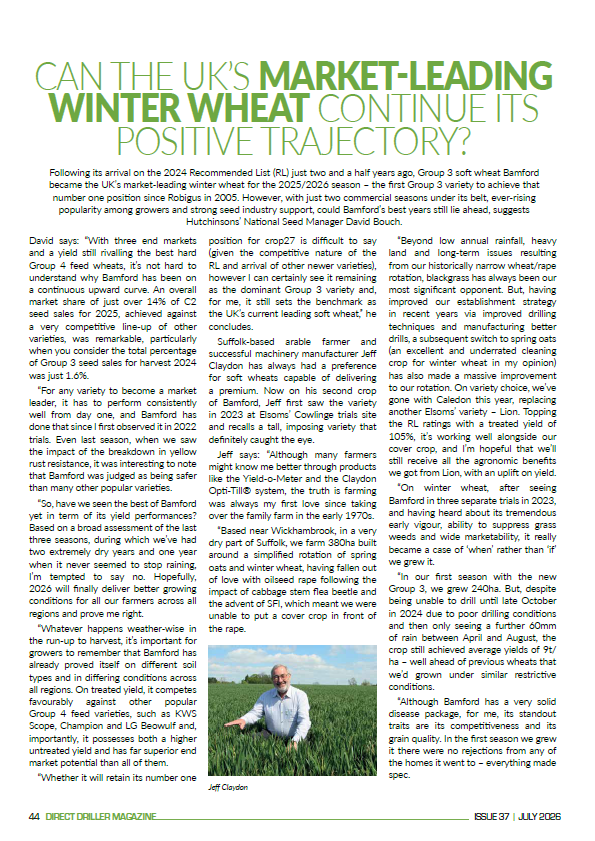
-

Farmer Focus – Andy Cato
Listen to this article Listen to this article “We’re gonna groove on something else instead. We’re gonna groove on biodiversity and bread.”
So said Grandma Funk, voice of our 1997 Groove Armada tune, I See You Baby, who you can hear on the video unexpectedly coming out of retirement during my DJ set for Groundswell’s 10th birthday.
Groundswell, the latest documentary from the makers of Kiss the Ground, launched the same week, and across the expanding festival site at the Cherry family farm, regen had the energy, in Victor Hugo’s words, of “an idea whose time has come.”
Yet despite solar now being cheaper than fossil fuels and biological farming systems more efficient than chemical ones, this doesn’t mean either transition will happen quickly enough. There are cultural and practical barriers, taxes still subsidising the status quo, true cost accounting still an idea rather than reality. Many problems need solving to make regen mainstream.

Above all, we need action. Farming in a festival environment took me back to the early, free party days of dance music – a reminder of the realities of the journey from niche to mainstream. House music went from illegal raves to a worldwide soundtrack. This didn’t happen by waiting for radio stations to start playing it; radio stations began playing it because House music lovers had shown up and created a movement.
While there’s still so much to be done before regen follows a house music trajectory, reflecting on Groundswell gave an opportunity to take stock of progress.
Wildfarmed’s Groundswell news included:
Research
A year previously, Professor Andy Neal and I sheltered in a strip of shade behind the Wildfarmed stand to work out how he could dedicate himself to farmer-focused research. This year, the idea became reality with the launch of a collaboration between Wildfarmed, Waitrose and Yeo Valley. With his right arm in a sling, Yeo’s Tim Mead had a touch of Nelson about him as he addressed the assembled crowd. Andy Neal shed a tear as glasses were raised. England helped the atmosphere with two last-minute goals.
National icons
There were cream teas in the National Trust tent to celebrate their iconic scone going Wildfarmed, and KitKats for those who prefer regen flour and milk in biscuit form.

Economics
Getting farmers paid for nature in food-producing fields has been a mission for a decade. Finally creating a mechanism to do that is such a milestone. The Lloyds team and a forum of water execs gathered at the WF tent for a Q&A on our new Food & Nature Resilience Fund (of which more below).
Government
Secretary of State, Emma Reynolds, came to WF HQ to discuss what farmers need to deliver nature and resilience at scale. I wanted to stress that we have the evidence to move from the word “subsidy” to “investment”.
Come together
A misfiring mixer and overheating generator didn’t stop the Wednesday party being a moment of togetherness in the farming calendar. It had the energy to rival anything in Ibiza.
Routes to market
Sarah Vachon of Citizens of Soil; Stephen Cronk, founder of Mirabeau; Bramble Partners’ Chris Mitchell and I joined Waitrose’s Charlotte di Cello, a passionate regen advocate and the only supermarket chief commercial officer to attend Groundswell.
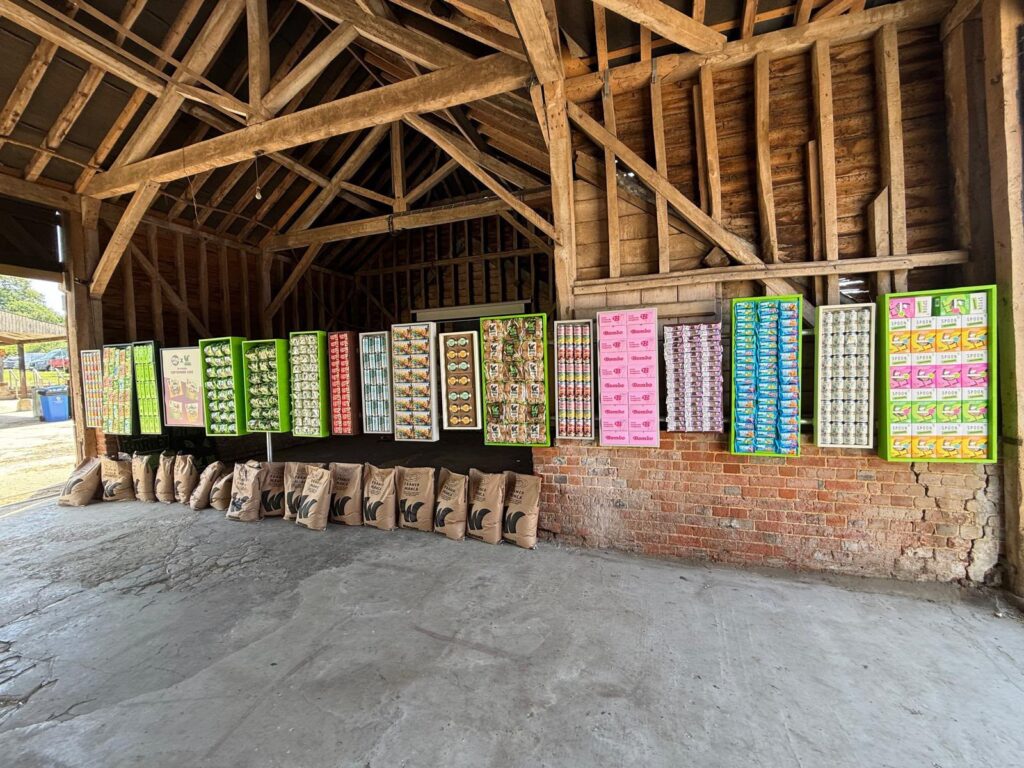
Across the two days, there were good discussions: whether quality and nature can co-exist with scale, on regen confectionery, or why Wildfarmed growers farm differently now to how they did when we started.
Here are some of the Q&As from Groundswell…
You are now working with Nestlé. Would you let any food business use Wildfarmed grains?
Yes. The first thing written on the office wall at Wildfarmed was “The Long Road to Greggs.”
Our founding mission was landscape change at scale, and the business began with a farming team to deliver financial, community and technical support to farmers.
We invested heavily in measuring outcomes to unlock the wider value of farming this way and built a traceable supply chain so that any food business, large or small, could choose grains whose field-to-plate story was known.
Over 1,000 food businesses have made that choice so far, and everyone who is using our wheat, oats or barley is directly supporting these farmers in bringing life, resilience and nature back into their fields. That’s the case whether the grain ends up in a sourdough loaf, a scone, a pint or a biscuit.
That’s why I think the question of what ingredients become must be separate to the question of how things are grown.
Some have said that regen ingredients should only be used in “healthy” foods. Let’s put aside the intractable minefield of what healthy means and who defines it and assume there could be a theoretical answer to this question.
Why restrict demand for products from regenerating farms? Why limit the supply of quality ingredients or the number of farmers able to build viable, biologically based, resilient businesses? Given how little ecological road we have, why hold farmers back?
Turning the countryside into a tapestry of viable, nature-rich farms producing resilient, low-carbon, high-quality food is overwhelmingly complex. We’re focusing on doing our best to solve these problems. Wherever the public health debate leads, we need a resilient supply of good ingredients.
I think there is something else at play here too – the old sustainability story of restriction, of hair shirts, of fewer choices. Yet the reality of farming with nature, of harnessing biology, is abundance. A forest doesn’t shrink to save itself – resilience comes from growth and expansion. Regeneration is expansive and inclusive and needs to feel that way.
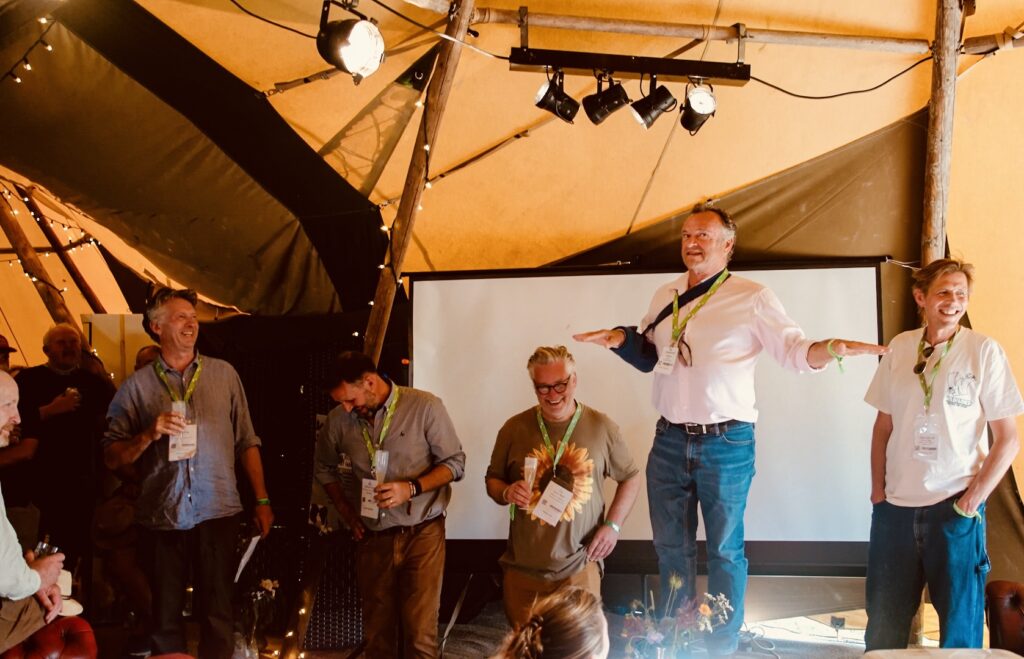
Above all, we need action. 90 per cent of UK grains are grown under a conventional system, most farmers aren’t making money, and yields are being hit because soils are fragile and weather is increasingly wild. To change this, regen needs to work economically for farmers and it needs public awareness. We know from frontline experience that lack of awareness is a massive barrier to regen adoption. If everyone could come on a farm open day, the battle would be won. But they can’t, so we urgently need everyday opportunities – pints, biscuits, whatever that might be – to introduce people to the idea of knowing how their food was grown and why that matters.
We also need engagement and confidence within companies with big procurement budgets for whom quality of ingredients has historically meant consistency of supply and reliability of performance. Because of quality being defined this way, regen farming is sometimes seen as a threat to quality – a prejudice that runs deep enough for many good organic wines not to put the organic logo on the bottle. If we take KitKat as an example, this is a big step in breaking down these preconceptions because of its iconic reputation and demanding specification. Nestlé deserve credit for making this move. They did a similar thing with First Milk 20 years ago. It’s a partnership through which we hope to raise awareness of both problem and solution.
Why have you relaxed your farming standards?
We haven’t; we’ve got better at measuring and delivering outcomes.
When the first Wildfarmed standards were drawn up – the first set of third-party audited regen standards in the UK – outcomes measurements in regenerative agriculture, at scale rather than for specific experiments, didn’t exist.
That’s why we began with practice-based rules, rooted in our organic origins and based on the best evidence we could find of what was needed to deliver for nature, water and soils. Since then, we’ve dedicated so much work to measuring actual outcomes, working with a long list of specialists to track in-field biodiversity, water quality, carbon impact and farmer welfare.
That data has shown us that greater flexibility for farmers can deliver equal or better outcomes than a more prescriptive set of rules. Personally speaking, some of the evidence along the way has meant accepting long-held beliefs were wrong. It has meant standing up for a nuanced position rather than a binary one – not a comfortable place to be in a world that loves slogans.
But I think following the science and avoiding dogma is essential, given the need for farmers to build resilient ecosystems while navigating a rapidly changing climate and extremely challenging economic conditions.
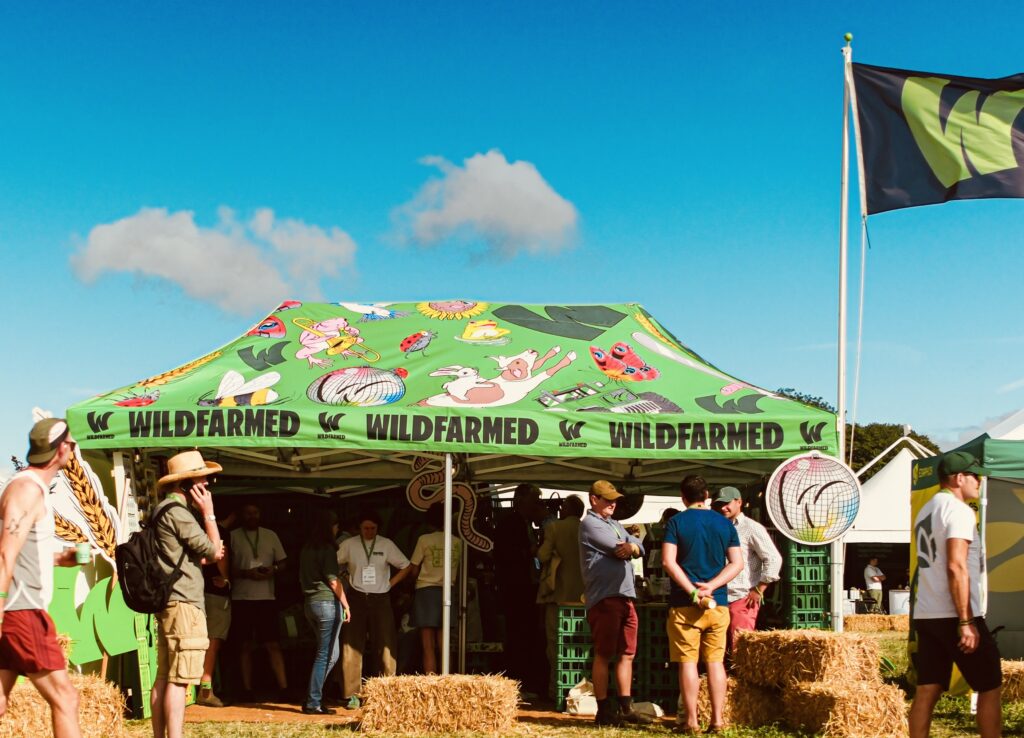
Isn’t regenerative food too expensive?
It depends on what you compare it to.
UK food has looked cheap for decades – but that price has always excluded the costs being picked up elsewhere: water treatment, flood management, biodiversity loss. I think the actual question isn’t whether regenerative food costs more; it’s whether the current system really is cheaper – or whether we’ve just got used to paying for it in different ways.
On top of that, food prices have risen 40 per cent in five years, so the current system no longer guarantees cheap food.
To deal with this, I think we need economics that reflect the reality of farming. Farmers manage around 70 per cent of UK land. They are making heroic efforts in the face of economic pressure and wild weather. What they do determines the quality of our water, the resilience of our food supply, the state of our natural environment. Today, the market doesn’t reward them for any of that. The Food & Nature Resilience Fund we have launched at Groundswell is a step towards building one that does.
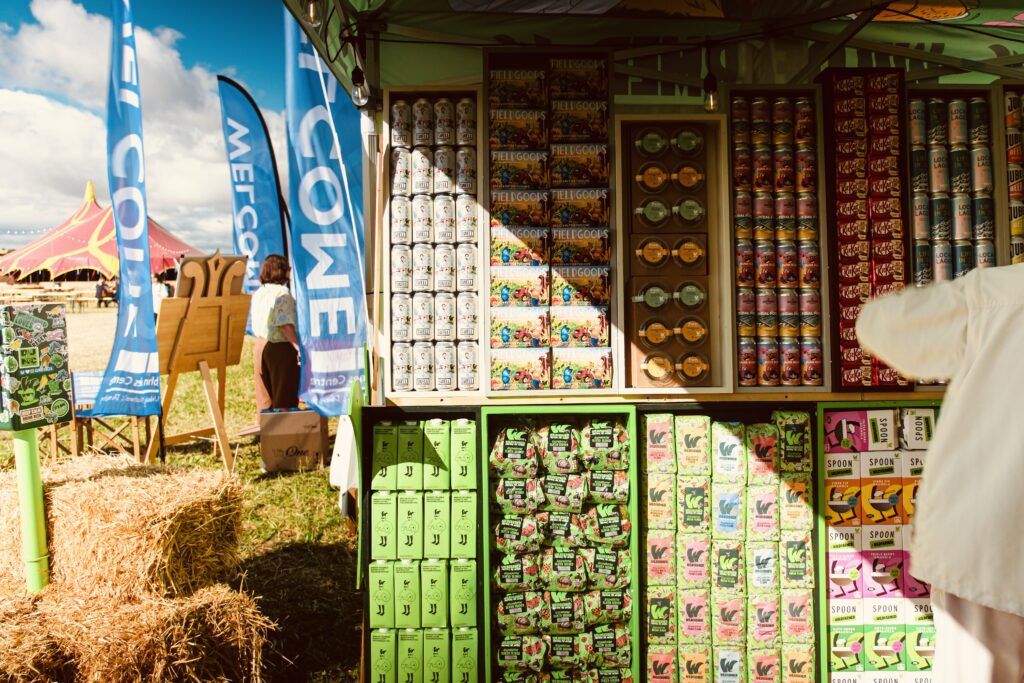
There are a lot of tech businesses here. Is technology the answer to regenerative farming at scale?
It depends what kind of technology.
When farm chemistry was developed, science promised to make the world repeatable and predictable; it was just a question of unearthing the rules. This approach was effective when building steam trains or microchips, but a disaster when applied to biological systems. As unforeseen consequences have unfolded over time, it has created a food system that’s expensive and fragile.
Yet while most farming technology to date has been designed to suppress biology, we’re now able to work with technology that serves it instead. Examples of that would be SAP testing and nutritional management, Trevor Tappin’s liquid applicators, or the inter-row mower I worked on for a long time, and which will hopefully one day exist in lightweight robotic form.
Rather than automating today’s fragile, chemical-dependent system and adding to farmers’ debt burden in doing so, we can instead inexpensively help farmers to read, respond and work with biology, at scale, in ways that weren’t previously possible.
Last year’s Diddly Squat data is an interesting case in point. 2025 was the driest spring in the Cotswolds for 132 years. Wildfarmed fields where technology was focused on improving biological health registered a far higher yield than the conventionally farmed fields, despite the use of variable rate and other automations that many of you will have seen on TV.
In measuring regen impact, technology is vital. From bioacoustics to AgriSound, to eDNA analysis of insect diversity or satellite crop assessments, it’s technology that’s allowed us to build the outcomes data that’s beginning to unlock value for farmers.
How much do regen yields go down compared to conventional?
We are already seeing regen fields deliver higher yields than neighbouring conventional fields during weather extremes. The last five years suggest the trajectory of extreme weather is only heading in one direction.
Even under favourable conditions, I don’t think regen yields need to go down. We can maintain yields by spending the budget used on conventional inputs on a different set of inputs – cover crop seed, different forms of nitrogen, seed inoculants, SAP-based nutrition, etc.
The challenge we have found is the required change in management to do all this optimally, given that the cost of farm machinery pushes farmers towards standardised operations across large acreages. So, I think the decrease in yield will depend on the farm’s bandwidth for more complex management. Given this bandwidth is often limited, our job continues to be finding the 20 per cent of actions that deliver 80 per cent of results.
Can regenerative farming feed the world?
This question is based on a false premise – that we can continue to feed ourselves by farming as we do today. The evidence suggests we can’t.
We find that procurement plans are often based on average yields. But the number that matters most for supply continuity is yield in bad years – and bad years are coming. We already talked about the large yield difference we saw at Diddly Squat last year, or the 40 per cent increase in food prices in five years, all of which indicate that the fragility of today’s food system in a changing climate is being exposed. Feeding ourselves into the future depends on regenerating soils and nature to make farms more resilient.
Can it be regen when your farmers don’t do Wildfarmed across all of the farm?
Working with farmers on specific blocks of land was a decision we took from the outset. Successful regen is a mindset shift – it requires depth of implementation. This is why we have such a large farming team for a small food business and why we decided to support farmers to go deeper on a section of their land rather than incrementally reduce inputs across all of it.
By running two systems side by side, farmers can see the results for themselves. What we consistently see are changes rippling out from the Wildfarmed block across the farm. With Wildfarmed barley and oats contracts now on offer, this means that when farmers are ready, we can work with them across whole rotations.
Is regen food more nutritious?
It shouldn’t take too much imagination to believe that healthier plants make healthier food. A plant growing in biologically active soil, with a functioning immune system and access to the full range of micronutrients it needs, is going to produce something nutritionally different from one growing in inert soil, kept alive by chemistry.
We now have early data that points in the same direction. For several years we’ve been testing small batches of grain, comparing Wildfarmed and neighbouring conventional fields, and have seen very significant increases in polyphenols. Last year, this was expanded into a comprehensive nutritional assessment of Wildfarmed flours against conventionally grown products. Analysis was carried out by Edacious, and again the data pointed in the same direction.
We’ll do a similar analysis after this harvest and keep building the evidence. Nutritional quality is one of the most powerful motivators for consumers choosing better food, and we want to be able to speak accurately and confidently about it.
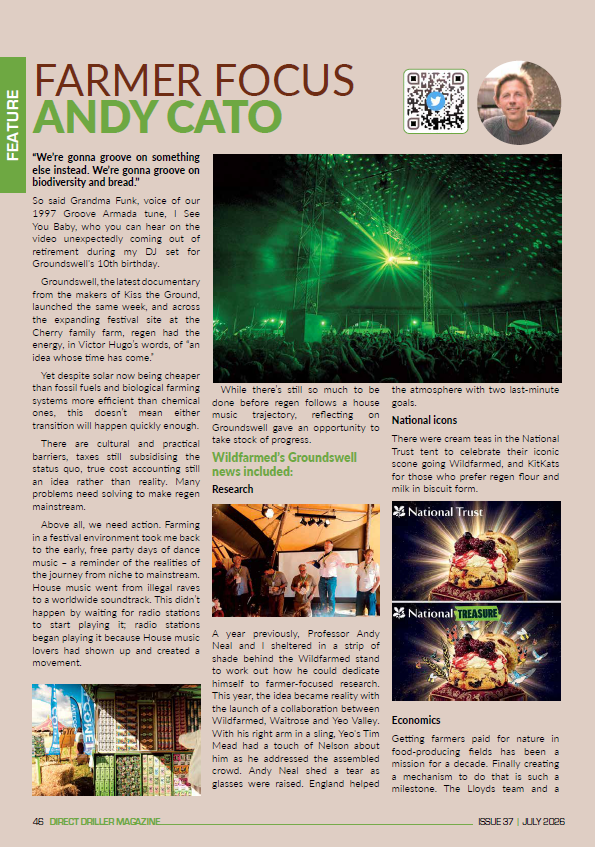
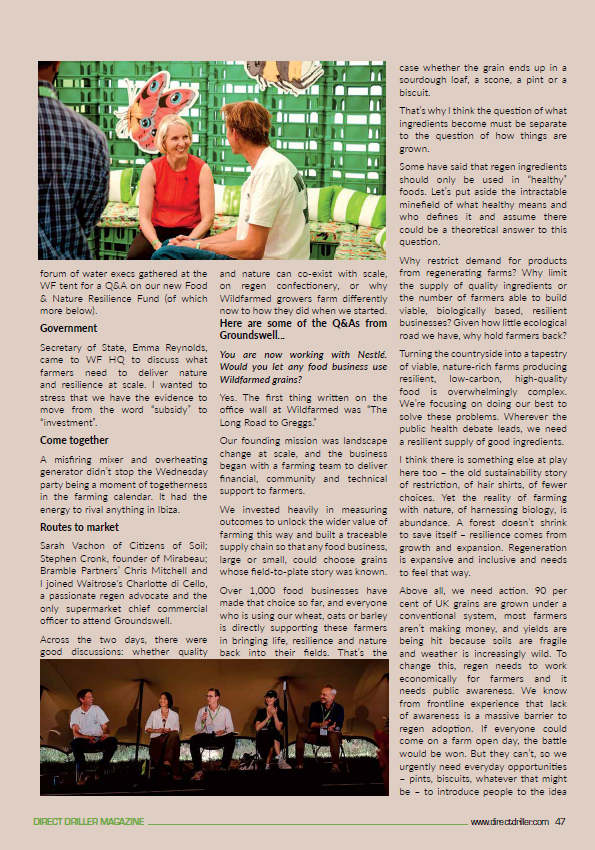
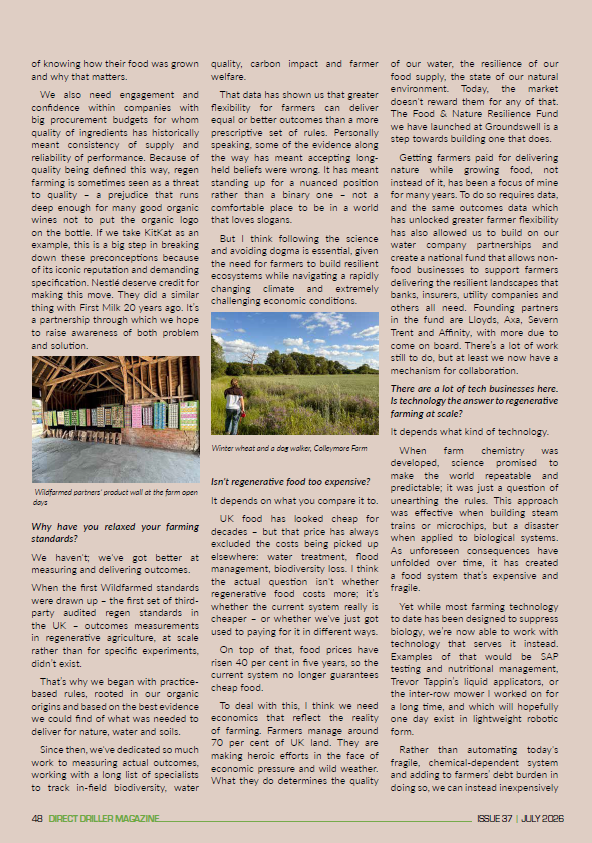
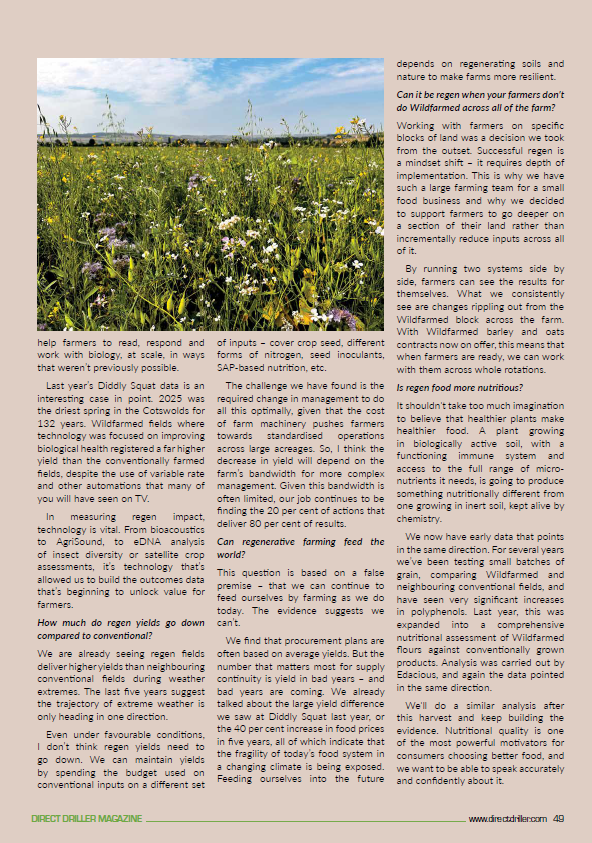
-

Rainbow Brings a Complete Portfolio, Built on Quality You Can Trust
Listen to this article Written by Simon McMunn from AgTIgrow, business partner of Rainbow
As the UK and Ireland agricultural markets continue to evolve, facing increasing regulatory pressure, resistance challenges and the need for consistent performance, farmers and distributors are looking for something simple yet critical: reliability.
Not just in products, but across the entire value chain.
This is where Rainbow enters the conversation.
A vision built 25 years ago
Rainbow’s story began in 2000, when six chemical engineers came together with a clear vision: to build a better future for agriculture.
Over the past 25 years, that vision has grown into a global platform. Today, Rainbow operates in more than 100 countries, supported by 10 high-tech manufacturing plants, 3 R&D centres, and a dedicated Process Engineering Centre. These capabilities are connected through a fully integrated system, linking R&D, synthesis, formulation, production and delivery. Reliability is built into every stage of the process.
From global capability to local relevance
Rainbow’s entry into the UK and Ireland is not about starting from zero; it is about bringing an established system into a new market.
For many growers, the Rainbow name may be relatively new. But the expertise behind it is already present in the industry.
“There’s a good chance a UK grower has already used a product that came out of a Rainbow factory, without realising it.”
This reflects a long-standing role in global manufacturing and formulation, supporting well-established crop protection brands globally and now evolving into a more visible, direct presence in the market.
The focus is clear: to combine global strength with local understanding.
From synthesis to the field: building a one-stop shop offer portfolio
Rainbow’s capabilities begin at the earliest stage: the synthesis of active ingredients.
Through advanced technologies, including AI-driven synthesis development, the company optimises how molecules are produced, improving efficiency, consistency and scalability from the start.
From there, formulation teams transform these active ingredients into products designed for real-world application. Drawing on field data and experience from more than 50 countries, formulations are developed to adapt to diverse conditions, from temperature variation to different application methods and farming practices. The result is products that deliver both performance and consistency in real agricultural environments.
Built on this foundation, Rainbow’s portfolio is designed to support farmers across every stage of crop production.
In the UK and Ireland, the focus is on key crop protection solutions, including herbicides, fungicides, insecticides and plant growth regulators, helping growers manage weeds, disease, and pest pressure across a wide range of crops.
Rainbow has secured registrations for more than a dozen products in the UK, with further registrations planned over the coming seasons, reflecting a clear commitment to building a strong and long-term presence in the market.
Quality built into every step
Quality at Rainbow is built in from the start. It runs across the entire value chain, from AI synthesis to final delivery.
Production is carried out through independent manufacturing systems and dedicated production lines, reducing the risk of cross-contamination and ensuring consistency batch after batch.
At the same time, automation and continuous production enable precision at scale, supporting both efficiency and reliability.
Packaging and logistics are managed with the same level of control, using reinforced drums and five-ply cartons to protect products during handling, storage and transport, ensuring they maintain their integrity from factory to field.
The result is consistent performance growers can rely on, season after season.
Reliability you can depend on
In farming, timing is critical. Whether responding to pest pressure or planning applications, delays can have a direct impact on results.
Rainbow’s integrated operations are designed to enable fast and flexible responses, from production to delivery, ensuring that products are available when they are needed.
This is supported by clearly defined delivery timelines, with standard lead times of around 24 days for retail pack orders and 19 days for bulk shipments, helping partners plan with confidence.
At the same time, a strong customer-focused approach ensures responsiveness at every stage, with all customer inquiries addressed within 12 hours as a standard.
Together, these capabilities help growers and distributors make timely, confident decisions.
A partner for the long term
Rainbow’s approach goes beyond products.
Its expansion into the UK and Ireland is built on long-term collaboration, working with distributors, agronomists and growers to understand local needs and deliver meaningful solutions.
“This isn’t a company that comes into a market for one opportunity and then walks away.”
This mindset reflects a broader commitment: to build relationships based on trust, consistency and shared success.
Rainbow’s proposition brings together a broad portfolio that supports every stage of the crop cycle, a fully integrated supply chain that ensures convenient value, and efficient services that enable timely, confident decision-making.
Growing together in UK and Ireland agriculture
As Rainbow continues to expand its presence in the UK and Ireland, its focus is on building a lasting role in the market, working alongside partners to support the evolving needs of modern agriculture.
With an integrated platform and a growing local portfolio, the company is bringing together global capability and practical field performance in a way that is both consistent and dependable.
After 25 years of growth, the ambition remains the same: to contribute to a better future for agriculture, guided by a simple belief: together we work, together we win.
Rainbow. All about growing.
Rainbow are looking for Direct Driller readers to try their products this autumn. If you would like to see how the new (to the UK) products stack up against your normal brands, then please do get in touch with me directly.
Simon McMunn
[email protected]Products in the range – Autumn
Product MAPP No. Active ingredient Type Key Crops Cerecarb 21521 Prosulfocarb 800 g/l Herbicide Winter barley, winter wheat, potato Metonary 21481 Metazachlor 500 g/l Herbicide Broccoli/calabrese, brussels sprout, cabbage,
cauliflower, winter oilseed rape , spring
oilseed rapeBosket 21513 Boscalid 500 g/kg Fungicide Winter oilseed rape, spring oilseed rape Inmar 21511 Prothioconazole 250 g/l Fungicide Winter oilseed rape, barley, wheat, oats, durum wheat, rye Pintray 21519 Prothioconazole 125 g/l + Tebuconazole 125 g/l Fungicide Winter oilseed rape, barley, wheat, oats, rye Nomita Xtra 21496 Metconazole 90 g/l Fungicide Winter oilseed rape, barley, wheat, field bean, peas, rye, triticale Afupet 21495 Folpet 500 g/l Fungicide Barley, triticale, wheat Refamid 21536 Ethofumesate 500 g/l Herbicide Sugar beet, fodder beet, red beet, mangel 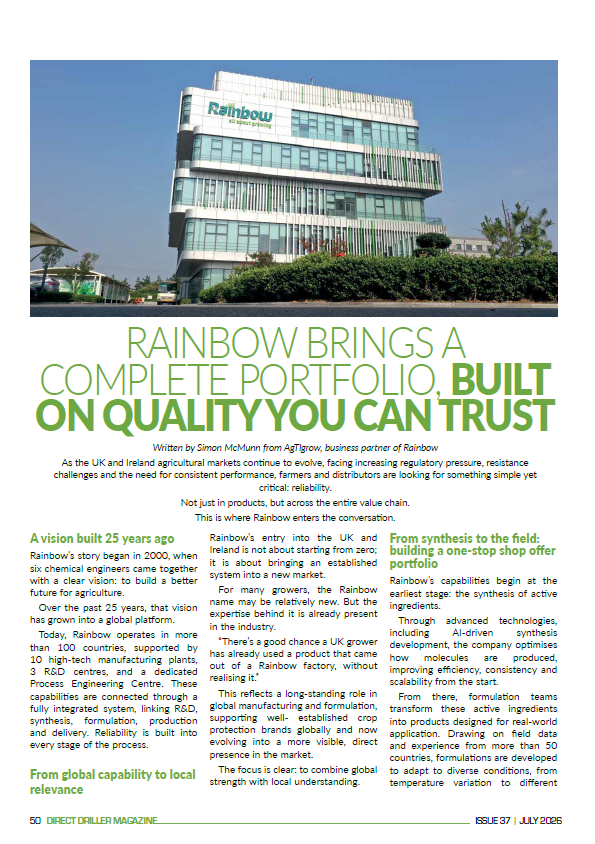
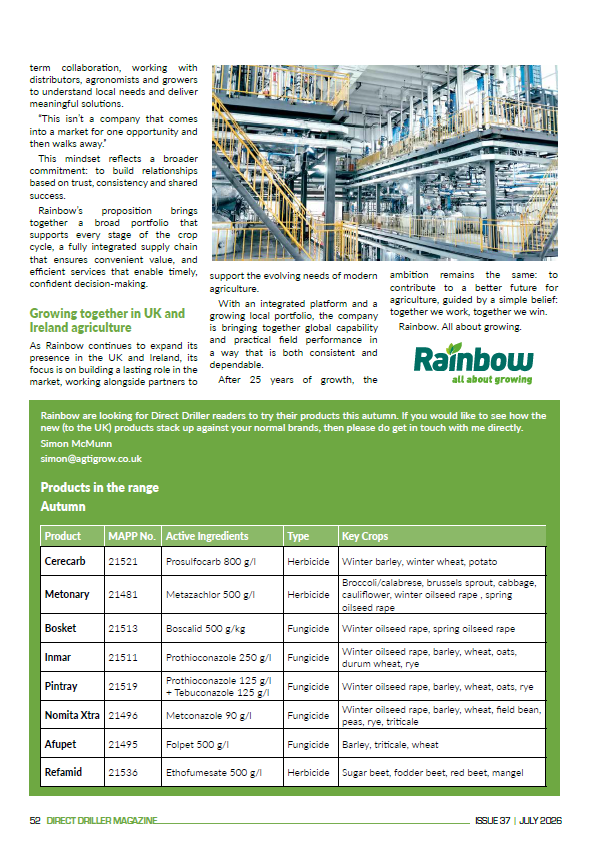

-
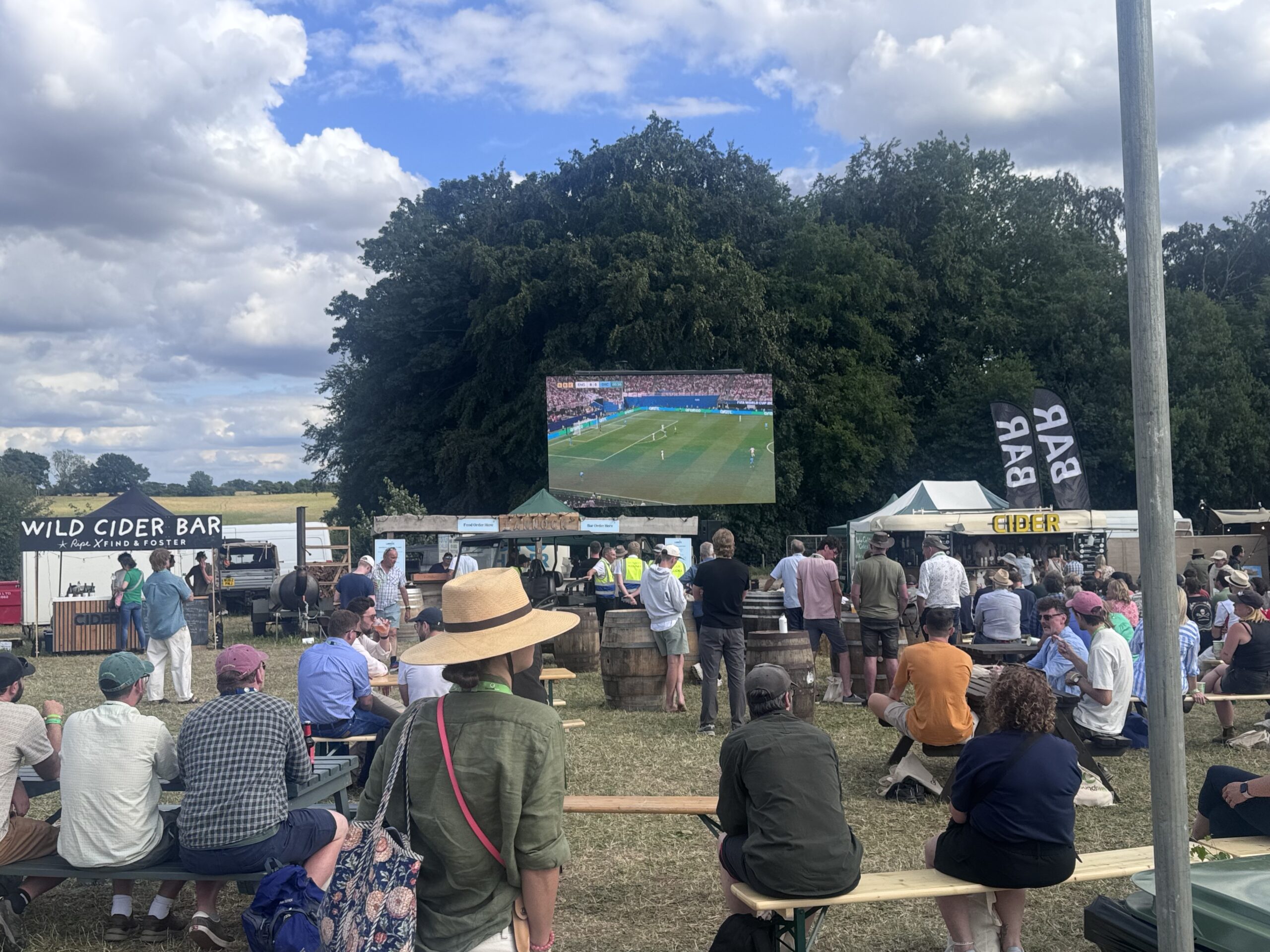
Groundswell 2026: Where the Future of Farming Was Argued, Not Just Discussed
Listen to this article Listen to this article There is a moment, somewhere around the third conversation of the day at Groundswell, when you stop thinking of it as a farming event and start thinking of it as something else entirely. A reunion. A think tank. A festival. All three at once, perhaps. The 2026 edition, held over two days in July at Lannock Farm in Hertfordshire, offered 179 sessions across two days, from 6am farmland bird safaris and morning yoga (which I didn’t make it to), to late-night music and a World Cup football game (which I didn’t miss). Across that programme, around 430 speakers took to stages, soil pits and demonstration areas to argue, demonstrate, question and occasionally disagree about the direction of British agriculture.
It seems pretty poor then that I only managed to make six of those sessions. But the rest of the time was spent exactly as it should be at Groundswell: catching up with readers, farmers, and industry contacts in the kind of unscheduled conversations that never make it into a programme but often matter more than the ones that do. On the first afternoon, watching England’s World Cup match on a big screen that Groundswell organiser Alex Cherry had shipped down from Manchester, with the food and bar area transformed into something closer to a village pub, the whole site was buzzing in a way that only a shared sporting moment can create. Then later that evening, Andy Cato’s DJ set in the Earthworms tent started at 10:30pm and kept the energy going well past midnight. Groundswell has always understood that food and farming is a community, and communities need to celebrate as well as deliberate.
The sessions we did cover ranged from the practical to the philosophical. The talks we missed were equally compelling: My Flour Mill Set Me Free, Only Art & Beaver Will Save Us!, Couples Therapy: Candid Stories from Farming Couples (waiting for our very own John Pawsey to write that one up), Ultra-Processed Food Systems – The Most Urgent Threat to Human and Planetary Health, and Anecdotal Science: The Evidence We Sense but Can’t Yet Measure were just a few of the sessions running in parallel to the ones we attended and I would have loved to have heard. The breadth of the programme is itself a statement: regenerative agriculture is no longer a niche conversation. It is a movement with enough depth to sustain two full days of simultaneous, substantive debate.
The sessions we covered shared a common thread. Whether it was the pulse panel arguing that farmers can grow the right crops but need a market willing to pay for them, Tim Parton and Lucy Williamson drawing direct lines between soil biology and human health, or the rainfall simulator demonstrating in real time why bare soil is a liability, the same message kept surfacing: the farming system as currently configured is not financially sustainable, not environmentally sustainable, and not delivering the quality of food that a healthy population needs.
Nowhere was this tension more sharply drawn than in the two data sessions. On the AHDB stand, the Farm Data Exchange was presented as a solution to farmer data duplication, but the underlying message was that environmental data will become a condition of supply, not a source of income. The following morning, a panel of investors and scientists argued the exact opposite: that farm data is on the verge of becoming highly valuable, that AI agents will soon shop on verified soil health scores rather than brand names, and that farmers who give their data away for free are making a serious strategic mistake.
The final session, on the cost of the regenerative transition, brought the economics back to earth. Over half of UK farming businesses currently fall below median household earnings. The Farming Roadmap 2050 offers a long-term vision, but the panel was clear that the detail of who funds the four-to-five-year transition lag remains unresolved. The organic sector has always answered this question with a conversion payment. The broader regenerative movement is still waiting for its equivalent.

-
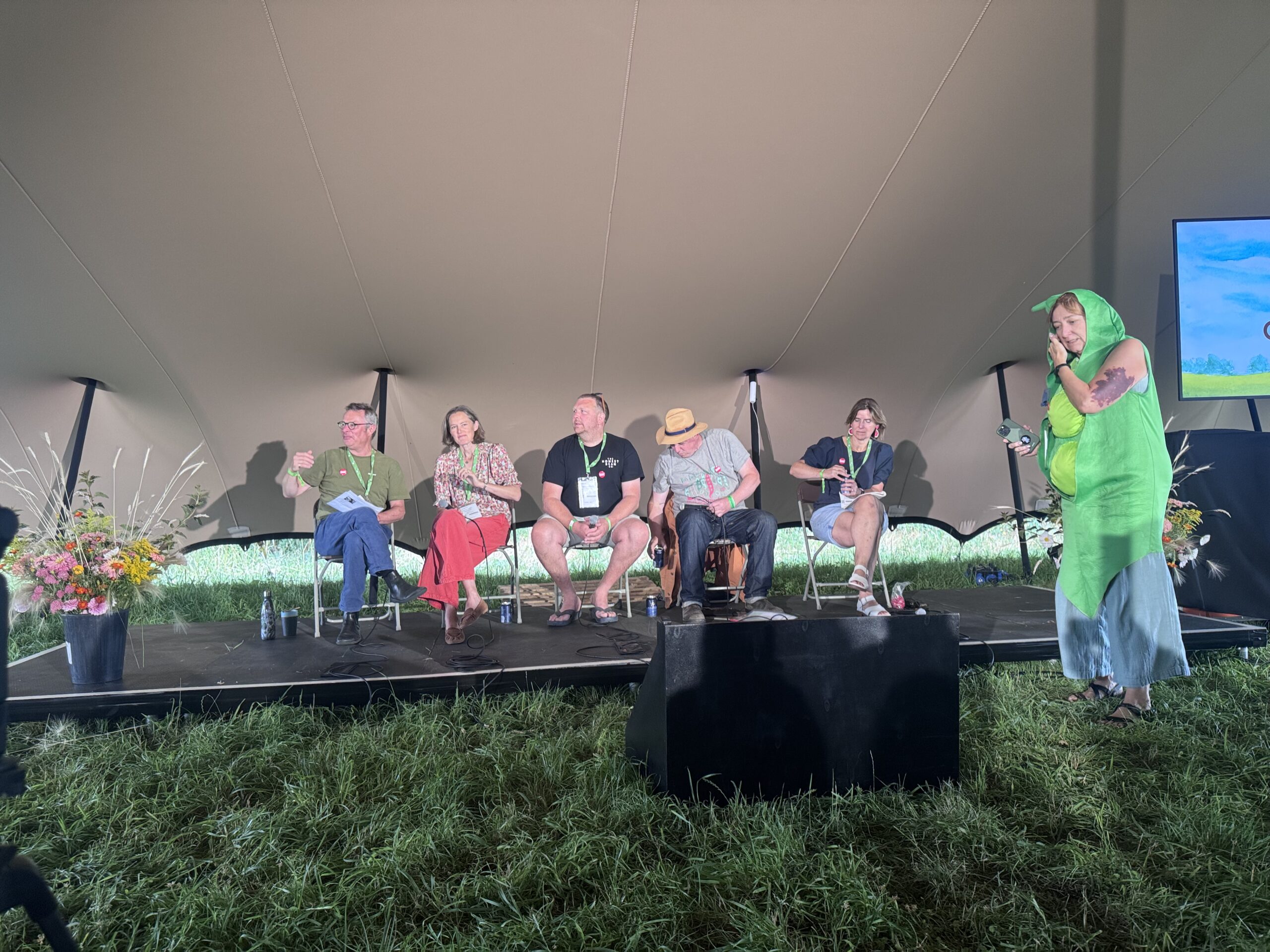
Field to Fork: Unlocking the UK’s Pulse Potential
Listen to this article Listen to this article A session at Groundswell exploring the agricultural, nutritional and economic case for growing and eating more beans and pulses in the UK.
For decades, the conversation around UK agriculture has been dominated by wheat, barley and oilseed rape. But as the climate changes and the pressure mounts to reduce reliance on imported proteins and synthetic inputs, a quiet revolution is taking root. Beans and pulses, long relegated to the sidelines of British farming, are stepping into the spotlight.
The agronomic case for growing pulses in regenerative systems is robust. They fix nitrogen, break disease cycles and offer a crucial low-input alternative to more demanding crops. Yet, as the recent Groundswell agricultural show highlighted, the conversation often veers away from agronomy and towards consumption. The reality is that we cannot simply “bang in some beans” without a market ready to buy them. The disconnect between what farmers can grow sustainably and what the public is willing to eat remains a significant hurdle.
This session at Groundswell explored the multifaceted challenge of unlocking the UK’s pulse potential. We begin our Groundswell summary with a write-up of a key panel discussion from the event, featuring leading voices from farming, food production and policy. Their insights underscore a central truth: to get more beans into our fields, we must first get more beans onto our plates or into our animals.
Banging the drum for British beans
The Field to Fork: Unlocking the UK’s Pulse Potential session at Cereals brought together a diverse panel to tackle a deceptively simple question: why aren’t we growing and eating more beans in the UK? Chaired by chef and campaigner Hugh Fearnley-Whittingstall, the discussion moved rapidly from the agronomic realities of the field to the complexities of public procurement and consumer habits.
The panel featured Emma Loder-Symonds of Nonington Farms, Adam Palmer of The Honest Bean Co, Josiah Meldrum of Hodmedod’s, and Anna Taylor from The Food Foundation. While Fearnley-Whittingstall set a distinctly culinary tone, the underlying message from the farming representatives was clear: demand must lead production.
The agronomic reality
Emma Loder-Symonds highlighted the practical benefits of fava beans as a break crop that fixes nitrogen, reducing the need for artificial fertilisers. However, she was quick to point out the challenges. Rotations must be carefully managed, with beans kept four to five years apart to prevent soil-borne diseases. Furthermore, the UK market for human consumption is currently stymied by stringent aesthetic standards, largely driven by the export market’s demand for unblemished beans.
A significant culprit in this aesthetic challenge is the bruchid beetle. As Loder-Symonds explained, the pest bores into the bean, leaving a small hole upon exit. While this does not affect the taste or nutritional value, it often leads to crop rejection for human consumption in the UK, forcing farmers to sell into lower-value animal feed markets or export.
Adam Palmer echoed the need for investment in agronomy and plant breeding. He noted that fava beans have suffered from a historical lack of research and development compared to major cereal crops. “I don’t think there’s a lot of investment that’s ever been put into beans in terms of agronomy, plant breeding or seeds,” Palmer said, emphasising that building consumer demand is the crucial first step to encourage farmers to take the risk.
The bruchid beetle challenge
The bruchid beetle (Bruchus rufimanus), also known as the broad bean weevil, presents a significant hurdle for UK fava bean growers targeting the human consumption market. Adult beetles fly into flowering crops when temperatures reach 15–20°C, feeding on pollen before laying eggs on the developing pods. The larvae bore into the seeds, feeding and pupating within as the crop matures. When the adult emerges, it leaves a distinct circular hole. While this damage does not impact the taste or nutritional quality of the bean, the visual blemish often leads to rejection by buyers demanding pristine produce. Current management relies on monitoring temperature thresholds and applying targeted treatments, though later sowing of spring crops can reduce risk. Addressing this aesthetic barrier is essential for expanding the domestic market for UK-grown fava beans.
Processing and the “missing middle”
The conversation repeatedly returned to the lack of processing infrastructure in the UK. Loder-Symonds pointed out the shortage of domestic canning facilities, meaning the vast majority of UK-grown fava beans are exported, often to Egypt, while the UK imports familiar varieties like kidney and butter beans.
Josiah Meldrum, whose company Hodmedod’s has pioneered the revival of British pulses, stressed the importance of processing to make beans more convenient for consumers. He acknowledged that expecting the public to soak and boil dried beans is a barrier to entry. Milling pulses into flour or roasting them for snacks, as Palmer does with The Honest Bean Co, offers accessible alternatives.
The discussion also touched on the controversial role of ultra-processed foods. The panel noted that the food industry heavily utilises bean and pea isolates – highly processed protein extracts used to boost the nutritional profile of snacks and ready meals. Loder-Symonds highlighted the stark economic disparity: farmers might receive £300 per tonne for whole beans, while manufacturers pay £3,000 per tonne for the isolate. The consensus was that while isolates have a place, the goal should be incorporating whole or minimally processed beans into everyday meals to deliver their full nutritional benefits, particularly fibre.
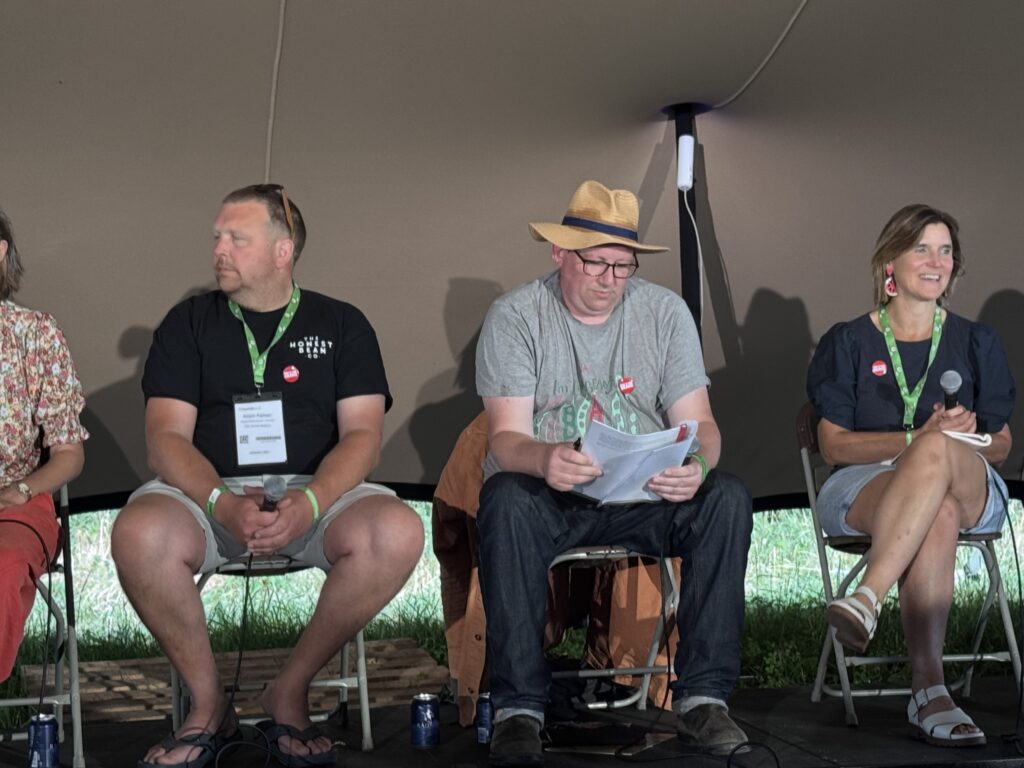
The UK fibre deficit
The UK is facing a severe dietary fibre deficit, with significant implications for public health. Government guidelines recommend that adults consume 30g of fibre per day to reduce the risk of heart disease, stroke and type 2 diabetes. However, data from the National Diet and Nutrition Survey reveals a stark reality: a staggering 96% of UK adults fail to meet this target. The average daily intake hovers around just 19g. Beans, peas and lentils are nutritional powerhouses in this regard; a single portion of beans contains two and a half times more fibre than two slices of white bread.
Policy and procurement
Anna Taylor outlined The Food Foundation’s Bang in Some Beans campaign, which aims to double UK bean consumption. A key strategy is engaging major retailers, caterers and the public sector. Taylor noted recent improvements to school food standards, which now allow beans and pulses to replace meat on menus, opening the door for more pulse-based dishes in schools.
The potential of public procurement was a recurring theme. The panel argued that government policy must move beyond simply encouraging production through environmental schemes like the Sustainable Farming Incentive (SFI), which currently promotes legume fallows that are often not harvested for human consumption. Instead, policy should actively connect British-grown pulses with public sector supply chains, providing farmers with reliable markets.
During the audience Q&A, the need for investment in the “missing middle” of processing was raised, with calls for government grants to support mid-scale facilities that can handle and process UK pulses.
A dual-purpose future
The session concluded with a recognition that the human consumption and animal feed markets are not mutually exclusive. Meldrum argued that the two sectors must run in synchrony. As the livestock industry seeks to reduce its reliance on imported soya – a point reinforced by recent trials demonstrating the efficacy of wholecrop beans in beef finishing rations – the demand for domestic feed pulses will grow. This dual-purpose approach provides farmers with a crucial safety net, ensuring a market for crops that may not meet the stringent visual standards for human food.
Ultimately, unlocking the UK’s pulse potential requires a coordinated effort. Farmers need robust agronomic support and reliable markets; processors need infrastructure investment; and consumers need convenient, appealing products. As the panel made clear, the beans are ready and waiting. It is time for the rest of the supply chain to catch up.
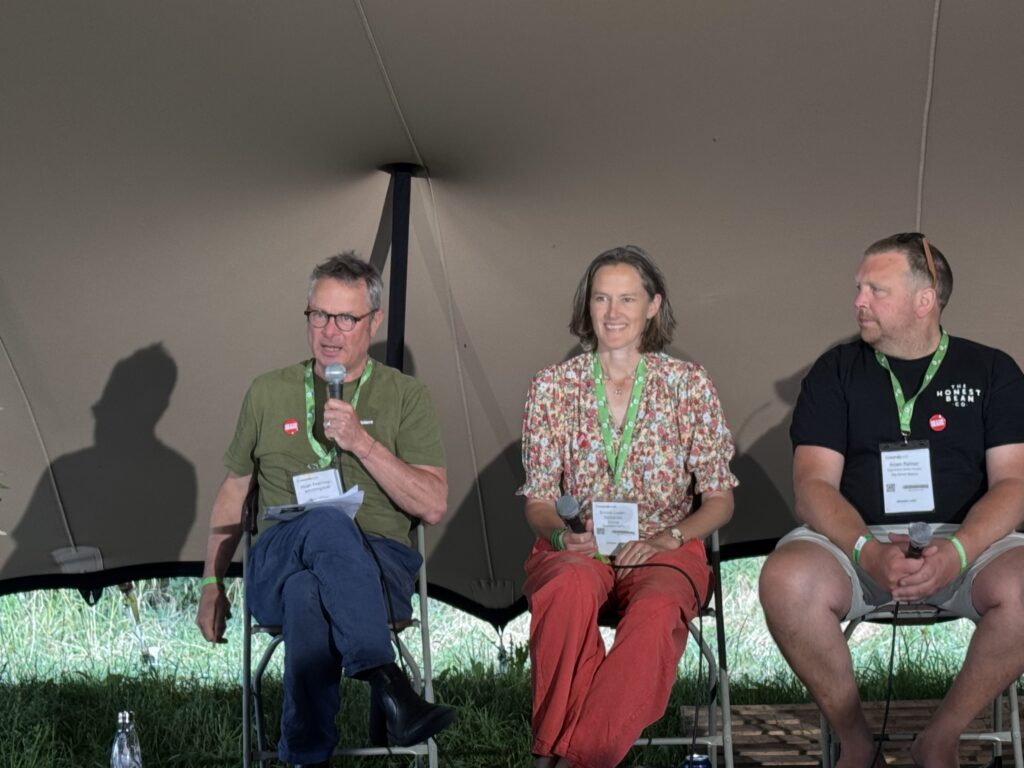
Speaker profiles
Adam Palmer – Founder, The Honest Bean Co
Adam Palmer is a regenerative farmer based on the Yorkshire Wolds, where he integrates sheep and pig enterprises with arable cropping. Recognising the agronomic benefits of fava beans in a sustainable rotation, Palmer founded The Honest Bean Co to create a direct market for British pulses. His business focuses on reducing barriers to consumption by producing convenient, minimally processed fava bean snacks and products, adding value at the farm gate and championing homegrown protein over imported alternatives within a nature-friendly farming system.
Anna Taylor – Executive Director, The Food Foundation
Anna Taylor leads The Food Foundation, an independent charity focused on transforming the food system to ensure healthy, sustainable diets are accessible to all. Under her leadership, the Foundation launched the Bang in Some Beans campaign, a major initiative aiming to double UK bean consumption by 2028. Taylor advocates for systemic change, focusing on policy reform, public procurement and retailer commitments to drive demand for climate-friendly crops like beans, aligning agricultural production with public health and environmental goals.
Emma Loder-Symonds – Director, Nonington Farms
Emma Loder-Symonds co-runs Nonington Farms in Kent, a showcase for nature-friendly, regenerative arable farming. Transitioning away from high-input systems, she and her husband James have integrated cover crops, herbal leys and livestock grazing to build soil health and biodiversity. Fava beans play a crucial role in their extended rotation as a nitrogen-fixing break crop. A qualified teacher, Emma also leads the farm’s extensive educational outreach, bridging the gap between consumers and sustainable food production through thousands of annual farm visits.
Hugh Fearnley-Whittingstall – Founder, River Cottage
Hugh Fearnley-Whittingstall is a renowned chef, broadcaster and food campaigner. Through River Cottage, he has long championed seasonal, ethically produced food and regenerative agriculture. His recent work, including the book High Fibre Heroes, strongly advocates for increased pulse consumption to address the UK’s dietary fibre deficit and reduce the environmental impact of our diets. Fearnley-Whittingstall uses his platform to bridge the culinary and agricultural worlds, encouraging consumers to embrace British-grown beans and peas for both personal health and planetary wellbeing.
Josiah Meldrum – Co-Founder, Hodmedod’s
Josiah Meldrum co-founded Hodmedod’s in 2012 with a mission to revive indigenous British pulses and grains. Working directly with a network of regenerative and organic farmers, Hodmedod’s has successfully reintroduced crops like fava beans, carlin peas, and naked barley to the UK market, while pioneering the commercial cultivation of lentils and chia. Meldrum’s work focuses on building resilient, diverse supply chains that support low-input farming systems, proving that ecological agriculture can be economically viable when connected with engaged consumers.